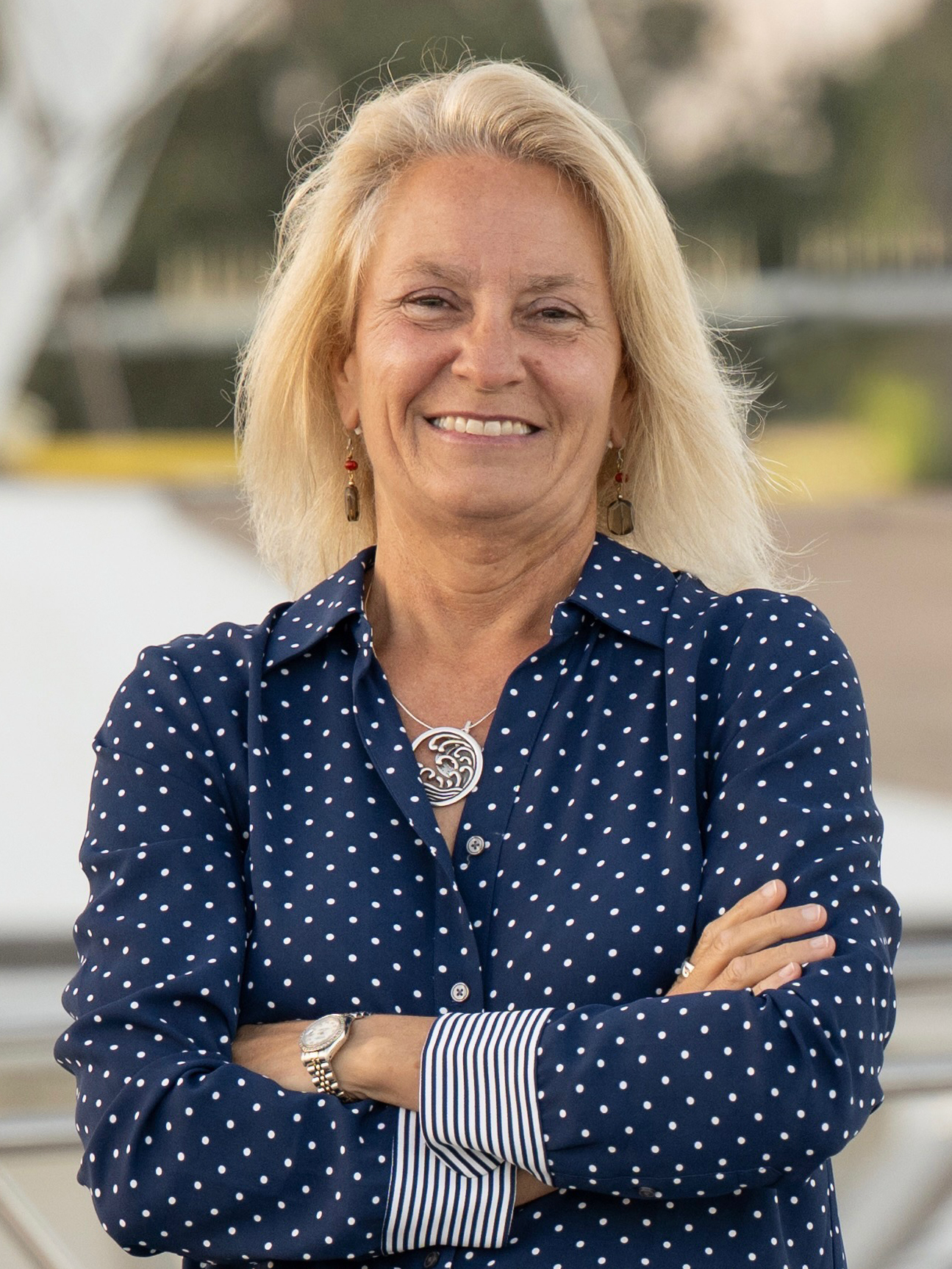
Recently, I reviewed the memoir Grace Through Fire by Deborah Samuel, and many of you mentioned you looked forward to an interview I planned to conduct. Samuel graciously replied to all of my difficult questions. Because my queries were not the standard fare of my Meet the Writer series, this is more like an interview about the memoir itself and the way in which it was written and worded. Because the memoir is so descriptive and emotional, I felt like I knew her. By page 50, I was an emotional hot mess. Therefore, all of my questions are asked out of curiosity and the choices made during the drafting of such a challenging part of Samuel’s life.
If you haven’t read my review yet, I suggest you do so before reading the interview below.
Grab the Lapels: All of my questions are asked out of curiosity and about the choices made during the drafting of such a challenging part of Samuel’s life.
Firstly, by the end of the memoir, I felt your relationship with sister Laura was deeply rooted in care, which is why I was surprised that when I went back through my notes, I had highlighted this passage:
“Secretly, I wanted this project to be at least as impressive as anything my younger sister had ever managed. Her success in business and in making savvy real estate investments at a young age had always rankled me and made me jealous. I wanted our lakefront home to let me catch up with and maybe even outdo her.”
Where did your jealousy stem from? And what does Laura think about what you wrote?
Deborah Samuel: As kids, Laura and I were not friends. We fought constantly, and the painful truth is that I was a bully. I would hold my little sister down on the floor, torment her, and sometimes beat her up. It is difficult to admit now, but I was an asshole to my sister growing up.
Our relationship began to change after I moved away from my family. While I went off to college and built my career, Laura quietly built an incredibly successful business. She had this natural business savvy, quick wit, and financial intelligence that I didn’t have, and I was jealous of her. I had all this formal education, yet my younger sister seemed to understand business and money intuitively. She became so successful that she could completely retired at 48. She now travels the US in her RV with her husband, Russ, playing pickleball and kicking ass on the courts.
Then Susan’s accident changed everything between us.
I was brought to my knees and desperately needed help. Laura stepped in. She had the business and financial skills to help me quickly organize enormous medical expenses and navigate countless other things that suddenly landed in my lap. Somewhere in that crisis, our relationship changed. I stopped seeing her as my little sister, whom I needed to compete with, and began seeing this extraordinary woman standing beside me when I needed her most.
Laura and I have talked openly about our childhood and my jealousy. I have apologized for my terrible behavior and the petty jealousy I carried for years. Today, we are incredibly close. There is something beautiful about being able to look honestly at who you once were, own it, apologize for it, and build something entirely different together. She was my biggest cheerleader for this book. She has read it multiple times. You should interview her! LOL
Grab the Lapels: That’s beautiful, and thank you so much for sharing how your relationship changed. I have a brother, so I know how complicated those relationships can be.
Next question — in recent years, memoirs and essays by disability activists have been published more visibly than in the past. One thing I noticed is how we have a tendency to use the phrase “wheelchair bound,” whereas disability activists emphasize a wheelchair is a tool of movement, granting them independence and access. Can you elaborate on your perspective at the time regarding Susan using a wheelchair and being “bound” in it? Did your feelings about what a wheelchair meant to her shift over time?
Deborah Samuel: I understand and respect why disability activists challenge the phrase “wheelchair bound.” A wheelchair can absolutely be a tool of mobility, independence, and freedom.
But the memoir reflects the language Susan and I used in our own lives and, more importantly, her experience of what had happened to her. Susan hated being in that wheelchair. She grieved the physical life she had before the accident, and she personally described herself as being bound to the chair. That was her reality, and the memoir tells our experience as we lived it at that time.
Today, I am much more conscious of the language surrounding disability and understand that Susan’s relationship with her wheelchair does not represent everyone else’s experience.
The accident also profoundly changed the way I interact with people with disabilities. I am very comfortable around wheelchairs and spinal cord injuries because they were such a significant part of my life for so many years. I tend to see the person first and the chair second.
That is probably one of the biggest changes for me. A wheelchair no longer feels foreign or intimidating. It is simply one part of a person’s life, and every person has a different relationship with it. It can be complicated when someone in their late 50s suffers a spinal cord injury vs. someone in their 20s. Very different!
Grab the Lapels: That’s amazing. I almost feel like we need a follow-up memoir that discusses these changes in your perspective. I also imagine there is a difference for someone suddenly requiring a wheelchair versus someone who has always used one.
In my review of Grace Through Fire, I explained that your writing evokes God frequently, but your overall memoir feels more spiritual than specifically Christian. You write: “As I paced in front of the church, I silently poured these feelings out to God. I didn’t know much about praying. Maybe I was just venting. It sure felt one-sided. But I wanted a miracle. There was no one else to talk to.” Can you tell me more about your religious background growing up, during the time when your memoir is set, and now?
Deborah Samuel: I was raised Catholic and attended Catholic school largely because my grandmother insisted. As soon as I had the opportunity to attend public school, I felt free. I essentially flew the coop spiritually for about 15 years and never looked back. Church simply had never felt like home to me. Gay people in the South and churches are like oil and water.
Later, I tried probably ten different churches, looking for a place where I belonged. By my late thirties, I finally gave up searching for God inside a particular building. Instead, I began having my own spiritual conversations with God. They usually happened when I was alone—in my kayak during long paddles, walking through the snow, or pacing around the church across the street from the greenhouse that appears in the memoir. I didn’t really know how to pray. I just talked. Sometimes I pleaded. Sometimes I was angry. Sometimes I was simply trying to survive.
Looking back, I realize I had a relationship with God long before I had a religious home.
About seven years ago, I converted to Judaism, and for the first time in my life, I truly found that spiritual home. Kelsey and I had a Jewish wedding, and today we attend a Reform synagogue here in Santa Barbara. CBB.
Judaism feels deeply natural to me. I love the questioning, the traditions, the community, and the idea that wrestling with God can itself be an expression of faith. After so many years of searching, I finally feel at home with this wonderful tribe of humans.
Grab the Lapels: Okay, I’m definitely sold on a follow-up memoir. I love that you found your home, and I want to know more about that process. Am I being greedy?
I was surprised when I read that your mom was abusive in her own way, saying things to you like, “Don’t be a pussy.” How did it happen that you seemed to associate help (such as joining the food club or taking your first yoga class) with being “a pussy”? I know that term is associated with weakness and asking for help is considered “weak,” but another person might interpret asking for help as extremely brave and difficult.
Deborah Samuel: Yes. Looking back now, asking for help was incredibly brave for me.
When you grow up with certain paradigms, language, and beliefs repeatedly put into your head by your parents, those messages can become part of your internal voice. You don’t necessarily realize where they came from. They just become stories you tell yourself over and over again.
One of my stories was that strong people solved their own problems. Asking for help meant I wasn’t tough enough, smart enough, or strong enough to fix my own life. That belief followed me for years!!!
Eventually, I began reaching for help in places I once would have dismissed as weak—including what I jokingly called the FGC, the “Fat Girls Club,” and later yoga. Those seemingly small decisions represented something much bigger: I was finally admitting that I didn’t have all the answers.
As I began doing deeper personal work, I could trace many of my patterns of behavior and even my language back through my parents and, in some cases, through their parents.
So yes, asking for help was brave for me. I had spent most of my life being the person everyone else came to for help. Always. Learning how to become the person who could say, “I need help,” was one of the strongest things I ever did.
Grab the Lapels: Mmmm, that’s amazing. You ARE brave. I thought that over and over as I read Grace Through Fire. Thank you for modeling bravery.
Lastly, I found it interesting that you describe your relationship with Kelsey as “soulmates” because I was emotionally invested in your seventeen-year relationship with Susan. How does a person know who her soulmate is when she has multiple long-term relationships?
Deborah Samuel: I can only answer that question for myself.
I loved Susan. I absolutely did. We shared 17 years together, and for many of those years, we had a good life. I would never want my love for Kelsey to somehow erase or diminish the love that existed between Susan and me. Both can be true.
But Susan and I did not connect deeply on a spiritual or emotional level in the way I now understand those things. The final years of our relationship were extraordinarily difficult. Her injuries, chronic pain, medications, alcohol, caregiving, and everything we had endured together created circumstances that neither of us could have imagined when we first fell in love. By the end, I no longer recognized our relationship—or myself within it.
Afterward, I prayed that someday God would bring someone into my life whom I could love again. I prayed for a partner who could understand that my past had happened, but also understand that I was no longer the same woman. I had done an enormous amount of work on myself, and I wanted a relationship that could meet the person I had become.
Then came Kelsey.
I believe there can be more than one soulmate in a lifetime. Some may be romantic partners, some may be friends, and some may simply cross our path like two ships passing in the night. Not every soulmate is necessarily meant to stay forever.
But with Kelsey, there was something different. Our emotional and spiritual connection felt immediate and profound. The circumstances that brought us together were so unlikely that I do not believe they were purely accidental.
I believe something larger than either of us set that meeting into motion.
And that, by the way, is a great story all by itself.
Grab the Lapels: Okay, so you AGREE that you need to write another memoir? Sign me up! I love your comment about how we change in relationships and that we can have more than one soulmate. I don’t think that Americans in general are good at change or growth. It’s happening, but there are still people who saw themselves as having one job forever, one partner forever, etc. Your comment is deeply appreciated.
Thank you SO MUCH for answering my admittedly difficult questions. I value your openness, time, and willingness to do this interview. Many of my readers commented that they were excited about this upcoming interview, so I want to say thanks on their behalf, too.
You can get your copy of Grace Through Fire online by clicking this link. You can also see more about the author, Deborah Samuels, at her website.