Scroll down for text review.
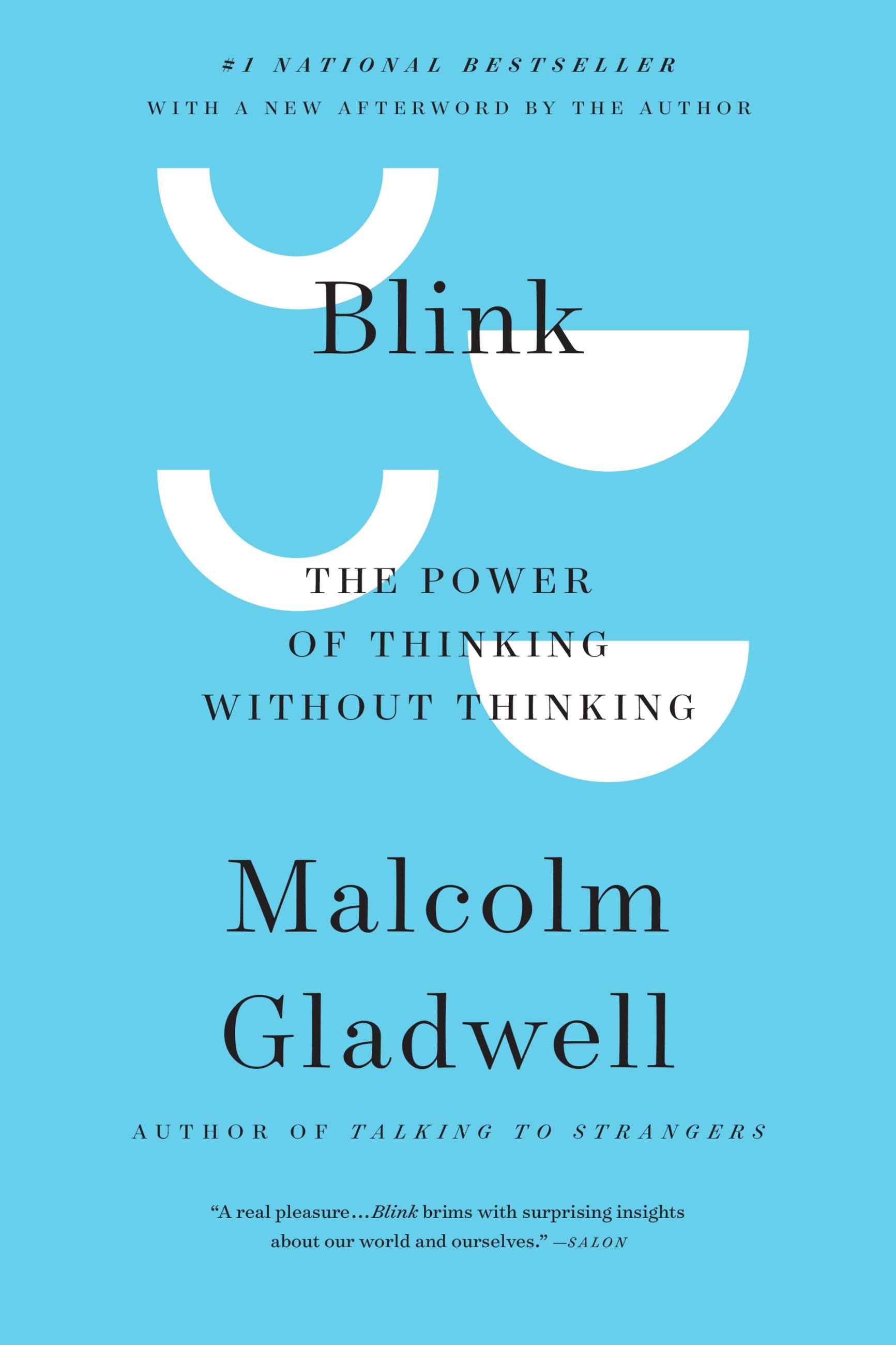
It is spooky season. Usually, things are much more red and brown and yellow, but it’s still very green. I did put on my spooky shirt just to feel the vibe. And I know there are some of you who are going, “Yes! It’s October,” and others of you who are not ready and unwilling. That’s okay because today I am actually reviewing a book that is not spooky. It’s not even fiction. I am reviewing the book Blink by Malcolm Gladwell, which first came to my attention because of the idea that you have to make snap judgments without really thinking about them. How and why does that happen? How can you improve on it? Can you improve on it? This notion is something that we talk about in my field: interpreting. I am an American Sign Language to English (and vice versa) interpreter, but this book would apply to any language interpreter. One company that I work for has trilingual interpreters: American Sign Language, English, and Spanish. We also have interpreters who do just American Sign Language and Spanish. They don’t interpret English at all. For those of you who thought that American Sign Language, or any sign language really, is just take the word that you heard and you turn it into a sign.
So, today I did want to write a bit about what I learned from Blink by Malcolm Gladwell and give you some impressions on it, but mostly what you can expect to take away from it as a reader. The author does state specifically what the point of the book is. He writes, “Our unconscious is a powerful force, but it’s fallible. It’s not the case that our internal computer always shines through, instantly decoding the truth of a situation. It can be thrown off, distracted, and disabled. Our instinctive reactions often have to compete with all kinds of other interests and emotions and sentiments. So when should we trust our instincts and when should we be wary of them? Answering that question is the second task of Blink.” Gladwell has different objectives that he has set out to meet, and I really appreciate when an author has a point to their book because I have read different non-fiction books where I’m reading along and it just feels like maybe this person is rambling or just giving me any facts that they feel are relevant to what they want to say, but I’m wondering, “Well, what am I getting out of this??”
Gladwell writes about how people often react on automatic pilot, he calls it, and that we’re susceptible to outside influences probably more than we realize. For example, he discusses a study that was done that I’d heard about before. The experiment shows words and pictures. So maybe you have words that are binary like good and bad pictures of people, sometimes white, sometimes black. When you have time to think, “Okay, here’s a photo of a black individual and here’s the word ‘bad’. Do I associate them?” If you have a second or two to think about that, you’re respond, “No, that’s ridiculous.” But they found in the study that the faster the images and words pop up, your brain will unconsciously start associating images of black people with negative things. One person who would do this test every single morning with the hopes of improving on it, and he never did, despite being very liberal-minded. The issue isn’t so much your personal biases, but it’s the society that you’ve lived in that’s influenced influenced your way of perceiving things. If you watch, the news, if you’re on social media, and if you watch movies, in a lot of cases, non-white characters or non-white people are emphasized as being bad troublemakers.
If you are biased, how do you start to trust your blink-of-an-instant reaction? Another big part of this book is that you can actually train yourself intentionally. Similarly, it’s not just about your reactions and biases, but also how do you react in a difficult situation? Looking at nurses, intensive care units, firefighters, police officers, etc.: how do you train those people to react in the blink of an eye in a positive fashion? Gladwell’s section on police was interesting because it described how trainers intentionally put these people under duress. Police officers were shot with either pellet guns or rubber bullets, something very realistic. The first time the police officer would be hit in this training, they would kind of freak out. By the time that they’ve been shot four, five, six times, they start to not have such a big blood pressure spike, or rage, that more animal instinct. Yes, you have to have training, but then that training can become a blink-of-the-eye reaction.
When we think too long about something, that can become a negative. For instance, there were studies done on specific musicians, movies, foods, things that allowed a person time to like sit down, watch the movie, eat the ice cream, whatever, and sit and think, and then they would answer questions. Why did you think this way? Why did you feel that way? It turns out we’re actually really terrible at explaining our instincts because in this case, they’re not instincts. You’ve had time to think about them. Gladwell gives examples of what happens when we think about something we instinctively liked. For instance, there was a musician Gladwell profiled who was very successful whenever he opened for another band, but then whenever the musician’s sent a song to a tester/rater and asked, “How do you feel about it? Why do you feel this way about it?”, the musician scored poorly. And so that’s a missed opportunity because instead of relying on that blink-of-the-eye moment, people are processing information in a way that we’re not trained to do. In contrast, Gladwell interviewed two individuals who are food testers and can like pick out little tiny details about food, like in terms of like mouth feel. Supposed there is a 20-point inspection of how a mouth feel affects the way they felt about the tested food item. These people could do it blink blink blink blink blink fast because they’d been trained to do it.
How do we make our blink reactions useful if sometimes we’re biased? An orchestra, I believe it was the Munich orchestra, decided to audition people who sat behind a screen. And the number one, I believe, trombone player picked was a very petite woman, but the the conductor who had chosen her was upset because the trombone was considered a masculine instrument. The conductor had immediately thought, “That’s my trombonist. That’s the best person.” before she walked out. How can we take our instant reactions and actually make a world of difference? The answer is that we have to intentionally create the situation where we’re not reacting with all these like noisy thoughts in the back of our brains. Historically, orchestras have been populated by men. I believe it was something like only 2% of people who played in an orchestra were women. And now it’s something like 50/50 because musicians have unionized and demanded that all auditions be done behind a privacy screen. They can’t wear like any kind of high heel shoe that would make a clacking sound. If they like clear their throat and it sounds too masculine or too feminine, that person goes backstage and they get shuffled in the numbers and they audition again.
And so all of this ties back to my job because as a sign language interpreter. I am listening to one human, figuring out what they mean, in my brain processing that into a different language, and producing it at the same time to another human. I would say that Blink by Malcolm Gladwell is an extremely useful book for interpreters or anybody who works in like high intensity jobs. Lastly, Gladwell is extremely readable. You don’t feel like you’re reading a textbook. It’s something that you want to sit down and read. So, I highly recommend Blink by Malcolm Gladwell.