
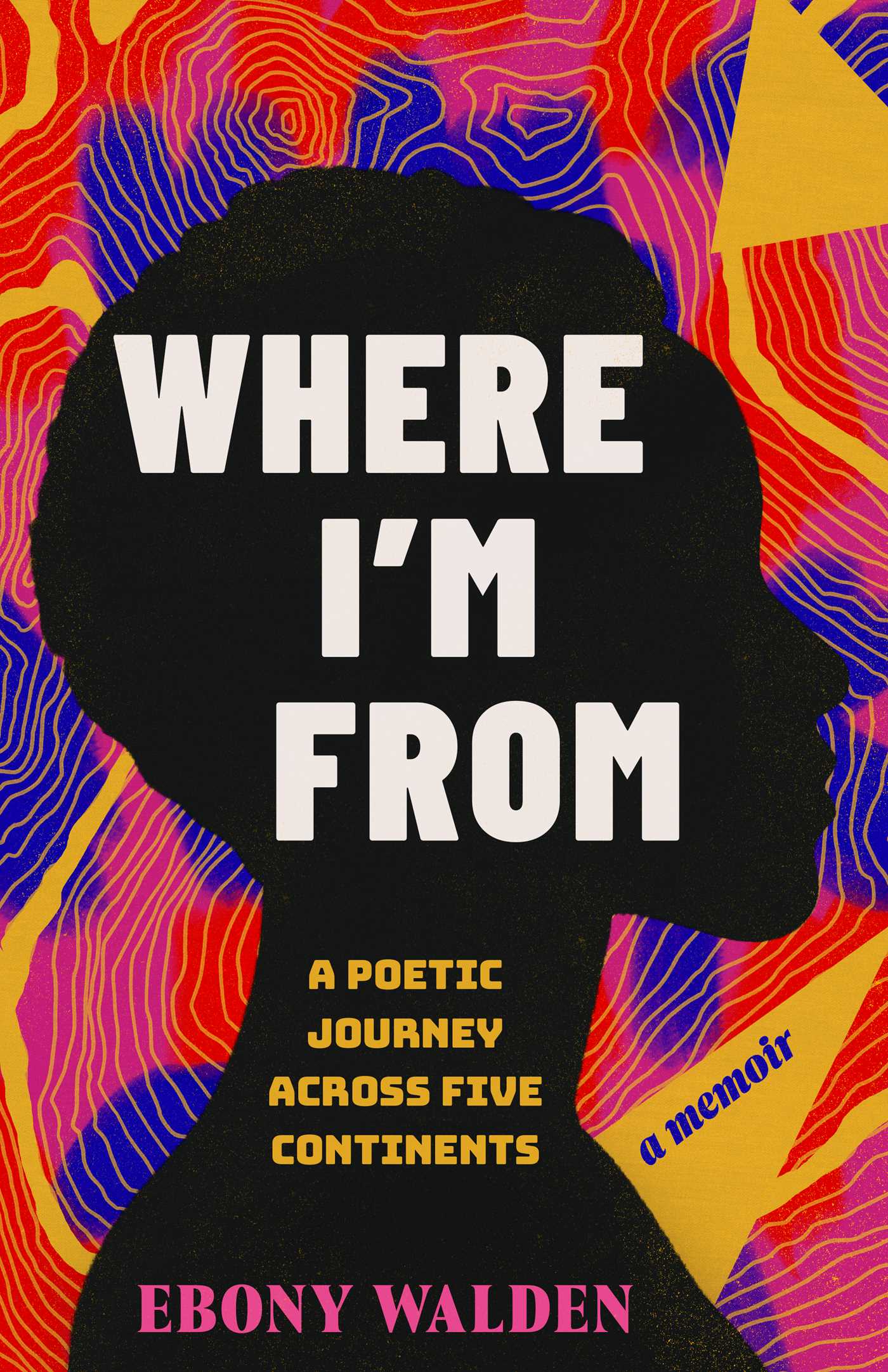
Where I’m From was sent to me as an ARC by She Writes Press. This does not affect my review. You can get your copy at their website starting September 8th, 2026.
It was 2010 when Ebony Walden, on the verge of thirty, decided to travel across five continents alone as a Black American woman. She travelled with two bags and some hiking shoes across the globe, volunteering in most countries, especially with children, a journey that took eight months. The subtitle of Where I’m From is “A Poetic Journey Across Five Continents,” giving readers a clue about the kind of person Walden is. After learning a creative exercise from another writer, one that shapes a poem that declares who a person is and where they are from, Walden takes the prompts from the exercise and uses them with people who are close to her at each stop on the trip.
We’ve gotten plenty of memoirs about a single white woman travelling the globe, most famously the Eat, Pray, Love craze. I also read Revolution: The Year I Fell in Love and Went to Join the War by Deb Olin Unferth, a memoir in which the author professes her intentions to help poor countries but became a burden after she fell ill from health issues common in the area and had to be cared for, using valuable resources that could have been directed toward the Central American war effort in the 1980s. But, just because you’ve read one travel memoir doesn’t mean you’ve read them.
Ebony Walden starts with a prologue of sorts, noting that “…volunteering while traveling, teaching English, and working in children’s homes was impactful, but I now understand how the revolving door of untrained volunteers can be harmful to children and communities. The ‘do-gooder’ mentality, even when well-intentioned, can sometimes be paternalistic and disruptive.” Immediately, her ethos was established, and I was ready for a good book. I trusted her because she didn’t try to nag the point that she has a right to travel and enter communities all while pretending to have no negative effect.
Where I’m From develops a pattern of Walden arriving in a community, getting settled, and asking someone she’s connected with to do the “where I’m from” poem exercise with her. Given that there are fifteen countries she visited, I was worried that the narrative was going to be repetitive, but I really liked how Walden noticed something in a foreign country that launches her narrative back to her past. For example, when one guy offers her a space brownie, she recalls to readers the revelation that her mother had been using drugs, which Walden couldn’t concern herself with fully at the time because she was focused on getting through high school and college.
Each country reads differently, too. I’m happily surprised I remember so many of the people and places. Occasionally, one location is memorable for not being what Walden expected. In an impoverished city, Walden learns, “Kenya invited me to see it, not save it; to be a witness to the good already happening, to learn, and to become more human.” I liked this reminder about the beauty in places that look destitute. We assume things about “those poor people” that need a monthly donation so they don’t starve to death, and the current US president labels them “shit-hole countries,” so the reminder of common humanity was lovely. In fact, when Walden is asked where her people in the U.S. came from originally, she’s not sure and thus is “adopted”:
“Our connection to Africa was severed by enslavement. Black Americans were cut off from our languages, our ethnic roots. Still, we know from history that our prior were from West Africa.”
She looked at me tenderly and said, “You are a daughter of Kenya now; welcome home.” She put her arm next to mine and smiled. “See, we look alike.”
I know a bit about feeling adopted thanks to my fathers-in-law and best friends who are like siblings; it’s warm. It’s the best. I found Walden’s memoir a compelling way to experience different cultures, including Walden’s own, and highly recommend it.


“You are a daughter of Kenya now; welcome home.”
That must have felt wonderful. What a kind and beautiful thing.
LikeLike
Absolutely, especially when we’re talking about descendants of people stolen from their homelands.
LikeLiked by 1 person
That sounds interesting, though the title implies she most interested in Africa, “where I’m from”. I looked on the website but bookshop.org only delivers in the US (though it appears there is a separate bookshop.org for the UK). Nevertheless, I’ll have a shot at ordering an ebook and I’ll let you know what happens.
She Writes Press appears to be for self-publication – which may well be the future – you don’t think quality suffered?
LikeLike
It’s not mainly Africa. She goes to South America, Europe, Africa, India, Australia, other (non-Indiana) countries. I don’t think She Writes Press is self-published? I get advanced read copies from marketing people, probably four or five different people (none of whom are authors). Their about page describes how they are neither traditional publishing nor self publishing. I haven’t noticed any issues with quality in general, though I did not enjoy the writing style of one author (an earlier review of a book called Landscape in Lavender). Here is the page I am referencing on She Writes Press: https://shewritespress.com/about-swp/
LikeLike
That sounds really good!
LikeLiked by 1 person
This image of them placing their arms next to each other is a striking one. I feel like I do it often with my friends to show them how pale I am (and continue to be, even after the summer months) but it feels so intimate too. It’s encouraging to hear that people are realizing more and more how international volunteerism can be harmful – often, it’s listening to the communities, and giving them the space and freedom to ask for what they really need that will help them, more than anything. We talk alot about this in the charitable space, so it’s good to hear the message is spreading further 😉
LikeLike
And while I haven’t read the other book that I mentioned in my post for many years, it still sticks in my mind sharply just how destructive it was for this little white Christian teenager and her boyfriend to go off to Central America in the 1980s and think that they would just do good because they were white and Christian. I actually met that author; her name is Deb Olin Unfirth. She’s not that same person anymore, I highly doubt what she’s Christian. Or, if she is, she’s not that kind of Christian that believes in going on mission trips. The thing that stands out the most is just what a huge burden she was because she was sick the entire time, and the only shoes that she brought with her were these chintzy ass sandals that kept eating up her feet.
LikeLiked by 1 person
My Baba always said, good footwear is so critical, and honestly, truer words never spoken. When your shoes aren’t up to the task, your entire day is ruined.
LikeLike
Or you’re a burden in Venezuela in the middle of a war, either or. 🤣
LikeLike
Sounds like an interesting way to learn more about various cultures and the way that the poem exercise is used with various people sounds intriguing too. It sounds like it balances the memoir and cultural side of things really well. Glad you enjoyed this one so much.
LikeLike
This is so bizarre; your comment just made me realize that Walden’s questions crossed languages, cultures, countries, etc. and were applicable to everyone.
LikeLiked by 1 person