Scroll down for my text review.
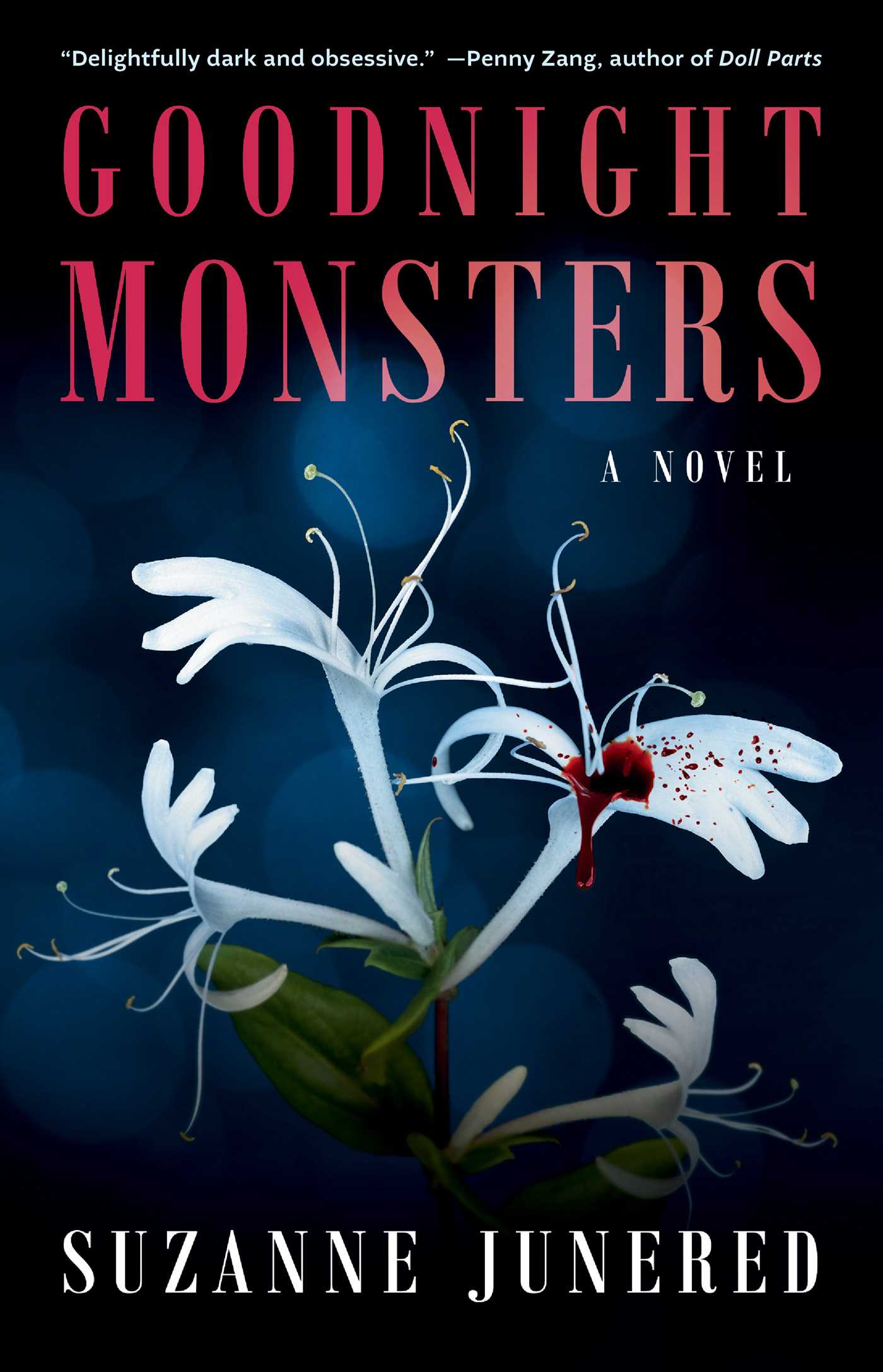
Today, I am reviewing Goodnight Monsters by Suzanne Junered. This book was sent to me as an advanced reader copy by She Writes Press. If you want a copy, you can go check it out at their site and anywhere you get your books. Of course, having a book sent to me as a reviewer copy does not affect my opinion of said book.
For the synopsis, I typically explain to readers what happened based on what I read. For this book, there are a number of places where I could get into accidental spoilers. I don’t want to do that. It’s also kind of all over the place as a book, and I don’t want to stumble my way through, so I’m going to provide it to you:
Southern suburban housewife Lia and her husband Evan have long dreamed of becoming parents—but when a pregnancy test shows positive, Lia questions whether she wants the child and keeps her pregnancy a secret.
As she’s holding new life inside, she intentionally surrounds herself with death by blackmailing her way into a job at a forensic anthropology center endearingly called The Body Farm. At The Farm, monsters emerge from within Lia—the desire to kill—and she begins daydreaming about murder. Because fantasizing never hurt anyone. Or so she thinks.
Then a body donation to The Farm turns out to be someone she’s imagined killing, and reality and fantasy begin to blur. As people around her begin to die, Lia loses trust in her loved ones and herself . . . and ultimately must put her monsters to bed.
I loved that synopsis. That’s why I requested this one as an arc. I think, unfortunately, the book makes a lot of missteps, so we don’t get what we were promised. For example, at the very beginning of the synopsis, it mentions southern suburban housewife. Now, if you are going to set your novel in the American south, which has its own flavor, its own culture, its own food, its own atmosphere, then I want to know that I’m there. As I was reading Goodnight Monsters, I felt like I could have been anywhere. In fact, the narrator mentions that uh Lia’s from the south, but she and Evan had lived in New York and then they moved back to the south. So, what was the point of that unless to make comparisons? The comparisons just aren’t there. I couldn’t tell where I was.
I noticed that a lot of reviews online mention that Lia is a tradwife. Right now trad wives and horror are all the rage. I believe there’s actually two or three books now that are horror books just literally called Trad Wife (I reviewed one). Why would you do that to yourself? Anyway, this is not a tradwife book. Evan is adamant that Lia stays home and takes care of the house because he has a job that requires him to be away pretty much all the time. The reader’s assumption is he’s obviously having an affair if he’s only home on the weekends. But Evan’s a really devoted husband. He’s super stoked. He wants to be a dad. They’re trying to get pregnant. When Lia finds out that she’s pregnant, she realizes she doesn’t know if she wants to be pregnant. She keeps it a secret. That’s all in the synopsis.
I don’t know why she didn’t want a kid or why she wanted to keep it a secret. There was nothing really; we don’t get into the psyche of this character. What suddenly made her afraid of being a mom? I think people like leaned into this idea of Lia being a trad wife, but for the majority of the book, she works for a summer program. It’s like a an internship of sorts, even though Lia’s in her 30s and not a student. She gets accepted at the “body farm” where she goes out into the field where bodies that have been donated to science are decomposing, and they test like rate of decomposition, the temperature, and the time of day. So the entire book, she’s not just at home. Evan wants her at home so that they can focus on starting a family, which she had agreed to. I was very confused about why suddenly she’s doesn’t want to be pregnant. It would have understood if she got the summer job first, loved it, then realized she needed more than family time.
As the book moves on, people start dying. The author had to be aware that readers were going to compare Goodnight Monsters to books like American Psycho by Brett Eastston Ellis or Maeve Fly by CJ Leede. But in this case, there were literally two people who were just suddenly dead. What’s the point of advertising violent fantasies if we don’t even get to read the violent fantasies? I just I was kind of baffled. Readers do not go down the rabbit hole with Lia as these bodies are turning up. Are they actually turning up? Is it real? Is it not? You know, same thing with like American Psycho. Is it happening? Is it not happening? Yet, the author plants little clues along the way as to whether or not these people are actually dead because you’re supposed to think that maybe Lia was fantasizing about killing people because she’s death obsessed. The resolution is pretty obvious. A sort of Fight Club meets American Psycho.
When Lia was younger, she found her father, who had died by suicide. He comes up throughout the book, and we’re meant to think she is obsessed with death because she saw her father die. But we also don’t really get a lot of introspection about the father, even in the conclusion. I don’t recall Lia’s reaction to finding her father’s body. Readers need an in-depth psychological journey into madness with this character and instead I felt like I was reading Dangerous Liaisons. There was so much about Lia having sex with one of her fellow interns while her husband’s gone all the time, but you’re not even rooting for her because he’s not a bad husband. As I was reading like the last 100 pages, I just really wanted it to be over with. The ending was crazy unrealistic, especially um now that we have the Lindsay Clancy case in the news talking about postpartum psychosis. In Goodnight Monsters, Lia is said to have had antepartum psychosis. I was irritated with how the ending wrapped up neatly.
Unfortunately, I would give this one a pass. I hope you read something spooky for October because now we’re into November. But don’t forget that doesn’t mean you have to stop reading the scary stuff. To be spooky is a year-round job.