
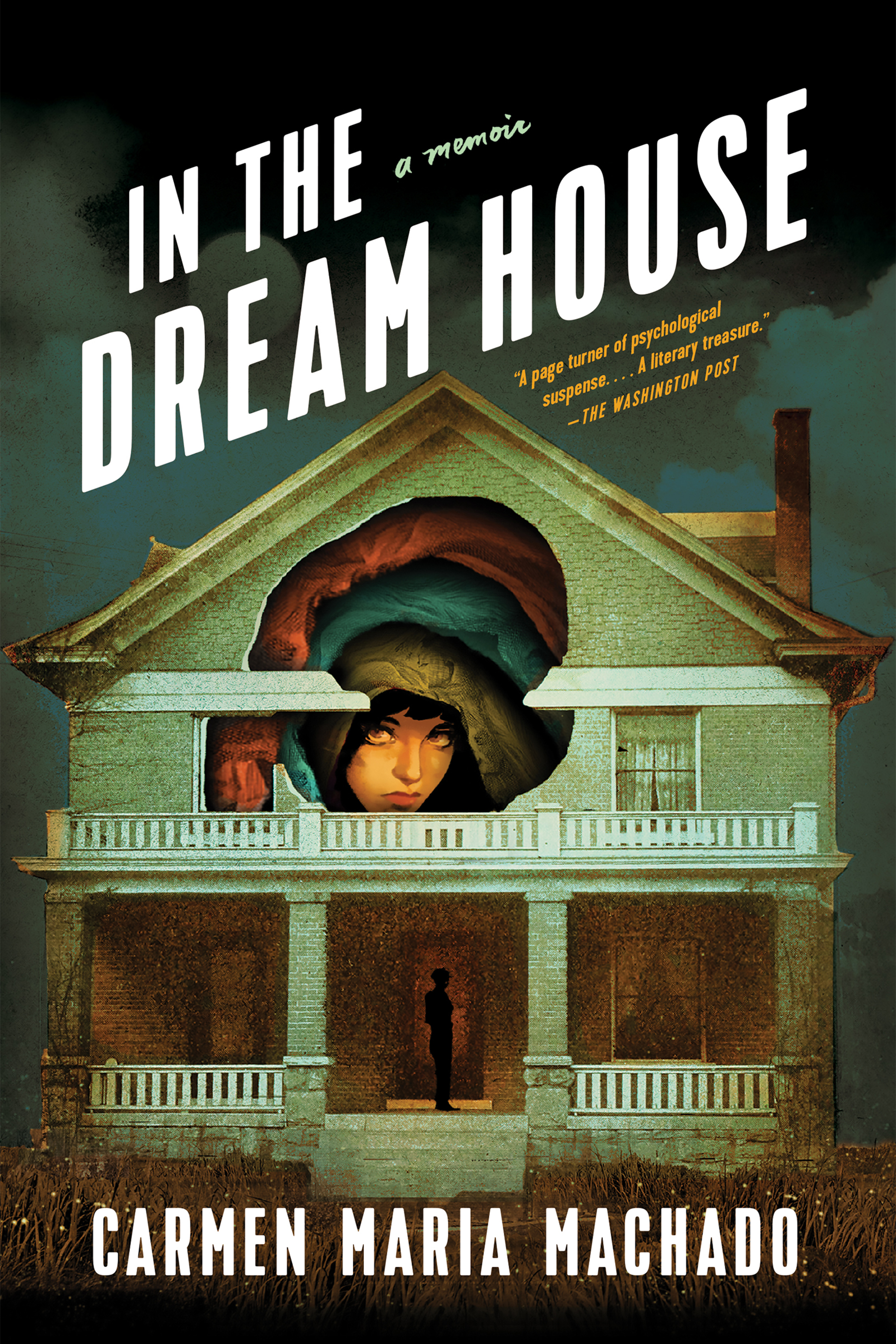
The memoir In the Dream House by Carmen Maria Machado is a poetic, academic narrative of the years Machado was in an abusive relationship. Growing up extremely religious and in a family that despised LGBTQ+ people (I used “despised” intentionally rather than “homophobic”), Machado had little experience with serious dating relationships. It was during her time at the infamous Iowa Writers’ Workshop that she dated a woman who gaslit, screamed at, and endangered Machado repeatedly. The girlfriend did not get accepted to Iowa, but she was accepted at a college near Bloomington, Indiana. Thus, though they were in a long-distance relationship, Machado put thousands of miles on her car visiting her girlfriend.
The book is a fast read largely because many pages have but one paragraph. Most chapters are titled “Dream House as [theme of chapter].” In those chapters, readers know Machado will separate herself from the narrative by using second-person point of view to describe her relationship with the abusive girlfriend. I was reminded of old choose-your-own adventure books, and surprisingly, one section is a choose-your-own adventure, the point being that you cannot escape domestic violence as you circle through the same pages repeatedly.
Other chapters pause and reflect on the lack of literature about domestic violence in the lesbian community. Society, Machado notes, must make it make sense by imagining one partner as butch, and therefore the “man,” to sort of straighten out (yes, phrasing intended) the relationship between abuser and abused. Machado also includes fairy tale references, sometimes telling a whole story to demonstrate her affinity with the victimized character and her girlfriend with the villain.
My main driver was learning how Machado escaped the relationship; we know she’s now married, so an exit did happen. But as I neared the end, the relationship (on the page) fizzled while the academic side (facts, creative narratives, slice-of-life events) pulls ahead. There was no final brawl nor screaming match, no restraining order nor parting words. Although my focus isn’t on the rubber-necking tendency to want to see the drama happen, the girlfriend was finally accepted into Iowa and moved to Machado’s town, meaning they were in the same place and circles. Awkward and scary, right? What happened?!? We get chapters about Machado writing this book. We get a chapter of a squid and an evil queen. We are told she went into a sensory depravation chamber. We know she went to Cuba with her brother. We’re told male writers, like David Foster Wallace and William Burroughs (and then men in general), have a long history of abusing women. It hit me that I felt like I was reading a Ruth Ware book. You know that part when we’re about to get back to The Moment It Happen that the present-tense timeline has teased for 300 pages, and then the author pulls on the reins and dilly-dallies around in the present for another 50 pages, not telling us what actually happened?
Finally, Machado writes a chapter called “Dream House as Ending” and asks, “Where to stop this story? . . . Some narratively satisfying confrontation between the woman from the Dream House and me?” Yes, I thought, exactly that. I thought, Is she literally responding to workshop feedback about the story not concluding? But In a Dream House attempts to make you recognize that time continues, and the story never ends until all the people in it are dead. I was still unsatisfied despite the philosophical question, especially because Machado writes that she wants her memoir to serve as a guide for lesbians in domestic abuse situations because not much literature on it exists (and the fills the ending with lists of books and articles about lesbians in domestic violence situations).
In a Dream House is probably best read with a book club for exciting discussions about the author’s writing style. Also, the chapters are full of sexual activity and way the girlfriend abused Machado. I would want to know what folks thought about how the relationship was portrayed; Machado and her girlfriend are either having sex or in a domestic violence situation, meaning either those are the only two ways they were together, or much is left out that could give a clearer picture of how a person feels compelled to continue in an abusive relationship. Machado’s experience is unique because her abuser lives several states away in her own dwelling, yet Machado continues to make the drive back. Despite my support of victims telling their stories how they want, I felt Machado spun a web of fairy tale ambiance that actually separated me from the events. When she conceived of herself as a ghost in the Dream House, instead of feeling the Hitchcockian mood, I thought, “Yeah, but you have your own apartment with two hippy roommates.”
 Grab the Lapels
That sound s like an interesting book, in the almost interactive way it’s written. Do you think she was responding to feedback as she went along? I’m not sure how comfortable I’d be reading about a closely described lesbian relationship. Though I am currently reading Anais Nin’s Henry and June. But I find that though Nin talks constantly about relationships, and implies sex, she doesn’t describe sex.
LikeLike