
Although many of my readers are fans of Agatha Christie, this was only my second time reading her work. First, I read Murder on the Orient Express with a book club in preparation for the Kenneth Branagh film release. This time, I listened to Hercule Poirot’s Christmas during the drive to visit family for, what else, Christmas. The audiobook is about six hours, so half on the way there, half on the way home.
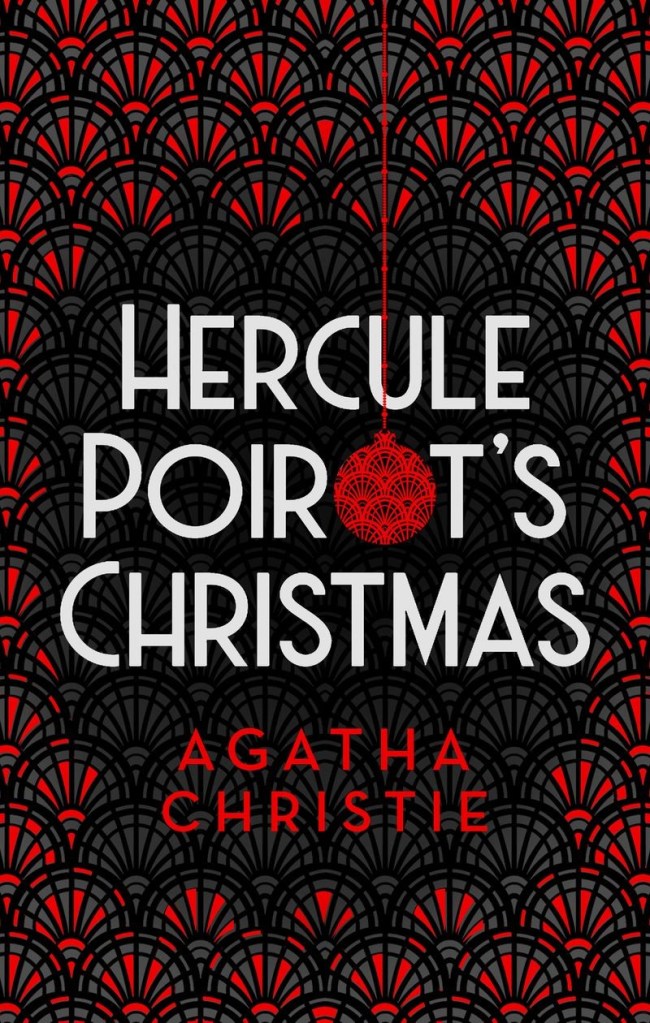
A rich old man who never leaves his bed has summoned his entire family, many of whom he has not seen in decades, to join him on Christmas. Surprisingly, they show up: four sons, three daughters-in-law, and a granddaughter. The granddaughter is the only grandchild of the family, and her mother — the old man’s only daughter — had run off to Spain and married a Spanish man, but died within the current year. Thus, the other guests see the granddaughter as an outsider. She’s half-Spanish, probably wants the old man’s money, had never come around before, etc. In addition, a young man arrives from South Africa claiming to be the son of the old man’s deceased business partner. He’s welcomed in by the old man but viewed with suspicion by the siblings.
We soon learn that the old man has uncut diamonds he loves to fondle, and he shows them to his granddaughter. Later, he invites all his family into his room, makes a call to his lawyer that he wants to change his will shortly after Christmas, and then proceeds to tell his family how weak they all are. Before the night is over, the old man has had his throat slashed and the diamonds are missing. However, the door was locked from the inside and there are no windows or secret doors out which a murderer could escape. Who dunnit? Someone call Hercule Poirot!
I enjoyed the methodical way in which each person was interviewed. They’re largely asked the same questions, which gives the book a rhythm that allowed me to remember the responses and keep the eleven main suspects (8 family members, the business partner’s son, and two servants) straight.
Poirot is also respectful of the police on the case. They develop theories and he listens, and even appears to get some ideas from them. In fact, one officer’s ideas sounded entirely plausible to me, but of course the police can’t solve the mystery, or there would be no need for Poirot.
I did not guess the conclusion of the book, so the explanation was surprising, and it made sense. As other bloggers have mentioned, Christie doesn’t write endings without clues throughout the novel, which is one of her many strengths. However, before Poirot explained the truth of what happened, he theorized about everyone present with general claims about personality types. This irked me. You can’t convict someone of murder because they’re “just that sort of person.” But for all his theorizing, Poirot stops and then gives facts about the murder based on evidence. Why do the postulations with feelings then? Is he showing off? My husband suggested that Christie wanted to show that Poirot is different from the police, a savant. But I thought he was supposed to be special because he notices what police do not and can think beyond the easiest explanation.
Overall, an enjoyable story with a bit of Christmas thrown in, though not terribly festive. I will also add the voice narrator has an annoying habit of lowering and raising his voice dramatically, so I was frequently turning the volume up and down.
 Grab the Lapels
Melanie, this made me laugh: ‘This irked me. You can’t convict someone of murder because they’re “just that sort of person.”’ My reaction was, don’t worry about it, it’s just a story – and it’s Agatha Christie, but I love that you care. I think this sort of thing would just blow over me.
I’m sorry I’ve been tardy but I think I’ve caught up now. Happy New Year to you both. I hope it’s a good one. ×
LikeLike
I’m also playing catch up with blogs. At least I’m into 2024 now!
I think I have a fair obsession with fairness, especially when it comes to judging someone based on appearances or neurodiversity that makes them seem “abnormal.” There was another comment in which a anonymous person said that Freud may have been the psychologist du jour when Christmas came out, suggesting Poirot was on top of his game in brain science.
LikeLike
Ah, I see where you are coming from – I understand that. I would react that way in many circumstances but I can’t take Agatha Christie that seriously but I take your point that we should care about stereotyping anywhere.
LikeLiked by 1 person
Sounds like a fun story to listen to on a long car ride. We just watched A Haunting in Venice and really enjoyed it. I’ve only ever actually read one Christie novel, The Mirror Cracked, and it was when I was a teen. I hated it. But I do enjoy Branagh’s Poirot. I wonder if the psychological type stuff that bothered you is related to psychiatry/Freud being a big deal at that time, and since it was scientific, Poirot is showing how scientific and logical he is? He does that a bit in Haunting too, but it is in the service of showing motive, which is then backed up with other stuff.
LikeLike
You know, I honestly hadn’t even considered which type of psychology would have been popular in the 1930s when this novel was published, but you are right; Poirot’s psychological profiling may have been the scientific tops at the time.
I want to see A Haunting in Venice. It actually looked scary in the trailer, more like a horror movie than a detective film!
LikeLike
Ha – yes, the long explanations and expositions are because Poirot is arrogant and likes being the centre of attention! That’s one of the most consistent parts of his character. Sometimes, he also uses those scenes to extract a final clue or to see how a particular person reacts. The extra-curricular explanation, as it were, is that for readers who read a lot of crime fiction and try to solve the puzzle, it’s part of the pleasure of reading to see how the author has tricked them, by making them misinterpret a particular clue or hint. Christie doesn’t often do the big denouement scenes in her books that are so common in the adaptations, but when she does (like here), that’s why – partly it’s because of Poirot’s character (Miss Marple doesn’t do them, and they are rarely in her other novels); partly so readers can place all the red herrings in the proper place.
LikeLike
I was hoping you would comment on this review and share your knowledge about Christie! That all makes sense. So, just to be clear, Poirot doesn’t always have a big scene during which he explains how the murder happened and who it is?? How do we find out how all the piece go together?
Also, I’m wondering if Miss Marple is a character I might enjoy even more than Poirot. I don’t dislike him, but he has a very male sensibility about him, and I wonder if Miss Marple is a scrappy, logical woman.
LikeLiked by 1 person
It depends on the book! Sometimes he directly confronts the murderer. Sometimes he lays a trap for the murderer. Sometimes he tricks the murderer into revealing themselves. Sometimes he’s hired to investigate a cold case, and the book ends with him explaining the solution to the person who hired him.
Miss Marple is a very different character from Poirot, and I think I probably do prefer her books – though I don’t think she’s scrappy. (If I understand that term right, at least – I’m not that familiar with it). My favourite is probably A Murder Is Announced, though some of the later Miss Marples contain a lot of Christie’s own perspectives on ageing and changing, which I find really interesting – but the puzzles are not as good as the earlier ones.
LikeLike
My mom is really interested in how woman are treated as they age, so I think Miss Marple would be a good fit for her to read.
LikeLike
It’s been a hot minute since I’ve read any Agatha Christie and you’re reminding me I should change that- I love trying to guess what’s happened, as Christie does such a great job of working in the clues but still surprising the reader. The last one I read might also have been Murder on the Orient Express lol, which I did enjoy. This story sounds a lot like the Knives Out movie, which I thought was loosely based on a mishmash of Christie’s work but actually sounds pretty similar in concept to Poirot’s Christmas? I liked that movie so I may have to check this book out too. Great review! 🙂
LikeLike
I thought the ending of Knives Out was interesting, but I could NOT stand that Foghorn Leghorn accent. They knew it was happening, too, as another character brings it up. Why?! Why couldn’t Daniel Craig just be British? I also want to see the newest Branagh movie, as it looks like a horror + Poirot.
LikeLiked by 1 person
Yeah, I thought it was just over-the-top campy, which I don’t mind so much but I do understand the frustration when it just delves into the territory of just being silly for silliness’s sake. Is the new Branagh the Haunting in Venice? I’m looking forward to that one as well!
LikeLike
Yes, Branagh is in The Haunting of Venice! It looks truly spooky.
LikeLike
I read Christie when I was young because her books were everywhere, but I haven’t since. I find her formats too stylized (and her settings too upper middle class English). I get used to all sorts of odd readers. What I hate most is when one of the characters is shouting and I get shouted at.
LikeLike
Do you also find yourself turning the volume dial up and down when that happens?
LikeLike
You’re both right, I think. Poirot solves the mystery because he notices details that others miss but he also understands human nature in a way others do not. I think he’d be absolutely insufferable in real life! In a Christie I recently listened to, Hastings can’t fathom the idea that a woman, especially a pretty one, or a gentleman could commit a murder.
LikeLike
Lou from Lou Lou Reads also just mentioned that Poirot being the center of attention is a big part of his character across all books, so now I’m wondering if he would be insufferable in real life. Maybe a true know-it-all type of person. When he listens to the police describe their theories, it has a vibe that he’s mentally patting them on the heads for their good efforts, but still thinks they’re not too sharp.
LikeLiked by 1 person
That’s a very good point. He definitely likes to control the scene.
LikeLiked by 1 person
Wow, this sounds so much like the movie Knives Out. I wonder if it was based off this book? (Will need to google that later once properly caffeinated. lol) Great review! ❤
LikeLike
Oh that Looney Toons chicken accent from Knives Out…. Just…. why.
LikeLike
Oh that thing with the inconsistent volume on the audiobook would drive me nuts! I’m glad you enjoyed it, I remember it being a very entertaining read. I almost never see the ending of one of her books coming. I love Poirot, he is endearing to me.
LikeLike
I find the volume problem to be the worst on Hoopla books. Does your library use Hoopla? Do you know why they might have the weaker-sounding recording compared to Libby?
LikeLiked by 1 person
Our library does have Hoopla but not for audiobooks. We only do them through Libby.
LikeLike
That’s an interesting distinction. I know my spouse loves Hoopla for the comic books and graphic novels.
LikeLiked by 1 person
I love that you listened to this in the car on your way to a holiday get-together, makes it feel cozy in a murderously Christmasy style. There’s something about murder during the holidays that just makes it that much better!
I also love the imagery of fondling diamonds while telling people why you hate them LOL
LikeLike
It’s so James Bond villain, isn’t it? LOL.
LikeLiked by 1 person
Yes!
LikeLiked by 1 person
[…] to my review of Hercule Poirot’s Christmas by Agatha […]
LikeLike
I’ve never read Agatha Christie. She is on my list of classic novelists to try out. I just have to be in the right mood, which is hard to predict when you’re a mood reader. :3 I think that when I see those kinds of novels for cheap, I’m just going to start picking them up to have on hand. Of course, I could use the library as well. But you know, sometimes a girl just wants a mass amount of books to chose from in her house. 😛
LikeLike
I find the Christie books I have listened to to work best with my brain. I think I would get distracted reading so much pondering in text.
LikeLiked by 1 person
That’s a good point.
LikeLiked by 1 person