
Full disclosure: I attended and graduated from an MFA program in 2010. When I say, “I can tell this book came from someone who attended an MFA program,” I don’t mean that in some vague Miss Cleo way. What I mean is that MFA programs demand students write a lot, but what students produce cannot look like what we’ve read before. Otherwise, the student is charged with “ripping off” another story by his/her peers during workshop sessions. I’ll pause here to note that I’ve never been in a creative writing class in which the professor establishes boundaries for what “feedback” even means, or for what an appropriate comment is, with the exception of the creative writing class I taught.
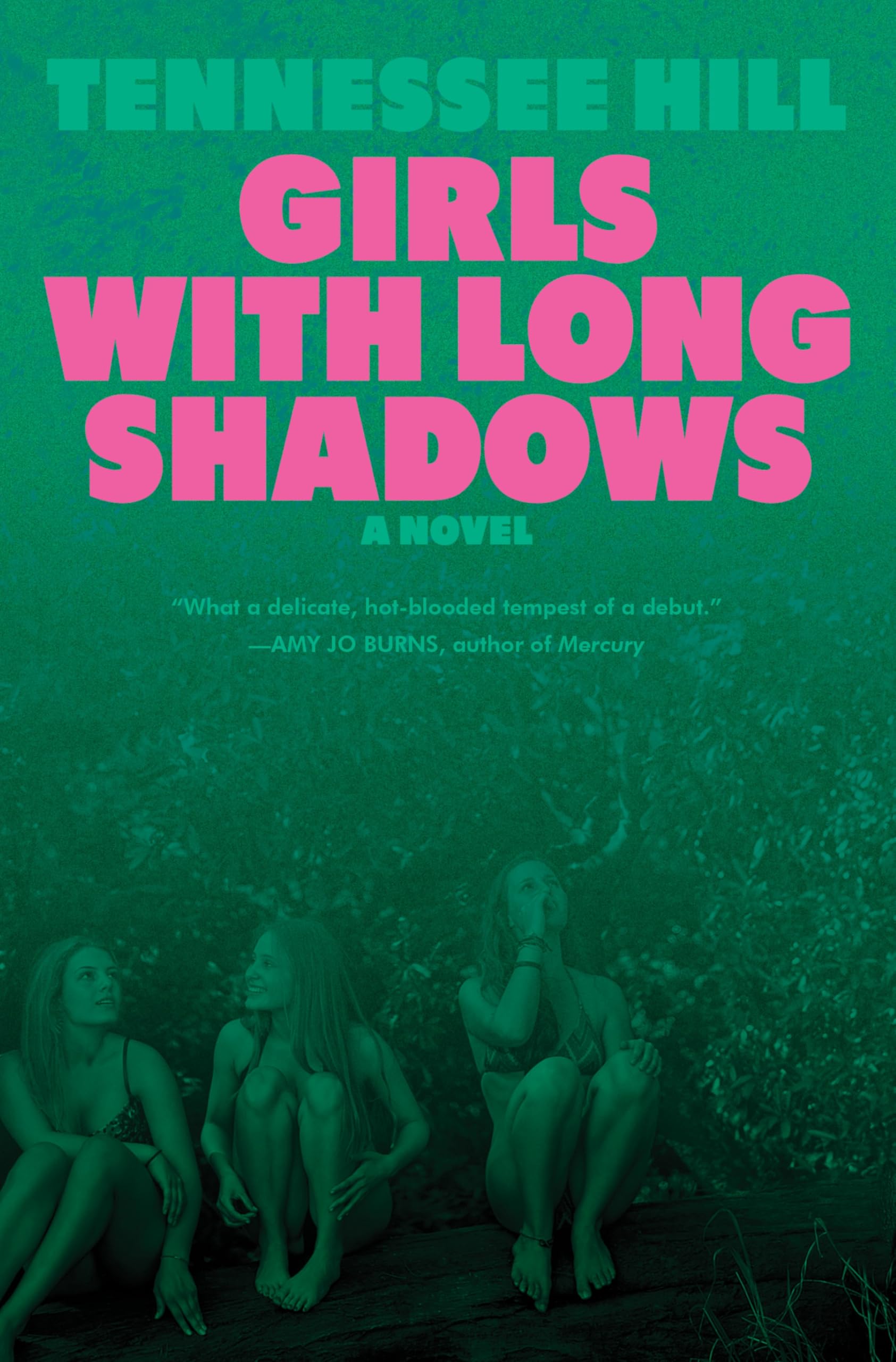
Therefore, I say this confidently: I could tell you Tennessee Hill graduated from an MFA program without reading her bio. Girls with Long Shadows claims to be a novel about identical triplets who don’t know their father and whose mother died in childbirth. They’re being raised by Gram, and despite their mother dying, they also have a younger brother. I made it to 69 pages out of 288, and still the brother’s existence was not explained. Gram owns a golf course in a Texas bayou, one that is designed to make terrible golfers feel successful. See what I mean by everything has to be “different”? The triplets are 19, graduated from school, and work on the golf course. In 69 pages, all they’ve done is paint a shed.
Here’s where we get all MFA-y. The triplets’ mom died in childbirth without naming them, so they are called Baby A, Baby B, and Baby C. Baby B narrates the novel, but her voice is like that of a sage, which doesn’t fit with her age or personality. And because they have no names, you get passages that read like this: “Baby A flopped her hand over, limp at the wriest as Baby C dragged her fingernail along our sister’s damp palm. The tickle from Baby C’s nail against Baby A’s skin sent a shiver through my own hand.” It grows tiresome quickly.
Girls with Long Shadows is supposed to be about identical triplets and Baby B’s concern that they aren’t individuals. No one can tell them apart, especially boys. How does a teen boy fall for one sister and keep her straight from the others? Baby A is supposed to be the wild one because she’s 19 and likes to make out with her boyfriend. However, her attitude toward young men is cold:
Baby A touched my face lovingly, in a way she hardly did, the way a mother might when her baby cries. “It doesn’t matter, in the end, which of us it is.”
This compounded my confusion. “How can it not matter?”
“Sometimes” — her gaze flickered between me and the window — “it’s better.”
When authors anthropomorphize animals, we relate to them like little people. Whatever Hill has done is the opposite; readers get people who are unrecognizable as humans, and though I didn’t finish the novel, there is no indication I’m reading about aliens or cyborgs.
The novel’s synopsis lures readers in with promises of one triplet being mistaken for another, tragedy, and a fallout, but after reading reviews online, I see most folks find the ending unsatisfying and the novel itself trudging. Therefore, I didn’t finish it.
summer reading update
currently reading
- Why We Can’t Wait by Martin Luther King, Jr.
finished
- So Thirsty by Rachel Harrison
- Goodbye Earl by Leesa Cross-Smith
- All this Can Be True by Jen Michalski
- Best Laid Plans by Allison Brennan (Lucy Kincaid #9)
DNF
- Big Man with a Shovel by Joe Amato
- Girls with Long Shadows by Tennessee Hill
to read
- Kittentits by Holly Wilson
- Graveyard Shift by M.L. Rio
- Going Bovine by Libba Bray
- The Last God by Jean Davis
- Homing by Sherrie Flick
- The Sorrows of Satan by Marie Corelli
- Bitter Thirst by S.M. Reine (Preternatural Affairs #8)
- Bastard Out of Carolina by Dorothy Allison
- Everything is Tuberculosis by John Green
- Perfume: The Story of a Murderer by Patrick Suskind
- Boring, Boring, Boring, Boring, Boring, Boring, Boring by Zach Plague
- Building a Life Out of Words by Shawn Smucker
- The Outsider by Richard Wright
- The New York Trilogy by Paul Auster
 Grab the Lapels
I think of MFAs as a production line churning out wannabee writers. Which is not to say that I might not have benefitted from doing one. I love how you as an insider are so critical of the process. The triplet’s father presumably had a son by someone else. Everyone these days has half-rellos – I can’t tell you how complicated my granddaughter’s halfs are.
The big question is not why was it written, but how did it find a publisher.
LikeLike
MFAs are sold as a way to get a job in academia, but really, they buy you time. You should never pay for an MFA, and a well-funded one will give you a stipend, too, meaning you get two years to be paid to write in a community of writers. That’s really all we should see them as, not as a means to employment.
LikeLike
I must say, I don’t like the automatic assumption that books coming out of writing courses are bad, because I don’t think that’s the case, but I enjoyed your analysis of why it is sometimes, or even often, the case.
I had a look at your list of Book for Summer and, not suprisingly, I recognise almost none of them BUT I do recognise Perfume. I really hope you read and review it. Meanwhile, this one – particularly given the excerpt you shared – does sound a bit try-hard.
LikeLike
I will review Perfume; it’s a book club pick, so I’ll read it when that month rolls along. I’m surprised you know it, as my impression is that it’s a horror novel?
As I wrote to Bill, I think if people view the MFA for what it really is — two years during which you can write, and, if the program is well-funded, be paid to write — then you can turn down the pressure on standing out, getting a book deal, becoming a creative writing professor, etc.
LikeLike
It is but I guess but it’s also literary fiction and so the focus is very little on the horror but on the character, his psychology and why he is the way he is. But it’s a long time since I read it. And I just remember how chilling he is. I’ll be interested to be reminded about it when you write it up. Grenouille is my favourite example of a protagonist you cannot like in a book that I think you can!
What you say re MFA makes sense. I’m rarely an absolutist about things. There are usually pluses and minuses to most things.
LikeLiked by 1 person
Have you read Matthew Saleesses’s Craft in the Real World? He does an excellent job at critiquing MFA programs and the sort of writing they tend to force students into creating.
This book sounds terrible. So the triplets are 19 and never got proper names? Why? And that quote you have about it not mattering which of the three it is is just plain creepy. Not to mention where the heck the younger brother came from if mom died in childbirth. Half-brother? But then they don;t even know who their father is. Oy
LikeLike
I have Saleesses’s book on my TBR because I’m truly interested in his opinion. I think the MFA program could be amazing if it trained people on how to give feedback and help a writer grow, and if they stopped suggesting an MFA will help you become a creative writing profession. It’s a gift, the MFA, if you approach it correctly: two years during which you can write (never pay for an MFA, and get a stipend if possible).
LikeLiked by 1 person
What I think of as “creative writing class style” is very convoluted metaphors and similes, from people trying to avoid clichés and ending up with something that just doesn’t make sense – that doesn’t really serve the character development, scene setting etc by hinting at truths, and just jerks the reader out of the story. Reading what you say about the class structure demanding that stuff can’t look like anything else helps me to understand why! Incidentally, I am currently working my way through Brandon Sanderson’s lectures from his writing class, which he has made available on youtube, and he spends a lot of time talking about what is and is not helpful feedback. He also gives specific advice about what kinds of feedback to listen to, and what to ignore. I’m surprised that isn’t more common in classes.
LikeLike
I’ll look up Sanderson’s lecture because I’m glad to hear there are folks who know that feedback isn’t a ubiquitous positive, nor is it helpful in a lot of cases. My MFA program strived to have students from different backgrounds — to make the class truly diverse — meaning how people felt about a story and what they would have done often had zero bearing on what the writer was trying to do.
LikeLiked by 1 person
He also spends time pointing out that some books (e.g. Lord of the Rings) break all the rules and have huge numbers of detractors, but are also books that simultaneously have a very devoted fanbase who would name it as a top favourite life-changing novel. A lot of his advice about feedback can be boiled down to “is this person saying ‘what you’re doing would never work for me’, or ‘what you’re doing isn’t working right now’?” I’m really enjoying the lectures even though I have no aspirations to be a fantasy writer (and don’t agree with everything he says). He does come across a bit pompous at times, but then he’s unbelievably successful so I can’t say I blame him!
LikeLike
Have you ever see that video of Kurt Vonnegut, Jr. doing a lecture about how to tell a good story? It’s not super long, and it’s rather entertaining. Just get on YouTube and type in “Kurt Vonnegut on the Shapes of Stories.”
LikeLike
Too bad this one was a dud, but good you didn’t waste too much time on it. The lack of names would drive me crazy so I don’t blame you. Ps – I love hearing your musings on the creative writing classes you’ve taken / taught, and your MFA experience in general; it’s fascinating!
LikeLike
I’m so glad my insight is interesting. If you look at my responses to others, you’ll see there is one big positive aspect to the MFA: time.
LikeLiked by 1 person
Oh too bad, I have this on audio and thought it could be interesting. I wasn’t planning to get to it any time soon anyway.
I didn’t do an MFA but a BFA and so spent a lot of time in writing workshops and I know what you mean. I can think of one or two professors who were better at guiding the feedback sessions but not al of them!
LikeLike
The plot synopsis sounds amazing, to be sure, so for the book not to meet the expectation set by the publisher is a bummer.
I forget you have a BFA! What did you write? Poetry? Fiction? Plays?
LikeLiked by 1 person
My focus was on Fiction and Poetry but I also did some journalism, Creative Non-Fiction, and even a semester of screenwriting!
LikeLiked by 1 person
I really wish I’d done some kind of journalism class in college, because I love asking questions and getting to the bottom of things.
LikeLiked by 1 person
[…] Girls with Long Shadows by Tennessee Hill […]
LikeLike
[…] Girls with Long Shadows by Tennessee Hill […]
LikeLike
[…] Girls with Long Shadows by Tennessee Hill […]
LikeLike
[…] Girls with Long Shadows by Tennessee Hill […]
LikeLike
[…] Girls with Long Shadows by Tennessee Hill […]
LikeLike