
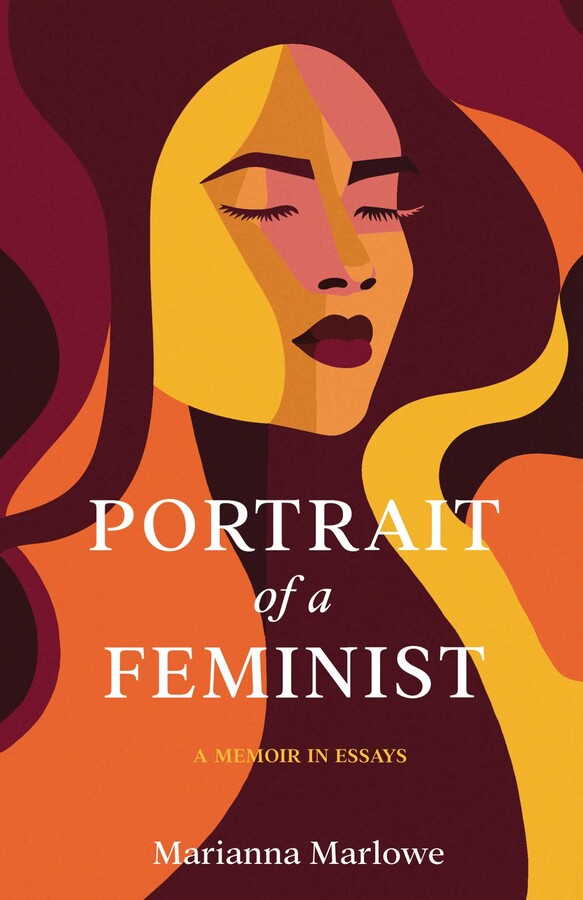
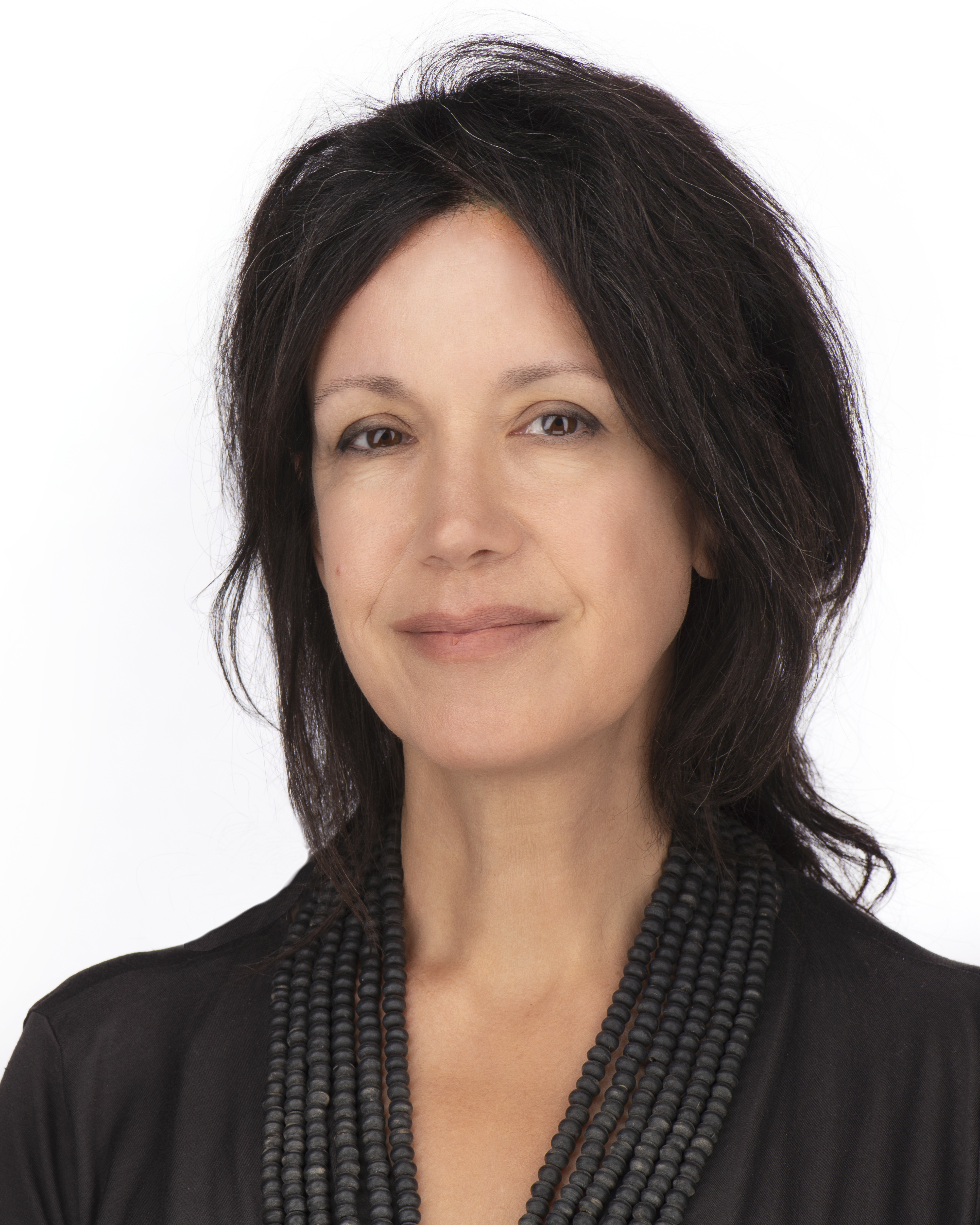
Meet the Writer is a feature for which I interview authors. We talk less about a single book or work and more about where they’ve been and how their lives affect their writing. Today, please welcome Marianna Marlowe. Marlowe is the author of Portrait of a Feminist, which I recently reviewed. Learn more about Marlowe and her work on her website.
Grab the Lapels: What did you want to be when you grew up, and does this choice influence your writing today?
Marianna Marlowe: I really didn’t know what I wanted to be when I grew up. I had only a crude understanding of the options out there in the world: doctor, lawyer, architect, firefighter, engineer, teacher. Even today, the sheer number of jobs and careers available is staggering to me in its unknowability. What I did know: that I loved to read. So I read and read and read throughout my childhood and my adolescence, then ended up majoring as a university student in English by default. I still didn’t know what I wanted to be when I “grew up,” but had taken a few psychology courses and a lot of English ones. My large university, UC Berkeley, demanded that its students declare a major before Junior year on penalty of being denied re-entry. I panicked and saw that the only major for which I had the requirements fulfilled was English. And so that’s what I majored in, quite happily I must say. When I graduated, I knew that I wanted to go to more school, so I interviewed some lawyers, thinking I might go to law school and maybe make some money. The lawyers I talked to all said it wasn’t worth it. So I ended up, again kind of by default, going to graduate school in English. I loved it. I loved getting my undergraduate degree and I loved getting my PhD. I just love reading and thinking about literature so much. I taught for a few years before devoting my time to motherhood. I like to say these days that I’ve made negative money with my degree.
But then my life, in terms of career, pivoted. Six years ago I turned fifty and faced a looming Empty Nest with the first of my two sons graduating from high school and moving to a faraway university in the Midwest. Something in me or in the universe or through sheer coincidence suggested I try writing creatively, specifically memoir. And I did. Writing creativity has proved to be both a game-changer and a lifesaver. It has given me a purpose that is completely my own, as opposed to one attached to my roles as daughter or wife or mother or homemaker or school parent.
You can say that my love of reading, and therefore my university degrees and academic roles as writer and teacher, have indeed influenced my memoir writing. First, because I am such a reader, before and during my first essays into writing I read many memoirs as well as creative nonfiction craft books. I also have all my years of reading fiction informing my creative writing, including my voice, style, vocabulary, references, tropes and metaphors, etc. More specifically, you can say that my history with reading and literature has directly influenced my writing in that I’m currently working on my third memoir, and it is called “Portrait of a Reader.”
GTL: What was the first piece of writing you did that you remember being happy with?
MM: It was one of the earliest pieces I completed, called “On Sons and Daughters.” I wrote it for a workshop on memoir writing hosted by The Writing Salon in San Francisco. I think I was happy with it because it got positive feedback from the workshop, and also because it was the very first piece I submitted to literary magazines. Two different journals accepted the piece almost the next day, which is highly unusual and a situation that, needless to say, I’ve never experienced since!
This very personal essay has many of the characteristics that tend to define my pieces today: a framing moment or scene; beginning in medias res; one or more flashbacks; a combination of showing, telling and reflection; and small moments that point to larger cultural dynamics.
GTL: How do your friends and family respond to your writing?
MM: Because I began writing as a reaction to turning 50 and facing Empty Nest, but had no idea what I was doing, I started writing in secret. I told only two of my friends for the first two years. Later, more confident that I was going to pursue this writing adventure, I began to tell other friends and some members of my family.
My immediate family, my husband and two sons, are supportive. I write under a pseudonym and I never name any of them, even with false names. My mother, who found out I wrote after snooping among my things one afternoon when she got to my house earlier than I did for teatime, loved what she read and demanded that I provide her with the missing pages. She died before she read more than a couple of my pieces though, which will always make me sad. But at the same time, it’s liberating in that I don’t have to be too careful about what subjects I include in my writing. My father never found out that I was writing creatively, but as he came from a family of writers, he may have found it a fitting occupation if he knew.
I’m now open about the fact that I write, although I’ve kept my pseudonym because it keeps my artistic life separate in important ways from my everyday life as mother/wife/daughter/in-law/homemaker. I like having a separate email address, Facebook page, general persona. This separate persona frees my writing at the same time as it feeds the core of my soul.
Most friends are excited by the fact that I write. Some are actively supportive, serving as beta readers, or helping to brainstorm ideas, events, and projects, as well as to problem solve. Others are happy for me but not that invested in the nitty gritty of the writing life. I’ve heard that as a writer you shouldn’t expect friends or family members to be fully invested, as most don’t read your work.
GTL: What is your writing process like? Which do you favor, starting or revising?
MM: Of the two, starting or revising, I most definitely favor revising. But what I most enjoy is being in the “meaty middle” — when most of the first draft is done, but you’re still thinking all day consciously or unconsciously about the piece: what to add, what to tweak, what to pare down. I’ve noticed that when you’re in the meaty middle of the writing process, the brain is constantly working, whether you’re sitting down with the laptop, or going on a walk, or listening to a recital, or waking up from a deep sleep. It’s an exciting time, a productive time, which I find myself seeking over and over.
GTL: How has your writing process evolved?
MM: In the beginning I thought I had to write from start to end, from the first paragraph to the last. Now, with time and after reading Lisa Dale Norton’s idea of “shimmering images,” I often write down an image, a thought, a phrase, a sentence, or a quote and go from there. I might be overwhelmed at the start of a piece with all the ideas and scenes that I want to include, and I’ll find myself writing rough chunks of what I will end up fleshing out later. Jotting down notes on thoughts and observations is a great way to avoid facing the dreaded Blank Page.
GTL: Did you learn anything from writing Portrait of a Feminist?
MM: I learned so much! When I learned that not every piece of advice applies to every kind of writing, I learned what writing advice pertains to my style of writing. I now know how to differentiate between types of writing advice and take only what is directly useful to me. I love reflection and takeaways in what I read and therefore strive to include them in what I write. I learned how to balance scene with musing, showing with telling with reflection. Showing for me is necessary, but not the primary mode of expression. Because I learned that my style doesn’t involve a lot of dialogue, I learned to use dialogue sparingly but strategically. I learned that personal experiences and small moments can be expanded to have much greater meaning than their original, individual impact. I learned that I love to play and experiment with language, that I’m drawn to reading and writing prose that is lyrical and poetic but not overly so. I learned that I loved writing Portrait of a Feminist—it was like birthing and nurturing a beloved child.
 Grab the Lapels
This was great! I love that she kept her writing pretty much secret for two years.
LikeLike
Me too! Most authors who actually write try to keep quiet about it so they don’t get too much random, unsolicited feedback while they are in the process of a first draft. People who talk about their writing all the time typically aren’t actually writing.
LikeLiked by 1 person
Well, thank you, Marianna Marlowe!
I love that she gave you such a detailed, thoughtful response. Interesting she doesn’t write about her family. You know I blog about mine all the time, which they seem to enjoy (or at least tolerate). Though, if my mum reads it she doesn’t let on, thank goodness.
LikeLike
Your comment made me laugh because I know my mom reads all of my posts! I hadn’t realized until I read her interview that she uses a pseudonym and keeps to herself.
LikeLike
I loved this: “I’ve heard that as a writer you shouldn’t expect friends or family members to be fully invested, as most don’t read your work.” I have one or two friends who write seriously – submit works to competitions etc. – and know some writers, and it makes me anxious if they want me to read and comment. I like to keep friendship separate. I fear that I may not think they write well – that’s the worst – or that they write in forms/genres that I’m not interested in. I suspect one of these reasons – or that the friends aren’t readers at all – is behind this thing she’s been told.
I loved that her mother found her writing by snooping around – hmm, or do I!
LikeLike
Over the years I’ve read and given feedback on many, many works in progress because that was my field for a long time. However, I started to resent everyone thinking I should do it free. Nick would get the same thing with computers. Oh, it’s not hard labor, so you should just do it free. Well, *blows raspberry* I don’t read for free anymore.
LikeLike
Yes … Mr Gums got worn out looking after computer issues for so many in our family so he tried very hard not to get caught up in helping all and sundry. If they asked questions he’d help of course but he didn’t offer because it could become neverending.
LikeLike
My mom and Nick had some kind of crazy system by which they help each other with everything. I stay out of it.
LikeLiked by 1 person
I think that’s lovely!
LikeLiked by 1 person