
Grab the Lapels has been around for eleven years. That’s grandma age in blog years, and I’d like to think of myself as a learning grandma blog. Firstly, I started GTL in reaction to my time reviewing books for online magazines/review sites. Every time the editor sent me a book, it was by a man, and the last book I reviewed threw me for a loop. It was so derogatory toward women, that my scathing review wasn’t even published. Hence, GTL was born.
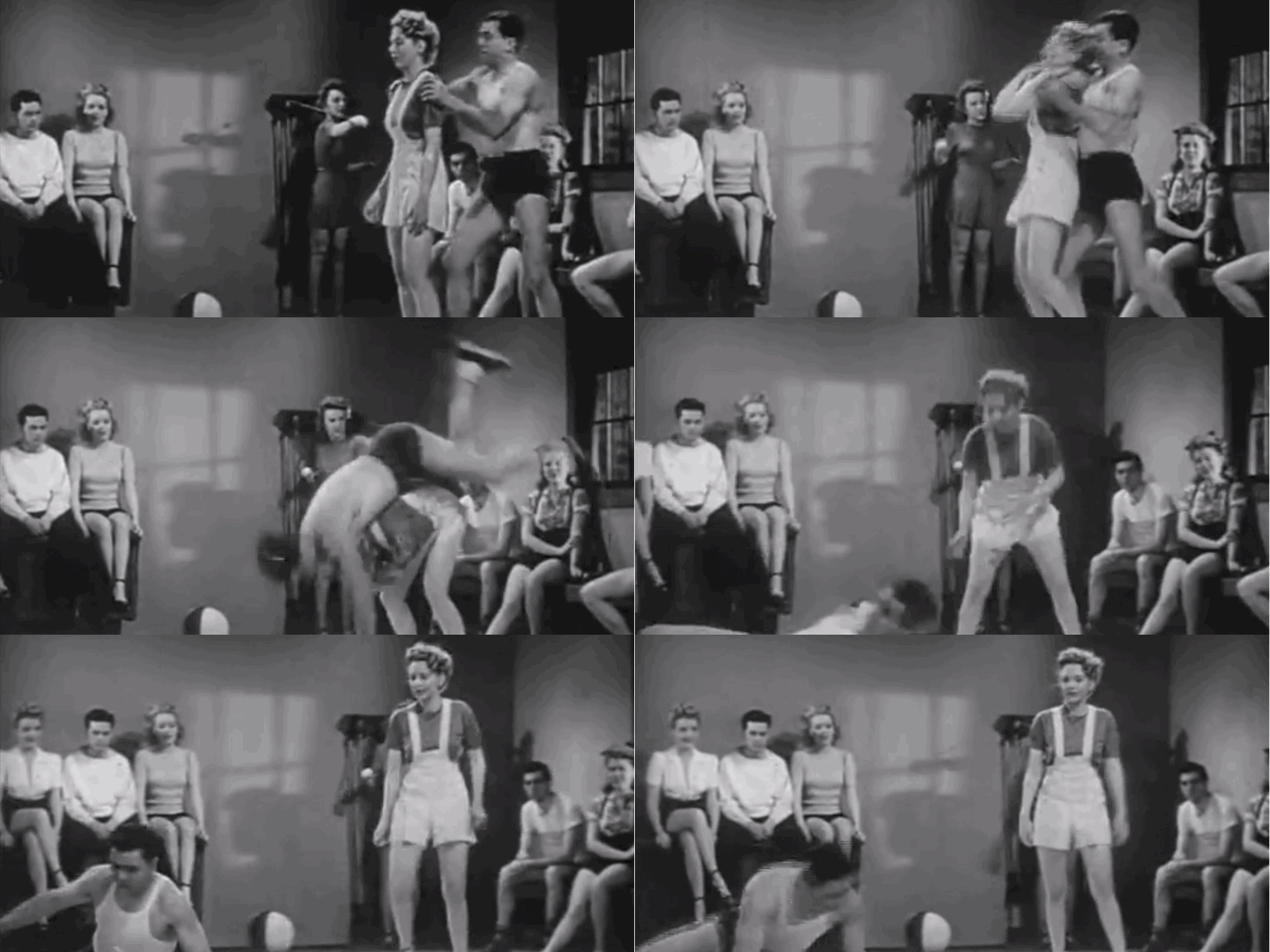
Afterward, I changed my reason for continuing GTL and started focusing not only on books by women, but by and about fat women. Oftentimes, it seemed that I could not find a novel in which fat characters were treated as human beings. Instead, the focus was dieting, exercise, and self-loathing, all until a man tells the protagonist she (it’s almost always a she) is worthy of love, so she becomes happy and life gets real magical. Can you hearing me sighing? I am. Over the years, I found more books in which fat women demanded equality, to simply be seen as a human, but a weird trend cropped up: fat women and fashion. I can only read so many books about independent fat women sewing “quirky” clothes. Plus, the cause was mostly taken up by writers with young adult audiences. I’m still waiting for those adult characters.
Later, I wanted to “expand the margins,” so to speak, by including nonbinary and transwomen authors. I had never excluded transwomen from GTL, but hadn’t considered where nonbinary writers fit in. I wanted to add each author’s pronouns after his/her/their name in my posts to be inclusive. The challenge cropped up when I realized that while loads of authors include pronouns in their social media profiles, most do not. I felt foolish hunting around for an author’s pronouns, like I was trying to be performative instead of genuine, and thus stopped.

In another effort to be more inclusive and transparent, I tried adding content warnings. So hard! Your content warning needs are not obvious, and given that around 1,400 people follow GTL (yes, I know about bots), I cannot, with my free time and unpaid efforts, go through lists of content warnings and get them all. I’m careful about noting sexual assault, child death, and animal cruelty, but sometimes I forget the baby died in the horror novel, or the dog ran into the spooky woods and all we heard was a yip, never to see the dog again. I largely stopped writing content warnings because again, it felt performative.

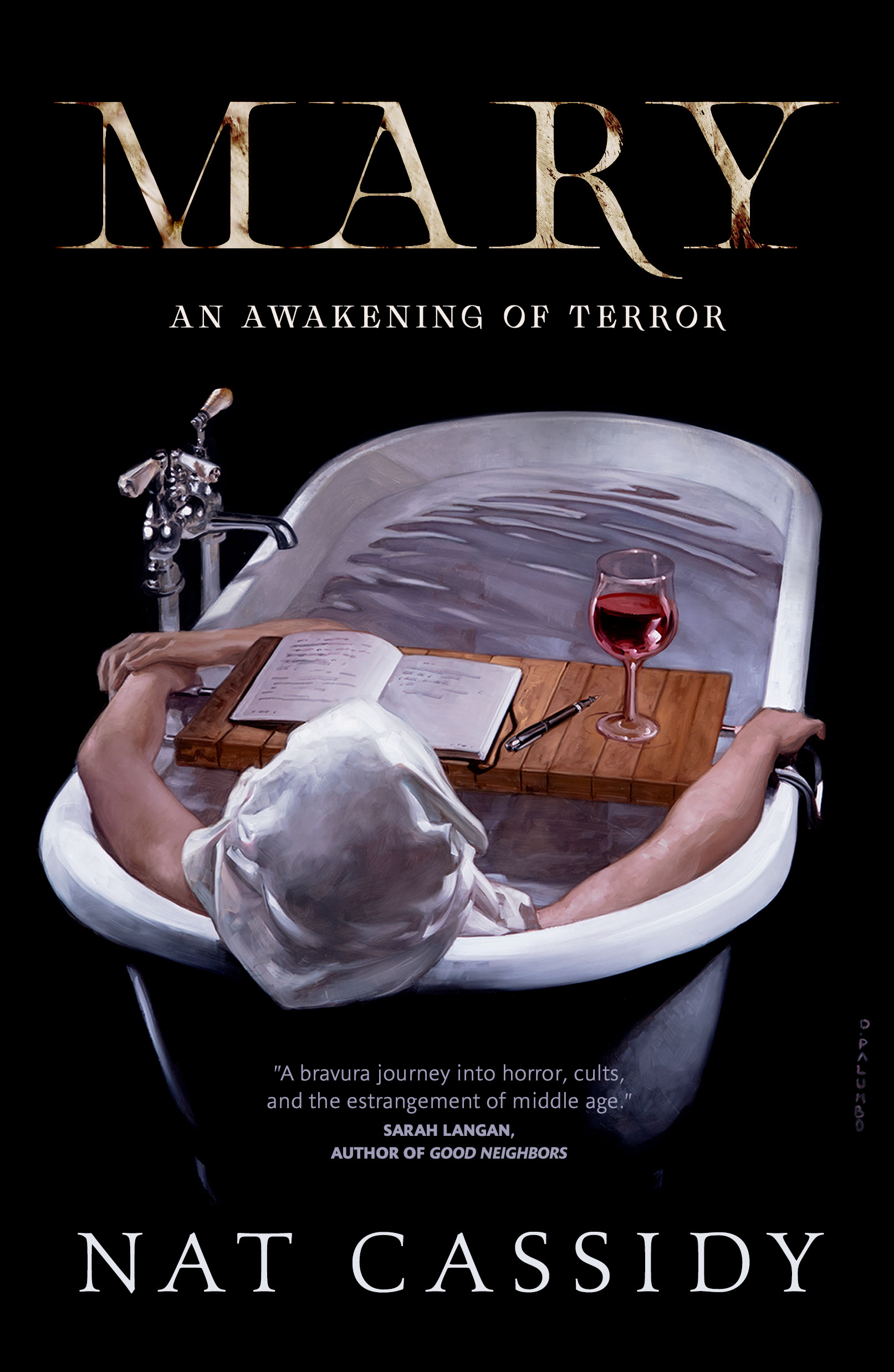
This next shift may surprise you more than anything else: I’m no longer limiting GTL to women, transwomen, and nonbinary authors. Yes, you read that right. What’s with the change? Recently, I spent several weeks reading a 400+ page horror novel called Mary by Nat Cassidy that was in first-person point-of-view. I lived in the head of, you guessed it, Mary for 400+ pages while she struggled with menopause, feeling invisible due to her age, loneliness, and ghosts. I started reading faster because I knew I needed a review to get posted, but I had no other books finished.
I got to the last page of Mary and shouted an internal “I did it!” about finishing in time to write my weekly review only to flip the page and see an afterward. By a dude. Named Nat Cassidy. Who wondered if he was the right person to craft a 400+ page novel from the first-person perspective of a menopausal woman. Cassidy genuinely explained that strong women largely raised and influenced his thinking, and that the original idea for Mary came to him when he was in high school. What to do, I thought. What to do.
Therefore, I’m widening the margins even further. Grab the Lapels will now post reviews of books by men and transmen, though with attention paid to selecting and favoring novels by oppressed people — women, Black, the colonized, Asian, disabled, Native American, socioeconomically disadvantaged, LGBTQIA, Latin American, immigrants — just like I always have. This also means I need to revamp my About and FAQ pages.
Please share your honest thoughts about this shift in the comments below.


I’ve loved reading you through all your twists and turns for nine of those eleven years. You didn’t mention Independent presses, which is what you were concentrating on when I started.
I would scream if I got to the end of a first person novel about a woman, let alone a woman in menopause, and then found it was by a man, meaning that every single emotion was guessed rather than experienced.
You women can all say when that happens- well that sounds right, or that sounds wrong, but what for guys there is no way of judging how right or wrong the author has got it.
LikeLike
Ah! You’re so right! I absolutely forgot that I was concentrating on small-press books when I started. Wow, that sounds to me like you’ve been there since the very beginning, though I know my first couple of years were spent on Weebly, not WordPress. Once I made the switch, I had more capacity to build an audience/relationships.
I do believe Cassidy wrote that he had several women read the novel and tell him what changes to make. I know that your focus is novels for which the author has first-hand experience or knowledge, but I believe there is room for imagination and collaboration. However, I prioritize authors who do have the lived experience, especially if they are a minority. One thing that really pisses me off is how skinny white women think they are the best candidates to write novels about fat women. The story is always the same: boohoo! I’m fat! No one will love me! I have no value! Oh, this guy made eyes at me! Oh, he loves me, even my “curves”! Wow, I’m starting to respect myself and lose weight! Tee hee!
I once read that fat prejudice is one of the last sanctioned forms of prejudice (people not only discriminating, but saying they’re doing it to be helpful). When it comes to reading about fat women in fiction, no one asks where the sensitivity reader was, if the portrayal was accurate or ethical, if the writer just dumped a pile of stereotypes on the page, etc.
LikeLike
Just read whatever the hell you like 😆 I don’t subscribe to the view that men can’t write women characters (or vice versa) because I’ve read amazing books about women narrators that were written by men (Colm Toibin, John Banville, William Trevor etc etc) Writing is about using your imagination and if we can’t imagine what it’s like to walk in someone else’s shoes then humanity is surely doomed. As long as it feels authentic and isn’t denying someone with lived experience from writing a particular story, I think we should be open minded about what we choose to read. Good luck with your endeavours. I think you will be pleasantly surprised by your new reading journey 😊
LikeLike
To be clear, I do read books written by men and transmen, I just don’t review them in this space. They sort of get a “read” check box on The StoryGraph (similar to Goodreads) and that’s it.
I remember reading The Tortilla Curtain by T.C. Boyle in which a liberal white couple in California is pro-human rights. That is, until two undocumented Mexicans set up camp in the couple’s backyard and start leaving trash around and fires untended. The story is written from the white husband’s perspective and from the Mexican woman’s perspective. People absolutely raked Boyle over the coals for daring to write in the POV of a Mexican woman. However, the whole point of the book is to point out the hypocrisy of people just like him: white liberal do-gooders who find it easy to have open-minded opinions, so long as a situation doesn’t affect them directly.
LikeLike
I see you every day and even I didn’t see this coming. 🤯 However, I know there are books we have listened to or read together where you felt duty bound not to post a review here. I think after a decade you get to branch out a bit.
LikeLike
Much like the Terminator, I am a learning machine. Or, to put it in Biscuit’s terms, I can tuck and roll. Thank you for being part of this journey from the very beginning. I love you deeply.
LikeLiked by 1 person
Yes, I agree with Kimbofo – sorry, Bill, but you know anyhow – and either you. There is absolutely a place for imagination – and collaboration. Kimbofo has a point, “if we can’t imagine what it’s like to walk in someone else’s shoes then humanity is surely doomed.”
And, while I was perfectly happy with your blogging focus, I knew your reading was broader so I’m sort of glad that Nat Cassidy came along. I think we need to be open to change on our blogs. Life changes, we change. I think you are right about fat discrimination still being around but it’s far less than it was a decade ago. Most of my favourite online clothes stores use models of different shapes, sizes and colour – but, hmm, rarely, ability.
I read The tortilla curtain in the mid 1990s and it made an impression, partly I suppose, because I had just returned from three years living in the USA, but it’s a read that has stuck with me.
LikeLike
Hmm, what I meant to add re the fat discrimination is that the need for advocacy is not as strong as when you started …
LikeLike
I do think the young adult authors have picked up the reigns, and I see some progress in the medical community. I think awareness means seeing people, so it’s still important to continue sharing books with fat protagonists.
LikeLike
Oh yes, I agree, I just meant progress has been made. Most online clothing shops I follow have such a range of models – height, weight, age, ethnicity. It’s great to see.
LikeLike
Very true!
LikeLike
I’m still trying to read books with fat women at the center, but it can be hard because they don’t often fit into my book club reading schedule. Perhaps my drive to and from Missouri will provide me time to do some audiobooks. I’m not sure how often I will return home, but it is a 6+ hour drive.
I like The Tortilla Curtain partly because T.C. Boyle is the exact person he is excoriating. He is a white, do-gooder liberal who likely would be challenged if he had undocumented people living in his backyard leaving trash around and fires untended.
LikeLiked by 1 person
I support your change! It’s your blog, your project, and anything you can do to make your life easier is a positive. I look forward to reading about anything you post!
LikeLike
Thanks, Laila 🙂
LikeLiked by 1 person
I tend to think it’s always a good thing for bloggers to try broadening the kinds of books they read and write about. Go you!
LikeLike
Over these past 11 years I’ve still read books by male authors, but I just didn’t blog about them, so there is this whole “secret side” of my reading life. Okay, I’m being dramatic, but still.
LikeLiked by 1 person
I’m always in support of my blogging buddies rejigging their blogging goals so fit wherever they are in the moment, so of course I support this! I love what you write, and are excited to see what you are reading. The idea of a man writing about menopause also excites me! It’s nice to know we aren’t the only ones thinking of his life change haha
LikeLike
I read a book about periods in which the author posited how helpful it would be if you could seriously just say out loud at a meeting, I apologize if I seem less involved today. I’m not feeling well due to my period. I’ve also heard of young men with their own apartments keeping little emergency baskets in their bathrooms like you see in some women’s restrooms.
LikeLiked by 1 person
God wouldn’t that be nice? Or just having some sick days speecifically set aside for periods? taking a sick day due to a period sounds dramatic, but my headaches can get quite severe when I’m on my period…
LikeLike
Some days I fare about as well as Mina in Bram Stoker’s Dracula after she’s been visited several nights in a row.
LikeLiked by 1 person
I know the feeling, for sure.
LikeLiked by 1 person
Oh my goodness Melanie, I thought you were going to say you weren’t going to blog anymore! So happy that is not the case!
So the cover of Mary is really freaky with that third hand coming out of the bath and not attached to anyone.
LikeLike
Oof, sorry for the false alarm! I think I’ve been fairly….is militant the right word?…about promoting women for the last eleven years that this may come as quite a surprise to some folks. Then again, those who have been around since almost the beginning have probably noticed that change and grow over time, bit by bit.
I don’t believe the cover artist read the book because at one point Mary is scolded for smelling so bad. She won’t take a shower (let along a luxurious bath) because there’s a dead lady hanging out near the shampoo.
LikeLiked by 1 person
Everything changes and blogging is no different. I think this will only be a good thing!
LikeLike
Thanks, Cathy!
LikeLiked by 1 person
I am pretty excited to hear that men are now writing novels about menopause instead of mumbling “the change” or “Women’s Trouble” under their breath, in tones of fear and/or dismissal. And in general, I love to read about people revising their blog goals to better suit themselves, so I look forward to reading more reviews about the Nat Cassidys of this world!
LikeLike
I am slowly gaining some hope in the gender divide closing slightly as men become more accepting of women’s health and how it affects their lives. We can appreciate what happens to our bodies and why, and also not say it in hushed voices. If anything, Cassidy having more information possibly has made him a better support person in the lives of women he knows.
LikeLike
I always appreciate your thoughtfulness in your reviews and the way you seek out lesser know or marginalized authors. I don’t see this shift changing that so I’m excited to see how you refocus.
What a surprise to find the author’s gender out like that though! I feel like even I wouldn’t write a book about menopause because I haven’t experienced that and couldn’t do it justice.
I also find trigger warnings tricky and I generally ignore them. I know I have things I cannot read about that don’t bother others as much. It’s a thoughtful concept but hard to actually cover every single thing. I think being a smart reader involves learning to identify these things for yourself to a certain extent.
LikeLike
After reading the Karin Slaughter book Pretty Girls for a book club (I did not choose the book, I was only told that it has some “crazy twists!”), I’ve been thinking about content warnings again. If I had content warnings for the Slaughter novel, I never would have read it. It was extremely disturbing.
LikeLiked by 1 person
I have heard only disturbing things about Slaughter’s books. It’s like her name is the content warning! Partially, stuff like that is why I avoid that whole genre all together.
LikeLike
I’d never heard anything about her. I just knew her name because she’s always popular on the library shelves.
LikeLiked by 1 person