
*The 6th book in the 13 Books of Fall.
It was just your average day in October 2017 when a viral sensation changed everything: #MeToo. Stories, largely from white women, about how they had been sexually assaulted took social media by storm, and shortly thereafter, we watched as some of the American entertainment industry’s most powerful men were taken down. But where did #MeToo come from? Was it spontaneous?
*This is a warning for the content of this post: I will be discussing sexual assault in the book.
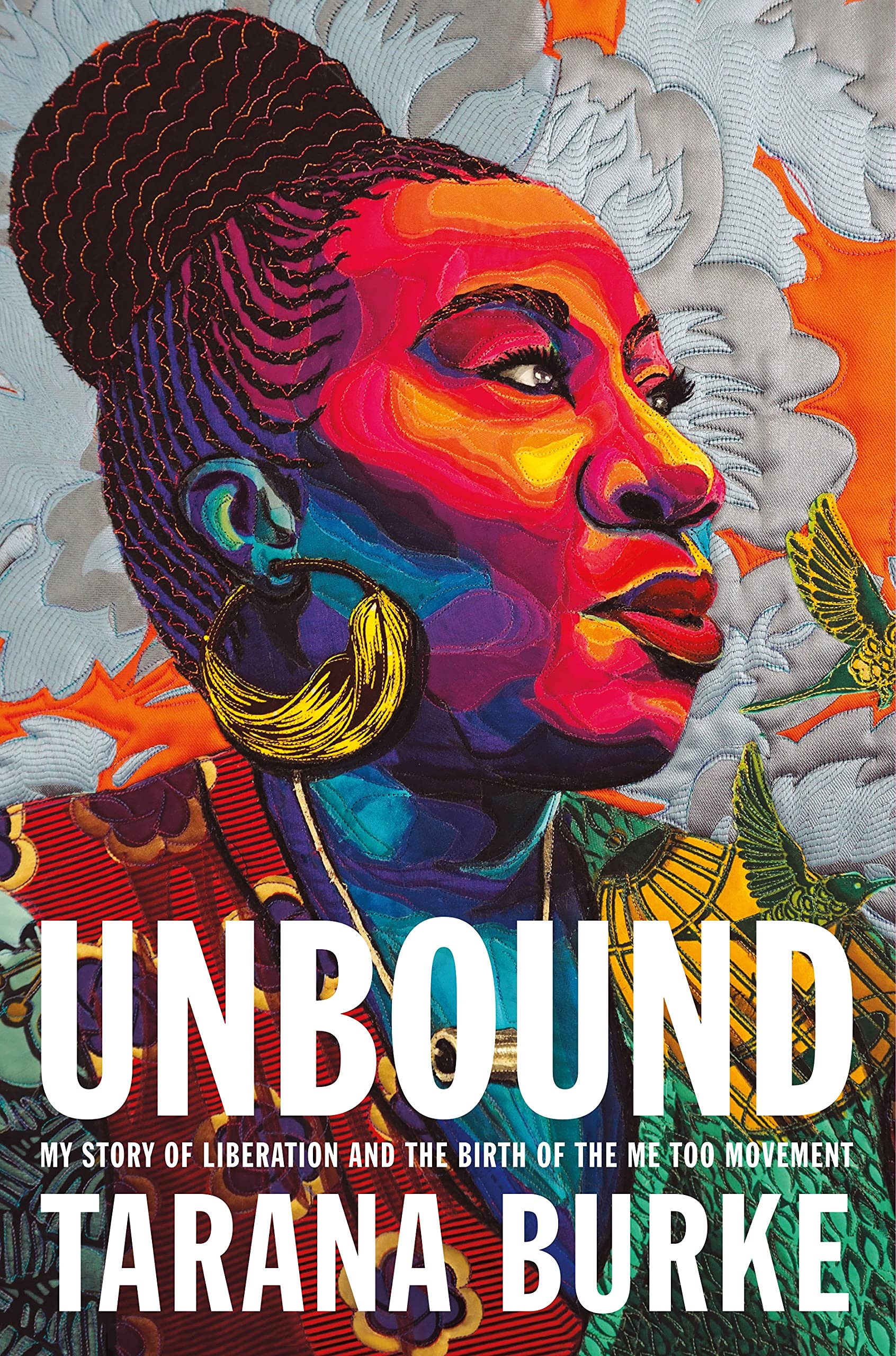
The memoir Unbound: My Story of Liberation and the Birth of the Me Too Movement by Tarana Burke opens with the author receiving texts and calls from her girlfriends letting her know that #MeToo was everywhere. Was this you? they asked. It was not. Burke started the work of “me too” years before when she set up retreats for black and brown girls. Knowing the shame she felt after being raped, Burke created a simple code for the girls to share if they felt shame and had a secret, too. Simply write on a piece of paper “me too.”
Unbound is not about the #MeToo movement. Instead, it is the story of Burke and how she developed the work that gave birth (without her consent or knowledge) to the hashtag. I listened to the audiobook, read by the author, and believe hearing the story from Burke gives her agency, an intimate moment during which she can explain her work and who she is. Despite any adult’s best attempts to protect their children (the book is directed at black and brown girls) from sexual assault, it happens. Why does it happen everywhere and so often? Who is responsible for protecting children? What can we do differently?
Largely, the memoir is about how shame can make a victim accept poor, even abusive, treatment because they think they deserve no better. Shame is tricky; Burke’s mother used to tell her not to let anyone touch her privates. When she was seven and raped, Burke thought she broke a rule — someone had touched her privates, and the way her mother phrased the rule suggested Burke was responsible for any touching. Because Burke knew the men in her life would kill the boy who harmed her, she kept it a secret to protect adult men from going to prison for murder. Keeping her assault hidden, Burke was unable as an adult to fully support traumatized girls at the retreats she organized.
Unbound is an informative memoir, though tough to read. It also highlights how black and brown women were largely left out of the #MeToo movement because not everyone feels safe disclosing trauma because there are few networks to support them after the disclosure.
 Grab the Lapels
Interesting. I watched as my friends wrote “me too” on social media that week in 2017 with incredulity–so many of them.
LikeLike
I found it fascinating that folks really seemed to pay attention when Terry Crews posted #MeToo. There was a lot of criticism around how people only paid attention after a man said that he’d faced sexual battery right in public. That whole moment in time really showed me that we’ve accepted high levels of sexual battery against women, but that it’s still surprising for men, especially if they confess that it happened to them, which in their world may be a emasculating situation.
LikeLiked by 1 person
[…] by Karin SlaughterWeek of October 20: This Wretched Valley by Jennifer KieferWeek of October 27: Unbound by Tarana BurkeWeek of November 3: Disabled Ecologies by Sunaura TaylorWeek of November 10: The […]
LikeLike
Sounds super interesting. I did not know about Burke, and so it is disappointing to hear that (mostly) white women went and appropriated something once again without giving credit. sigh. The book cover is really stunning.
LikeLike
Pretty much what Stefanie said. I don’t brace much anything to add. This is an awful story on so many levels, it’s hard to know where to start. But it says a lot about our society beyond the actual physical abuse doesn’t it.
LikeLiked by 1 person
I’m happy that I learned the origins of the #MeToo movement. It wasn’t random or spontaneous; there was loads of labor and love that went into it.
LikeLike
I noticed during the height of #MeToo that it was a lot of white, able-bodied, extremely attractive female celebrities posting their stories. I hadn’t thought about the implications until I listened to Burke’s book.
LikeLiked by 1 person
I’ve said before I grew up in an almost all-male environment (sorry mum), certainly not one in which women’s issues were discussed – and even now, not one in which issues of race are understood except second or third hand – but these days, living mostly with women, I see over and over that “shame can make a victim accept poor, even abusive, treatment because they think they deserve no better.”
LikeLiked by 1 person
It becomes internalized. Lately, I’ve been watching a few older spooky movies, and the ways in which women are grabbed, wrenched around, slapped, told what to do, etc., are hard to watch and the true horror.
LikeLike
Yes, that does seem to be common Bill I agree.
Are all your brothers as comfortable around woman as you are?
LikeLiked by 1 person
They seem more like my father, but then they might say the same of me.
LikeLiked by 1 person
I’m interested in the contrast between the secrecy of writing “Me too” on a piece of paper and the public declaration of using the #MeToo hashtag online. I think that point you make at the end is so important, about who feels safe to make those public declarations and who doesn’t. I also found it heartbreaking to read about the shame she felt and how she thought it was her fault. I’ve heard Burke being interviewed and was impressed by what she said, so I’d love to read her memoir – hadn’t heard about it before, so thanks for posting about it.
LikeLike
Hi Andrew, thanks for writing. If you’re going to read the book, I would recommend that you get the audiobook because she reads it herself. There’s a lot of emotional gravitas added through that voice. Now that you’ve phrased it that way, paper versus hashtag, you’ve got me thinking more about the importance of the metoo movement. Originally, it seems like writing me too on a piece of paper was a silent way of reaching out for help. In contrast, the online movement was more about bringing awareness to the high rate of inappropriate sexual behavior that women, and some men, have faced. The part about shame also struck me, because I am slowly learning about different situations or even disabilities that will cause shame, which I didn’t realize. For example, my spouse was diagnosed with ADHD, and I hadn’t realized that one of the distinct features of a person with ADHD is that they experience a load of shame. That shame shapes the way they move in the world.
LikeLiked by 1 person
Thanks for the recommendation! I’ve found with other books that, as long as the author is a good reader, it brings a new dimension to have them read it. Born a Crime by Trevor Noah springs to mind, but there have been others. My wife and I tend to listen to audiobooks on long road trips, so will line this one up for the next one.
I didn’t know that about ADHD and shame, so thanks for adding that. I do know that shame can be crippling. I think it can have a positive effect in certain circumstances, e.g. strengthening community by making us feel bad when we knowingly transgress social norms. But it can become toxic when those transgressions are not our fault, or when the shame is misplaced. I feel angry thinking about a little girl feeling shame for being abused, while her abuser may have felt no shame at all.
LikeLike
Unearned shame is crippling in the worst way. People with ADHD will over-explain to be understood and then feel shame when everyone looks like at them like they’re crazy. They’re often “too much” for society. I do think this would be a good road trip book; that’s how I listened to it. I have a tag on my blog for audiobooks, and I always mention whether folks should read or listen to the book, if you’re interested.
LikeLiked by 1 person
I had no idea about the origins of MeToo, but I had heard that since it broke, it isolated many folks, which seems like even more of a tragedy knowing Burke was the one who coined the term in the first place. It’s interesting that this is also seen through a lens of parenting, and questions how we protect children, because I would have thought of this is an ‘adult’ issue but obviously it isn’t, unfortunately.
LikeLike
I know sexual harassment and violence against children, particularly girls, starts very young, especially if they are isolated within their own families due to parents overworked, stressed, can’t be present like they want, etc.
LikeLiked by 1 person
Ugh that makes me shudder. So, so unfair.
LikeLiked by 1 person
I’ve heard that the origins of #metoo were actually with women of colour so this seems like an interesting though hard read.
LikeLike
And it’s not even about the #MeToo movement, which adds an extra dimension. It’s a very personal story.
LikeLiked by 1 person
I’m not sure I’m ready for that this week but I’ll keep it on my list for future reading.
LikeLiked by 1 person