
There are so many thoughts running through my head that I would love to discuss this weekend, but I’m not sure they’re blog appropriate. I like to think I know who reads these posts, but then someone I either don’t know or didn’t know read Grab the Lapels leaves a comment. Huh. Do you folks get that, too? It’s always surprising, like I thought I head my head under the couch and you couldn’t see the rest of my body sticking out. Or is that the cat? Either way, I decided instead of going on about me, I would focus on a comment Bill @ The Australian Legend left for me:
The political side of post-modernism: deconstructing racism, misogyny and colonialism, capitalism’s theft of our personal freedoms and of a livable planet is the one path forward for modern writing.
Bill blew my mind not only for his insight, but the fact that he had the insight to have insight. Basically, I never think about the future of fiction. I assume we have the same basic five plots and we recycle them to fit our time and place. Kurt Vonnegut has a funny video in which he talks about the shapes of stories, that there are the same basic plots (people seem to especially love boy-meets-girl tales, he notes).
But back to Bill’s comment. I noticed something implied in that comment, though perhaps Bill didn’t mean to imply it and I’m just seeing it myself: fear. We not only take the same basic stories and shape them to our time and place, but our time, place, and fears. I know I’m not going to sell any of you on horror fiction, but hear me out. Horror is a safe place in which authors can work through modern fears, writing what scares them to its limits and seeing what happens on the other side. Ghost stories are often about fears of loss and grief. Zombies typically represent fear of diseases and death. Vampires are such a varied monster, but they have been metaphors for everything from fear of AIDS to toxic masculinity.
Recently, I finished an anthology called Out There Screaming: An Anthology of New Black Horror, edited by Jordan Peele. In case you didn’t know, Peele is a famous comedian, writer, and director. He single handedly changed the face of horror with his hit movie Get Out, which won the “Best Original Screenplay” category at the Oscars. Horror never gets any love at the Oscars; Get Out was so brilliant that it was nominated for Best Picture, Best Director, and Best Actor in addition to winning Best Original Screenplay. What I’m saying is Jordan Peele knows good storytelling.
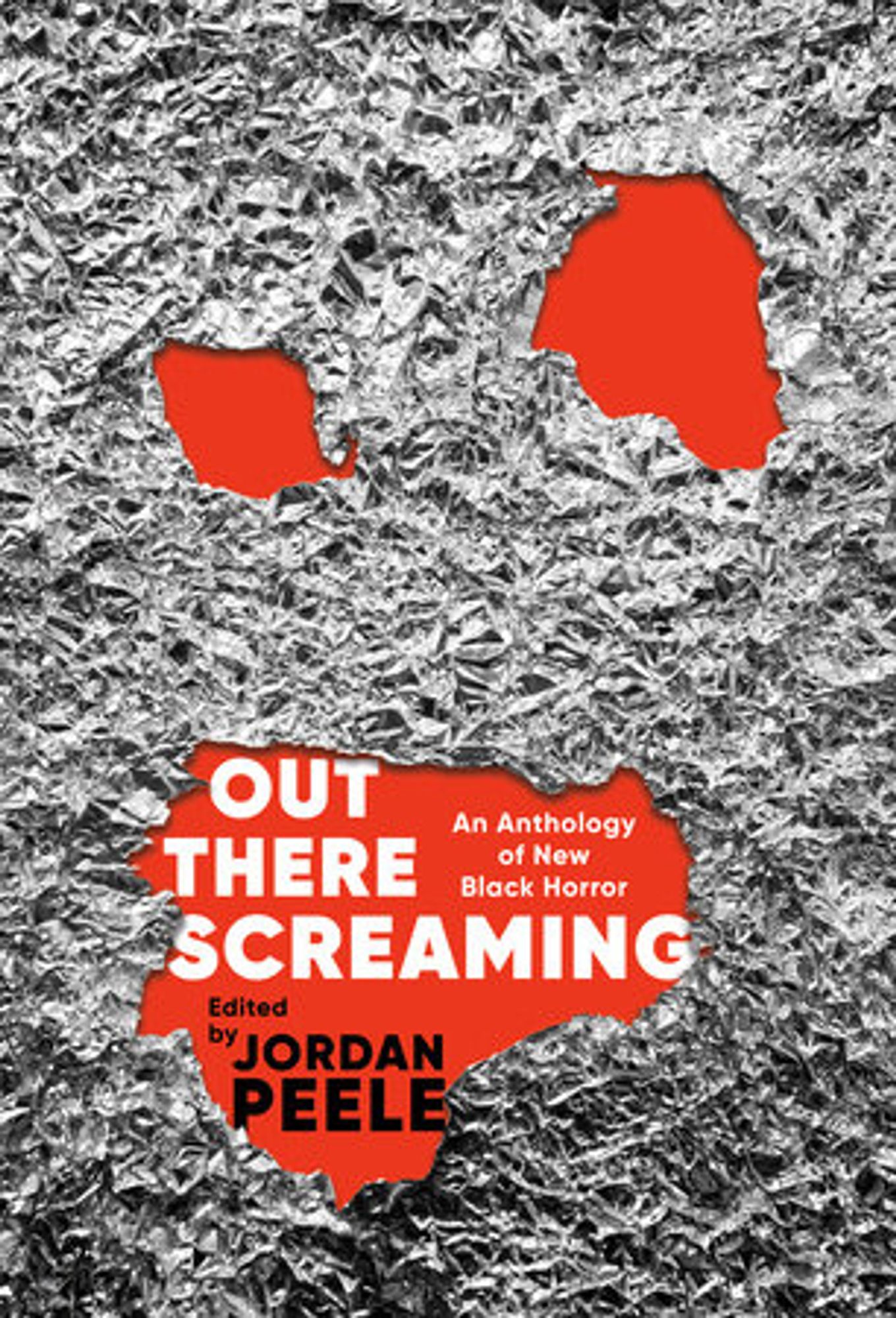
Out There Screaming had over twenty stories by different Black authors like Tananarive Due, Nalo Hopkinson, and Cadwell Turnbull. In these stories, authors addressed what Bill says is the future of fiction: the Earth, racism, capitalism’s theft of our freedom, and misogyny. For example, when a tech-bro launches a start-up project that accidentally nukes everything in an effort to combat climate change. Or when prisoners are made more useful by being forced to work while sedated with a software so they think they are free. In another story, a swamp ghost helps two sisters get to Montgomery to protest after the bus driver takes them to the backwoods where racist southerners wait to hang them. Yet another tale explores our impatience when a young women refuses to let a man merge in traffic, resulting in her death, but that’s not the end; instead, her corpse is confined to the stretch of highway where she died, so she makes use of her time by killing drunk drivers before they can hurt someone else.
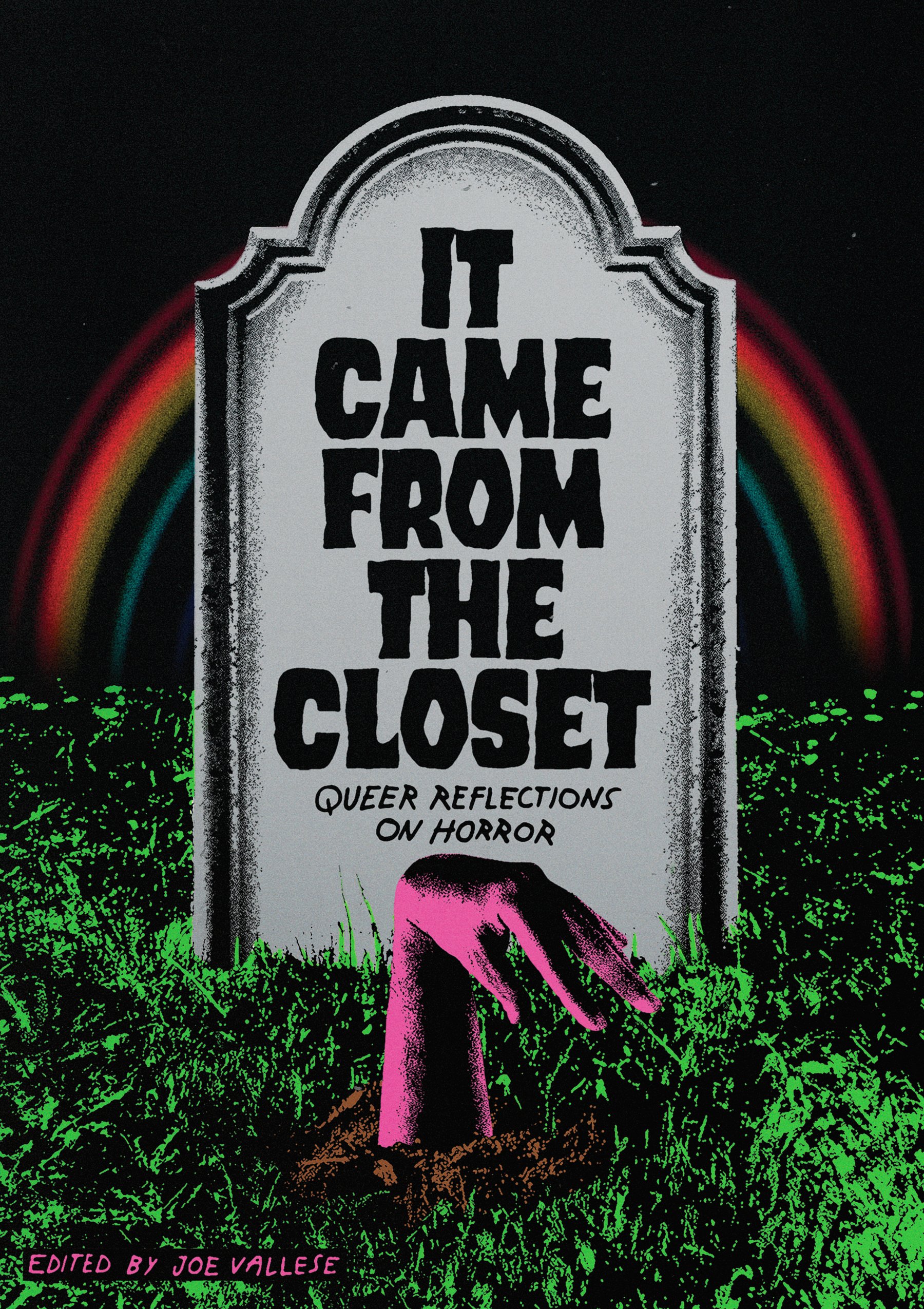
So, you may be thinking, Yeah, but horror is really not for me. Then again, as I toss around in my mind Bill’s comment at the top of the post, I can’t help but think that the future lies in horror. We are afraid of and angry about losing power, freedom, and a livable planet. Another case in point is the anthology It Came from the Closet: Queer Reflections on Horror, edited by Joe Vallese. In this anthology, Queer authors each discuss their connection with one horror movie. While you might assume the connection is always feeling “othered,” perhaps like Frankenstein’s monster, the writers describe their experiences with adoption and fertility, transitioning, racism, male entitlement, and the failure of religion.
Now I’m wondering if you’ve thought about the future of stories. Do you think it has only one path, like Bill? Or do you see fiction continuing in a different way?


I wouldn’t be as prescriptive as Bill. I would never say there is ONE path forward but I’d accept that it is A path forward. (Perhaps that’s what Bill meant?) Who knows really what the future will bring?
Related to this is your point “Yeah, but horror is really not for me. Then again, as I toss around in my mind Bill’s comment at the top of the post, I can’t help but think that the future lies in horror. We are afraid of and angry about losing power, freedom, and a livable planet.” I am one of those you describe. I think for as long as I can remember people have feared the future … nuclear war, was a big one in my youth. I’m not saying these fears aren’t valid and that we shouldn’t care about people and the planet but just that I don’t feel that the future lies in horror. Also when I do want to explore that concern I tend to prefer realism. I’m in a minority I know but I want to see people like me not zombies or whatever horror writers like to use to explore the issues. I always have. I quite liked fairy stories in my childhood for example but my best reading memories are stories about real people.
LikeLike
Well, one truly scary period in the US was the AIDS epidemic. They were literally called the walking dead because it was a horrible way to die, and all of them would surely die. However, people with the AIDS virus were connected to vampires because Anne Rice’s Interview with the Vampire book focused on isolation born of singing that changed you forever through a blood exchange. I think a lot of people feel seen in horror elements. Even the trope that the Black character always dies first has an echo of Black Lives Matter. Perhaps it’s more that horror represents oppressed groups and you don’t fit into one of those?
LikeLike
I’m a woman!! Yes, I know, a privileged white woman. I take your point to a degree – in that I see that can be an aspect of why people might like horror – but I don’t think I’m the only non or little oppressed person who can’t relate to horror?
LikeLiked by 1 person
Definitely you’re not alone ☺️
LikeLike
I do think horror has found its moment. I’m especially interested in what happens when speculative and SFF meet horror.
LikeLike
Then you should definitely read Jordan Peele’s book.
LikeLiked by 1 person
I have! I had mixed feelings tbh, but I thought there were a few standouts.
LikeLike
Mixed feelings!? Laura! You’re so complicated 😂
LikeLiked by 1 person
Melanie: I think you and Bill are saying the exact same thing: deconstructing racism, misogyny and colonialism, capitalism’s theft of our personal freedoms and of a livable planet is the one path forward for modern writing.
We need to keep on the lookout for modern writing in all forms. It’s always been the authors, great speakers, and comedians who open our eyes to injustice. Great post Melanie! ❤️~B
LikeLiked by 1 person
You know, I think you’re definitely right about comedians, and I hadn’t even thought about them. For example, just yesterday I was humming that George Carlin song that is sung to the tune of “America the beautiful” —
O beautiful for smoggy skies
Insecticided grain
For strip-mined mountain’s majesty
Above the asphalt plain!
America! America!
Man sheds his waste on thee
And hides the pines with billboard signs
From sea to oily sea!
LikeLike
Comedians, yes … good point from Biscuit. And your example is perfect.
LikeLiked by 1 person
Like WG I don’t want to be prescriptivist, but if we are talking about fiction that is relevant and important and addresses the human condition, then 100% what Bill said. Amitav Ghosh wrote a whole book about it, The Great Derangement, and continues to talk and write about it. Other writers like Lydia Millet and Lidia Yuknavitch and too many others to name, are also talking and writing about this.
I understand what you’re saying about horror. To me there’s Horror, like the Exorcist or Stephen King’s It, and horror, like Shirley Jackson’s Haunting of Hill House. Horror I absolutely cannot do, it gives me nightmares. But horror, I can do in small doses. It sounds like Jordan Peele’s book is that kind of horror. And I loved his movie Get Out.
I think science fiction and other sorts of speculative fiction are other genres that have always been, and continue to be, very good at exploring the sorts of things Bill mentions in his comment. It is one reason why I love Ursula Le Guin, Ann Leckie, and N.K. Jemison so much.
LikeLike
Sounds to me like you DO enjoy horror, just not the kind that is written only to scare. So much of real life IS scary, and if you have anxiety, modern horror writers like Peele are talking about what is actually scary and can happen, but also what we can avoid and solve. Michael Myers, Freddy Krueger — that is the kind of horror we can’t do anything about and represents unrealistic fears.
LikeLike
I think wordpress just ate my comment? If it didn’t just delete the extra one!
I wouldn’t say I enjoy horror, it is not my preferred genre and I don’t actively look for horror stories. I have read and enjoyed some stories that I think of as “psychological horror” but that’s about as far as it goes 🙂
LikeLike
Okay, that’s funny because I just left you a comment about Hannibal Lector on your blog, and now I’m wondering if you’ve read and enjoyed Silence of the Lambs.
LikeLike
I have not read Silence of the Lambs but I saw the movie and thought it was pretty good.
LikeLike
It’s a great book, but I haven’t read the whole series, like the more serious fans do.
LikeLiked by 1 person
Yes agree Stefanie … I can do some horror like I can do some speculative fiction … for the reasons you give.
LikeLiked by 1 person
So I was thinking while reading about the Peele edited collection that I’d probably read those stories. And then I read Stefanie’s comment about capital H horror vs. small-h horror, and I agree with her. Shirley Jackson – yes please, love her! (Lots of social commentary there.)
I’m also thinking about how much of my reading over the last 10 years has turned towards the escapist variety and I am fairly certain it’s indicative of how much of a shit-show the modern world is turning out to be. Bring on the rom-coms.
An interesting post, Melanie!
LikeLiked by 1 person
Maybe next week for my Sunday Lowdown. I’ll ride a whole post about how rom-coms make me feel bad, lol. They’re so capitalistic. Oooooh, okay, the ideas are flowing now. Thanks, Laila!
LikeLiked by 1 person
This is a really interesting post, to me especially because I’ve quite literally never thought about the future of fiction. Maybe because I’m not a writer myself, I think that’s someone else’s problem? I always just assume there will be stories for me to read, on and on, until I die. That’s about the extent of my future thinking on fiction.
I found your summaries of what kinds of horror reflect what kinds of fear very insightful as well, it’s helpful to think of them in those terms. I like horror every now and then, it helps round me out as a reader and human haha
LikeLike
Oh, I’m totally in the same boat as you. There’s a 110 bajillion books, so I will always have something to read, and that is all I need to know. However, whenever there is a trend, such as Twilight or Fifty Shades Of Gray, that people deem trash, then we all get into a tizzy about the future of fiction. So maybe we should do our part and think about it now, like Bill has 😂
As for horror, I’m hell-bent on converting some folks. I really feel those who don’t read it are only picturing what was popular in the 80s and are missing out on oppressed communities putting themselves in the pages and showing us the horrors of white supremacy by adding horror elements. Look how popular Stephen Graham Jones is. His characters are always Blackfeet people.
LikeLiked by 1 person
SGJ is a great example! I agree that there is horror for everyone out there, people just haven’t found the one that suits them yet. I sort of feel this way about romance books too – there’s something for everyone out there..
LikeLike
As soon as I find a romance book in which she says, “Not tonight, I’m bloated,” I’ll know I’ve found the right one.
LikeLiked by 1 person
OMG so true
LikeLiked by 1 person
I agree with Whispering Gums and Stefanie that horror is one path forward for fiction. As someone who’s studied satire through the ages, though, I’d say there’s always been a didactic path for literature. It’s why I’m so fascinated by necromancy in fiction–usually (as my blog title implies) there’s a lesson in it.
LikeLike
I would think that someone with a blog that has the word necromancy and the title would just be inherently into spooky things. Jeanne, I was counting on you LOL 😂
LikeLike
Ha, it’s my terrible moralistic stance on necromancy!
LikeLiked by 1 person
I get top billing in a post and then I’m late to the party. Sorry! All I can say is I had a series of consecutive jobs, and a lot of posts fell through the cracks in my limited reading time.
Thank you for featuring my comment – unlike WG I enjoy being prescriptive – as you have demonstrated it makes for interesting discussions. I have always followed SF for the expression of my fears – from its early days replaying WWII, through nuclear apocalypse to the now-imminent climate crisis – and it I find it interesting how much Horror as you describe it here has crossed over with SFF.
I haven’t read the collections you mention but am currently reading Nalo Hopkinson’s first novel, Brown Girl in the Ring which is almost 100% horror, unlike her second, Midnight Robber, which is mostly SF. She’s a great writer, though I’d probably struggle to say specifically which fears she is addressing.
LikeLike
Ayyyyy! You’re the star of the post, meaning you can show up when you want to. I’m kidding, of course. Never worry about being late, though. I know the feeling. Recently, I was about 10 days behind on reading everyone else’s blogs. Been there, done that. I’m glad to hear that you’ve had several jobs lined up. I know from talking to my dad that there’s always this hectic feeling when he’s got too much work and not enough work, and I swear he was never going to achieve that just right feeling. I remember you telling me the Australian horror movie Wolf Creek scared the crap out of you. I would never recommend a book to you like that. However, I truly do think that you would enjoy the Jordan peel book. It really is more sci-fi, and I think the reason that science fiction is going in that direction is because right now there’s so much for us to be afraid of. I recently read a quote that said every generation thinks that they have the scariest moment in time in which to be alive. That book was written in the ’70s. However, I asked Nick what he thought about that, and before he could respond, I pointed out that no generation before us has had to deal with climate change. That surely makes a difference, right? Especially the story in the Jordan Peele anthology that’s about a tech bro who created something off the cuff because he has lots of money, and it blows up the whole world.
LikeLike
Are my generation’s fears bigger than yours? Maybe. It wasn’t certain that Russia and the US would start a nuclear war, but it was likely, and the planet would have been rendered unlivable (except apparently for cockroaches). Now, the same men more or less have decided to let the planet become unlivable slowly rather than all in one moment, and so some people will survive, but by 2100 not all that many.
LikeLiked by 1 person
I have not thought about the future of stories, but I love horror!!!
Gimme all the zombie books.
Gimme that Jordan Peele book.
Stephen King doesn’t scare me.
Exorcist bored me.
I haven’t read Stephen Graham Jones yet, but two of his books are on my Fraterfest and Readers Imbibing Peril long lists.
I recently discovered Richard Laymon and Jack Kilborn. So good!
LikeLike
If you are interested, I host a horror-only book club that meets on Discord. We have meetings once per month. You can find us here: https://www.meetup.com/huntsville-horror/events/299995356/
LikeLike
[…] horror and how I think it is the future of fiction, connecting with Bill’s comment about what he thinks the future of fiction is. While I know that most of you are not horror fans, and it would take a lot to convince you that […]
LikeLike