
This Sunday snuck up on me! On Monday we were at my folks’ house, and on Thursday Nick was home because it was the 4th of July. I thought it was interesting that the 4th happening on a Thursday seemed to really throw people off. There weren’t the big firework shows in the neighborhood, and some people were headed to celebratory parades on Saturday. Basically, everything felt higgledy-piggledy, and now I’m like, “Ope, it’s Sunday again.”
Something I’ve been thinking about all week, though, is a book blog tour I arranged ten years ago for a novel by Lynn Kanter called Her Own Vietnam. It was from the perspective of a nurse who was stationed in Vietnam and the repercussions of coming home from that war not viewed as a hero (people were called baby killers), but not recognized as a veteran because nurses “didn’t see combat.”
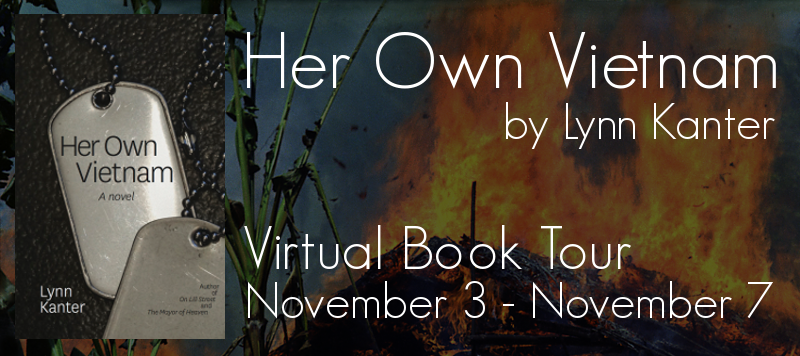
Kanter’s book was published by Shade Mountain Press, a little indie organization you’ve likely never heard of. However, one of the hottest books of the 2024 is The Women by Kristin Hannah, which is about nurses in Vietnam who come back to be spit on and not acknowledged as veterans. I read Her Own Vietnam in 2014, and I’m reading The Women now for book club. Kristin Hannah already has loads of fame and popularity, so it stung that Kanter’s novel didn’t receive the same acclaim because of her unknown name and small publisher.
Kanter, from my best guess, was born in 1954, while Hannah was born in 1960. Therefore, Kanter’s experience with Vietnam happened during her teenage years — likely when the main character in The Women was seeing her brother off to Vietnam. Hannah says the Vietnam war ended when she was thirteen, so while she was raised in the culture of the Vietnam War, she did not have peers drafted or volunteering for service. If you think about Bill’s (Australian Legend) feelings about authors writing what is authentic to them, Kanter’s novel would be the more true-to-life version. In fact, in one post I helped put together for the tour (now gone because the blog at which it was published has since shut down), she described marching and protesting against the war. (I want to add, I’m well aware that Bill does not read Vietnam War novels, and I would be remiss not to mention that).
Another comparison came to mind, one of books I have not read: The Book Woman of Troublesome Creek by then unknown Kim Michele Richardson and The Giver of Stars by the bestselling author Jojo Moyes. Both center on the people in Appalachia who have a blue hue to their skin. Both have packhorse librarians. Both are set in Kentucky in the 1930s. Richardson did gain notoriety because her book, but Moyes’s novel was chosen by the powerhouse Reese Witherspoon for her book club, which sends any author to #1.
The point of this post ties in to other concerns happening right now, those of fairness and the wealthy getting wealthier. People who are “in” get first dibs, and those who are not are left with a small, but, I hope, supportive fan base. Maybe I’m naive, but when I learn that powerful politicians now had parents who were in politics, too, I’m surprised (the family dynasties — Kennedy, Clinton, Bush, Roosevelt — are obvious). We have popular journalists from privilege: Anderson Cooper (mother: Gloria Vanderbilt), Chris Wallace (dad: Mike Wallace). Sometimes, it goes on for generations: Zoë Kravitz’s dad is Lenny Kravitz, and Lenny Kravitz’s mom is Roxie Roker. But back to books and stories. What are your thoughts on books that seem too similar? Do you see how some artists are getting more space at the table that someone who has already done the work on a smaller scale?
 Grab the Lapels
The rich getting richer while the poor are getting poorer seems to be an age-old tale that never changes, doesn’t it? But what about the American Dream? Doesn’t the U.S.A. stand for those who never had anything are able to make something out of nothing, and build their own legacy? I heard of this happening often for the baby boomer generation in Canada – many folks immigrated here, and were able to buy a house within only years of moving. But the real estate prices are so high right now in many major cities in Canada, this is no longer feasible for many even if they are working two jobs. The publishing industry is no different than others I suppose – it’s about who you know. I like to think that fantastic writers will always make their way to the top, but the market is getting so crowded with self-published junk that people are looking more and more to people like Reese Witherspoon to do the sorting for them, thus limiting the number of new authors being discovered. I have no answers to these problems, only complaints it seems haha
LikeLike
Even if I look back to not THAT long ago, Charles Dickens was all about poor people trying to make something for themselves while the shady rich folks kicked them down. I hear the most lousy, measly excuses for why prizes in literature can’t be judged blind. Honestly, you mean you can’t have a group of people confirm whatever criteria are necessary to submit do that and then exchange the name for a number and pass all submissions on to the judges?
I can’t even blame the self-publishing people. You have to know someone who can get you an in with an agent, who gets you an “in” with the publisher, before anyone even looks twice at you. The fact that so many books come out of the big presses that are just awful tells me the self-publishing folks and the published folks have less different about them than we may think upon first glance.
LikeLike
Ok weird I didn’t login for my last big ranting comment so it likely wasn’t posted correctly LOL
LikeLike
I saw it! It’s attributed to “someone.”
LikeLiked by 1 person
well now you know it was my rant LOL
LikeLike
Awww, my little ranty-ranter.
LikeLiked by 1 person
Yes I do but this is such a complex question. Do those getting recognition not deserve it or is it just that others deserve equal attention? But then there’s the issue that some create in niche areas (forms, content) that don’t appeal to a wide audience.
I think awards can play a role in bringing some of those lesser known artists into the light if those awards consciously work to be fair. This means ensuring their criteria are broad, their judges are diverse and open-minded, entering the award is easy and not expensive, and so on.
But that’s just one small thing that can play a role.
LikeLike
I look forward to seeing what others say because there is so much to say from how or why it happens to how or why you might try to “fix” it.
LikeLike
All I know is that having submissions with no identifying information should be a given. When we talk about disparities in publishing with race and gender, nationality and wealth, submissions without identifying information could get the best books into readers’ hands without them wondering what the political motivation was behind publishing the book. I’m reminded of American Dirt; chosen by Oprah, apparently the author was a Latina, which turned out to be barely true, and the whole thing was a battle between folks reading the book because they were tired of “diversity hires,” so to speak, and people banning the book because the author was a white woman. I can’t think of anyone who actually read the book for what it was and said something about it.
LikeLiked by 1 person
Blind submissions are appealing and Finlay Lloyd publisher has created a new prize that works this way. I think it’s harder to do with books that are already published (vs manuscript awards) particularly with authors who are well known, because their styles will be known to judges. But I agree that it does feel fairer. We have had controversies like American dirt – one a novel that won an award, another a memoir (as I recollect).
LikeLiked by 1 person
It’s a type of microaggression to ask people to pay to be accepted for judging. All we’re saying is that the people who can afford submission fees are the only ones worthy of reading, and we’re saying that before we’ve even read them. This is a conversation I had with someone recently about internships: colleges have to assume that students have enough money to not only pay tuition for that semester, but live without having a job. You can’t afford it? You’re not welcome. These are financial microaggressions. I think a lot of books have gone through the prize circuit that are uniformly called bad by readers. There are books that are popular because Oprah said so, and I don’t trust Oprah at all. At least Reese Witherspoon is highlighting debut authors, but how did she find these people?
LikeLike
I guess the submission fees are to cover some of the costs of administering the awards, distributing the works to the judges, etc, but I agree that it’s best if they are not part of the deal for the reasons you give. Internships are an issue too I agree. Money, eh?
Reese is such a big name, authors and publishers will bombard her. They’ll all want her seal of approval. Her challenge I’m sure would be weeding through all those who want her to read them! Presumably she uses readers (staff? friends?) to do some sifting?
LikeLike
She would HAVE to have a slush pile reader or twelve. Either than, or she’s finding books that are already published using her own interests as a guide and then picking them for her club?
There are some interpreting agencies that let you pay what you can, which supports people who can’t afford to pay, and I’ve noticed some folks give more than they would have been asked anyway. I’ve also seen this with online lit readings and coffee shops.
LikeLike
These Pay What You Can options are good but also stressful I think. If you can pay easily, how generous do you be – where is the limit? (It’s particularly hard if you have no idea what is a reasonable amount to pay in the first place.) If you can’t pay how uncomfortable do you feel?
I am secretary of a Friends group which puts on free webinars and we just ask for donations. We’d probably get more if we said pay what you can, but as our costs are minimal this works well for us.
Re coffee shops, I’ve seen “pay it forward” arrangements where you can pay for your coffee but put more money in a jar (literally or physically) to cover someone who can’t pay. All great schemes but with their challenges.
LikeLike
The pay what you can options (I know that requires hyphens, but I don’t have the patience) I’ve seen say a suggested donation. Now, I will say that I’ve been to events, like festivals, at which they have a suggested donation for parking, but you can’t park unless you give them the suggested donation amount. Scandalous!
LikeLiked by 1 person
I’ve seen that – suggested amount – sometimes, and that works. You know, I think I’ve also seen that parking thing at a festival. Agree – if it’s a donation it’s not compulsory. Hmmm, just remembered that an organisation I’m in sometimes puts on events where we say “Free for members; Gold coin donation for others”. In Australia a gold coin is $1 or 2. It doesn’t sound like a donation does it BUT we don’t check everyone coming in or demand it.
LikeLike
I think the reason the festivals around me say that this is a donation, but it is required, is because they’re a non-profit, so they can’t make money, but they can collect money. It’s shady! It’s my $5, dang it!
LikeLike
That seems a narrow definition of non-profit. Here in Australia, non-profits can cover their costs, but can’t make profit in a commercial sense. If they do more than cover their costs that money can be put towards what ever it is their mission is. Most non-profits here try to have a little more money than they need to operate. Like the Friends organisation for which I’m secretary – sometimes we charge for an event, sometimes we do donation.
LikeLike
I think we call what you are describing as a Not For Profit, which is different.
LikeLike
Ah, sounds like you are different over there. In Australia they are the same:
“A Nonprofit (also referred to as a not-for-profit or NFP) is an organisation that is not run for profit or personal gain. A Nonprofit can legally make a profit but it has to reinvest those profits back into the organisation to further fund its purpose or mission (e.g. to pay for day-to-day expenses, pay staff wages, build infrastructure or launch projects).
Examples of nonprofits include:
– Community sports club
– A religious mission
– An educational or social organisation such as a recreational facility
– A well-being organisation
– A scientific organisation”
(From the Australian Save the Children website)
LikeLike
This is the U.S., per the U.S. Chamber of Commerce:
A nonprofit organization is one that qualifies for tax-exempt status by the IRS because its mission and purpose are to further a social cause and provide a public benefit. Nonprofit organizations include hospitals, universities, national charities, and foundations.
Similar to a nonprofit, a not-for-profit organization (NFPO) is one that does not earn profit for its owners. All money earned through pursuing business activities or through donations goes right back into running the organization.
However, not-for-profits are not required to operate for the benefit of the public good. A not-for-profit can simply serve the goals of its members. A good example is a sports club…
Nonprofits are formed explicitly to benefit the public good; not-for-profits exist to fulfill an owner’s organizational objectives.
Nonprofits can have a separate legal entity; not-for-profits cannot have a separate legal entity.
Nonprofits run like a business and try to earn a profit, which does not support any single member; not-for-profits are considered “recreational organizations” that do not operate with the business goal of earning revenue.
Nonprofits may have employees who are paid, but their paychecks do not come through fundraising; not-for-profits are run by volunteers.
Okay, so maybe I got them confused a bit.
LikeLike
Thanks Melanie … I don’t wonder you got them confused … I can understand what they are saying BUT “nonprofits run like a business and try to earn a profit” sounds contradictory even though I understand what they mean!
LikeLiked by 1 person
I think nurses at the front in wartime would see an awful lot of combat. There was some talk during the Vietnam War of making non-compliers/draft resisters – which is what I was – stretcher bearers. I’m glad nothing came of it. I have read one, and only one, great Vietnam War novel (actually, ‘American War’ novel) by North Vietnamese soldier and writer, Bào Ninh, The Sorrow of War. Anyway, thanks for thinking of me.
My opinion is that we, readers, should look out for indie presses, buy their books when we can, and also not scorn self-published works (especially if they seem well-edited).
LikeLike
According to The Women, a fiction novel that was read and shaped by feedback from Vietnam nurses, the medical camps were often under attack, and helicopter pilots were shot down at surprising rates. She not only survived bombings, but everyone she sees is wounded. I would think that could be even more traumatizing that the not-constant barrage of mutilation and violence.
I found Bào Ninh, The Sorrow of War at my library, so thank you for the recommendation. I read No-No Boy by John Osaka, which was about a draft dodger from WWII; he was Japanese-American, and his family had everything taken from them in the U.S., so he refused to go and went to prison. It was an interesting read.
I also agree that there are good books from self-published authors. I’ve read many, but I know that getting one that is barely readable make the whole thing stink to high hell.
LikeLike
Re self-published Bill, I agree to a point, but for me the trouble is the time you need to invest to find out if they are well-edited.
LikeLike
In today’s paper it said that 5,000 copies in its lifetime is what a successful Australian book sells. I don’t think publishing on paper for ‘ordinary’ writers will survive. Already, writing’s not a career unless a university picks you up to teach creative writing to the next generation for whom it is not a career. More and more books will be digitally published for free or for a dollar, and one of us will have to bite the bullet and start reading and grading them (also for free).
LikeLike
Well many of those writers I’ve been researching for AWW made a living it seems but writing for papers. I think very few writers have ever made a living from writing novels alone.
LikeLike
Making a living as a writer is a thing of the past because we don’t have regular subscribers to anything but Netflix, and after the writers’ strike, I now know the writers for Netflix programming were also not making a living.
LikeLike
Information and work sharing. Sounds like something you might support?
LikeLiked by 1 person
I think the children of rich and famous people definitely get a leg up. Even in not rich and famous families there is an advantage in having family people in the business. I see it in the making of lawyers. Students who come from families who have other family members who are lawyers start law school and their careers with an advantage because they have experience and connections and support a first generation law student does not.
But I think there is a bit more complexity to it all. Having an advantage doesn’t guarantee success. I think when it comes to publishing there are lots of variables–who you know, what publisher you have and how hard they work to promote your book and career, the timing of the book, who notices it, what sort of buzz it gets, does it win a big prize, does Oprah or someone else promote it. That sort of thing. I mean, look at Ursula Le Guin’s Earthsea books. Her wizard school predated Harry Potter by several decades and while her books are read and well loved by a lot of people, when Harry Potter hit the scene everyone was like, wow a wizard school! What a great idea! No one’s ever done that before.
LikeLike
I read that Jamie Lee Curtis felt that in no way would she have been famous without her parents, and it was at least nice to hear it acknowledged. On the other hand, I also remember the days back when George H.W. had C’s throughout college, and yet there he was, the Clown-mander in Chief after his dad. The only respect I feel for H.W. was when he so skillfully dodged shoes thrown at him. Just because he’s not worse that what came later does not mean he wasn’t awful. These folks don’t seem to understand that they came with a leg up, and the Trump dynasty seems worst of all. I know some people on Reddit have expressed wishes for him to have a heart attack or something and keel over, but he has children all hanging out in the wings with their most noticeable attribute being their last name.
That’s interesting you bring up Harry Potter because I saw someone on Goodreads bashing Mercedes Lackey’s books about a magic school, saying she ripped off Rowling, despite Lackey’s books being published in the 80’s. She was also accused of ripping off the idea of a throne made of your enemies’ swords (like in Game of Thrones), and her her depiction of that same throne pre-dates Martin’s work, too.
LikeLiked by 1 person
100%! The rich and powerful always help the rich and powerful, we’re in a class war that those of us in the lower classes have been deluded into believing doesn’t exist because the oligarchs allow some people to rise into the upper classes through “merit.” And because of those few we all keep supporting the current system because we believe we or our children could be one of those lucky few. Ha!
Oh I hadn’t heard about the Mercedes Lackey bashing. That really stinks. It’s super sad when fandom turns ignorant and cruel because there is absolutely no good reason for it.
LikeLike
Speaking of one person from the lower class getting through, Trump announced that J.D. Vance is his running mate. I remember reading Hillbilly Elegy because everyone said it would help us understand why some people felt left out of America and why they voted for Trump. He writes about living in a trailer, a mom with lots of boyfriends, no dad, Mamaw cares for him, going into the military, going to state school, blah blah blah, he was a law student at Yale. Um, excuse me, how did he get into Yale?? He skips what is essentially the hardest part that shows how he pulled himself out of poverty, suggesting he likely did not do it alone.
LikeLiked by 1 person
I don’t discount Vance’s background, but I find how he talks about it and the working class and poor people he grew up among to be a kind of victim blaming. He is no champion to the working classes, that’s for sure.
LikeLike
Lately, I’ve been reading about how he’s surprised that bigots hate his wife because she is brown skin. I’m also waiting for the attacks on his faith. He switched to Catholicism for her, I believe. America does not love a Catholic in charge.
LikeLike
I’ve heard that regarding Vance’s wife too and I was surprised that he’s surprised. Biden is Catholic so maybe people don’t really care about that any longer?
LikeLike
I haven’t heard as much about Catholics since Biden took office, but it seems like so much more about him overshadowed the rest. I just saw a video clip last night in which Trump actually said he’s not Christian, which is kind of a mind-boggling thing to say at this point in the game.
LikeLike
What a surprise to see my book mentioned on your blog after all these years. Thank you for this thoughtful analysis – and for all you do for women writers.
LikeLiked by 1 person
You’re welcome, Lynn. I think often about the authors who hired me to put together book blog tours. During the time, I would get to know the author and his/her/their work so well. Have you noticed any uptick in attention to Her Own Vietnam since The Women was published? I’m sure people are Googling something like “that Vietnam book with nurses” all the time now.
LikeLike