
I love ’em. That menacing, throaty growl. The death roll. Those pre-historic eyes. For a while, TV shows suggested that the America alligator is ubiquitous in the southern states meaning people are now eating them like chicken or calling animal control to get the creatures out of their swimming pools. In reality, the American alligator was on the endangered species list in the 1970s, and modern poaching, which includes both killing animals and egg stealing, could easily upset the entire population today.
Rebecca Renner, a Florida native, grew used to the landscape and nearly internalized the “Florida man” meme as a representation of her history. When Renner’s student mentioned gator poaching, she began to investigate. Specifically, the student “. . . had heard from a friend of a friend who had just been arrested that the Florida Fish and Wildlife Conservation Commission . . . was putting people so deep undercover that they were practically shapeshifters.” What she found is reported in Gator Country: Deception, Danger, and Alligators in the Everglades.
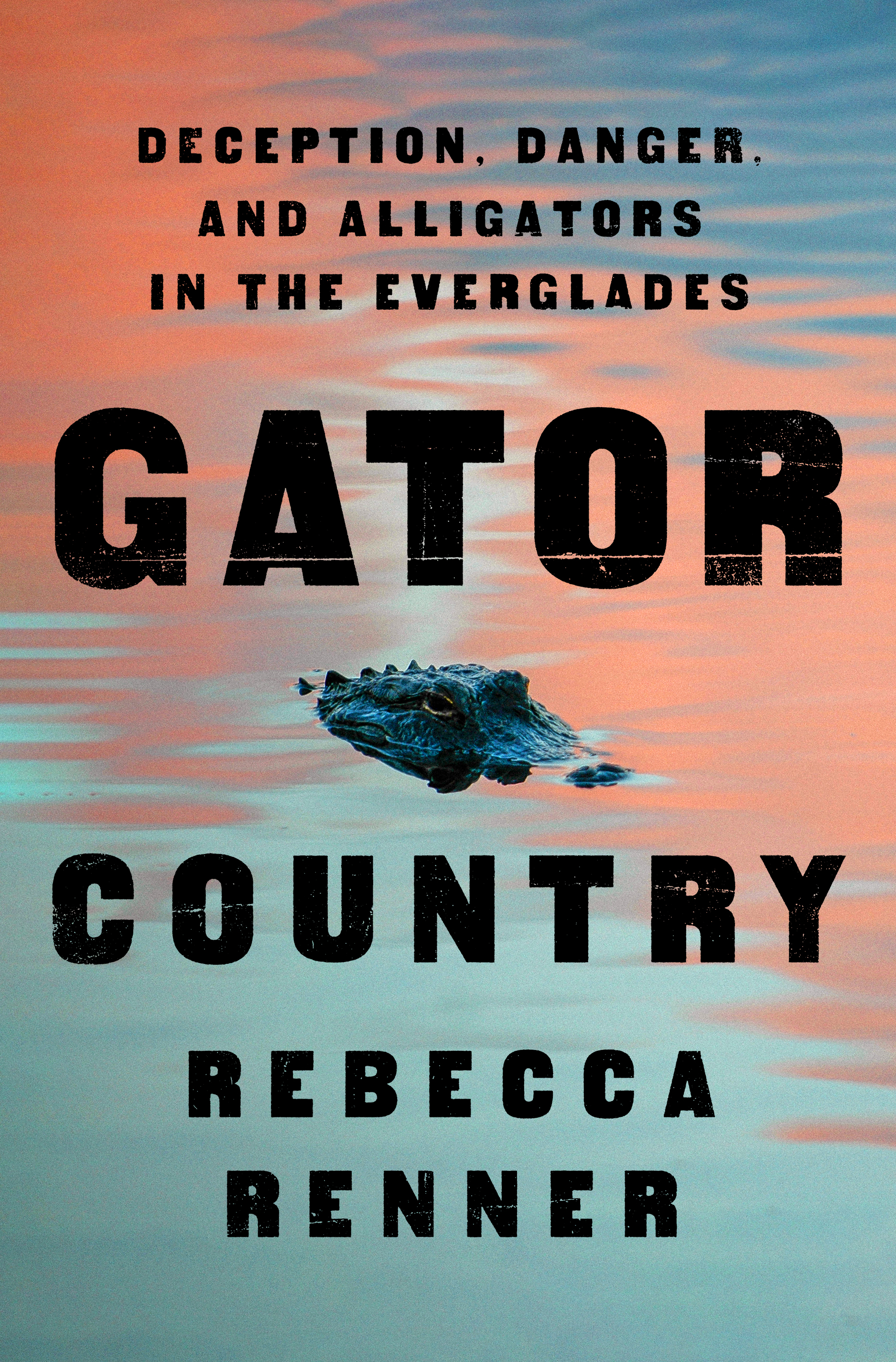
Renner’s work follows Jeff, an undercover wildlife conservation officer. To take down an operation of illegal egg collection and gator sales, Jeff must become a stranger to himself. He gets a new name and documentation, a new trailer to live in, and minimal cash to set up his own alligator farm. It all must look legit so he can get in good with the other gator farmers, who may be poaching on the side. For well over a year, his mother doesn’t know what’s happened to him, and his wife and adult son must be cautious lest someone discover Jeff’s sting and retaliate.
In addition, Renner examines a legendary poacher from Florida tall tales. Going by the name Peg, this rascally character was a local hero, outsmarting the authorities and feeding his family. As I read about Peg, all I could picture was “them Duke boys” evading “a whole heap of trouble.” The point is that Peg, a poacher, never seemed greedy in the way that the modern poachers Jeff follows do. Were the poachers Jeff investigated hungry for money, fame, or something else? Thus, by combining legends and speaking to Peg’s family, Renner gets another side of the poaching business that prevents readers from seeing “good guys” and “bad guys.”
In Jeff’s story, he learns something similar. Some of the players he met were people he would choose as friends, but they also killed animals illegally and stole eggs from alligator nests. Furthermore, he had to consider how he would charge the people involved, such as a husband-wife team with three children that would be left without parents if both were sent to prison. On the other hand, one strong season of poaching alligator eggs could destroy an entire season of breeding. For instance, Louisiana alligator farmers know that gators do need breed in captivity. Thus, if a weather event makes it hard to get gator eggs, poachers in Florida will risk life and limb to collect eggs themselves and sell them over state lines, sometimes at $60 per egg. Therefore, Florida’s breeding season would be a wash due to greed, upsetting the ecosystem of the Everglades.
Gator Country is partially about conservation and history, but it’s more so a true-crime sort of book. We follow Jeff as he goes undercover, reading about what he would do to fit in, how he questioned people without raising suspicion, the sacrifices he made regarding his family, and the laws that tip people from legally helping with population control (much like deer hunting in Michigan) to poaching and potentially sending gators back on the endangered species list.
I found the book hard to put down because it fed me information in different aspects: conservation law, evidence gathering, backwater storytelling, and Florida’s ecosystem. In addition, I was reminded that baby gators, fresh out of the egg, will bite! But they also make cute peeping noises.

 Grab the Lapels
This sounds wonderful! I don’t usually like true crime, but that’s because it often has an obsessive interest in murderers at the expense of their victims. This sounds very different. Actually, it sounds like a sort of gator-themed spy story, which sounds amazing.
LikeLike
I’m going to be snooty, loulou, and differentiate between “genre” true crime and “literary” true crime. I have never read what I understand to be genre true crime, because I think it tends to focus on the sensationalist aspects of the crime. But I have read a bit of what I call literary true crime, starting with Truman Capote’s In cold blood. That opened my eyes to how true crime can be truly analytical of broad issues in society. Helen Garner has written a couple, both focusing, in particular, on the court case.
All this is the say the Gator Country sounds like the latter and a book I would love to read. Presumably, Melanie, the actual writing is good too, as well as the breadth of the analysis?
LikeLike
The writing is good, yes. Hmmmm, so I would probably say there is “journalistic true crime” and “sensationalist true crime.” If it’s a sensational story, can we even call it true? In fact, Capote is accused of sensationalizing the story of In Cold Blood. For example, “Although Capote promoted the book as “immaculately factual,” revelations in recent years have called that claim into question. In 2013, Wall Street Journal writer Kevin Helliker published evidence that Capote distorted a chronology of the police investigation to burnish the reputation of Kansas lawman Alvin Dewey Jr., who had given Capote unprecedented access as the case unfolded. In a follow-up story published earlier this year, Helliker reported that Capote had failed to mention Hickock’s idea to write his own book about the murders—a plan that Capote apparently schemed to thwart in order to prevent any competition for In Cold Blood. Other writers have uncovered other discrepancies.”
LikeLike
Yes, good questions that I can’t answer. As with all things, I guess, it’s reader beware? I’ve read Helen Garner’s “narrative nonfiction” true crime books. She doesn’t try to be “objective” but she does, I think, make clear where she is coming from. It’s too long since I read Capote for me to comment on where he is coming from.
LikeLiked by 1 person
I enjoyed learning a bit about the laws around poaching, what counts and what does not. There are no murders, so you don’t have to get into that. Also, it describes what a undercover officer of the Fish and Wildlife department has to go through to catch poachers, and how there is a sticky relationship because some people caught alligators for generations to feed their families, and now they aren’t supposed to.
LikeLike
This does sound like a really cool book. As I mentioned in one of my earlier comments, we went on a fan boat tour and saw some gators (actually, now that I think of it, were they gators or crocodiles? Gators I think). Anyway, they are very cool, but I was shocked at how lazais-faire many of the Floridians were who were also on the tour-they commented that they saw bigger gators in their backyard! LOL
LikeLike
You probably saw alligators in Florida. Apparently, there ARE crocodiles in Florida, but it’s mostly gators. I liked this book because it’s true crime without the weird murders/sex stuff that I’ve seen in other true crime books. The author shows two sides to the story, as well. How do anti-poaching laws affect families that have been eating animal sin the Everglades for generations, because roads were build and the natural habitat changed — that sort of thing.
LikeLiked by 1 person
I’m off to a SF conference in Orlando later today, and the hotel used to have a small-ish gator in the lake. Maybe this year I’ll see it again!
LikeLike
If it’s in its own lake and someone is feeding it, I’ll be it’s gotten bigger! 🐊
LikeLike
Maybe Florida should talk to New York about importing some of their sewer gators to the Everglades? Just kidding 😀 This sounds like a really well done book, interesting and suspenseful as well as educational.
LikeLike
I love old 80’s movies about gators in the sewers of New York. They’re just down there menacing trespassers and turning into mutants.
LikeLiked by 1 person
I did kind of assume that people are just tripping over gators everywhere in Florida. I didn’t realize that they were so recently considered endangered. This does sound like an interesting true crime type story.
LikeLike
Isn’t that wild? I had not realized they were endangered, too. Some TV shows in the US make it seem like they are a problem because there are so many. Now it’s the snakes everyone worries about. People release pet snakes, and there is evidence that they are cross breeding (one particular concern is a boa and a python cross breed that makes the snake both bigger and more aggressive. Fun!)
LikeLiked by 1 person
Yikes! That’s terrifying!
LikeLiked by 1 person
[…] to my review of Gator Country by Rebecca Renner: I was surprised so many people were excited to get this book for themselves! I think of myself as […]
LikeLike
Sounds interesting I like that eye-catching cover.
LikeLiked by 1 person
This sounds amazing and is immediately going on my TBR list. I might buy it for my little cousin who has been going to school for wildlife conservation and thermal imaging. (He’s in his masters course now.) Thank you for the recommendation and great review!
LikeLike
Yeah, you’re welcome! It’s not true crime like those action packed ones that make me picture Clarice Starling, but it is true live undercover conservation, so for sure, send it to the cousin!
LikeLiked by 1 person
I also just told my friend about it and she’s adding it to her TBR list as well. 😀
LikeLike
Fricken sweet!
LikeLiked by 1 person