
After reading the emotional story in What Looks Like Crazy on an Ordinary Day centered on Ava, a woman recently diagnosed with HIV, who moves to middle-of-nowhere Michigan to get herself together at her sister, Joyce’s, house, now we pick up in I Wish I Had a Red Dress. Ava and her husband and their niece are on a road trip across the U.S. This is a plot point designed simply to remove a some characters so we can focus solely on that older sister, Joyce.
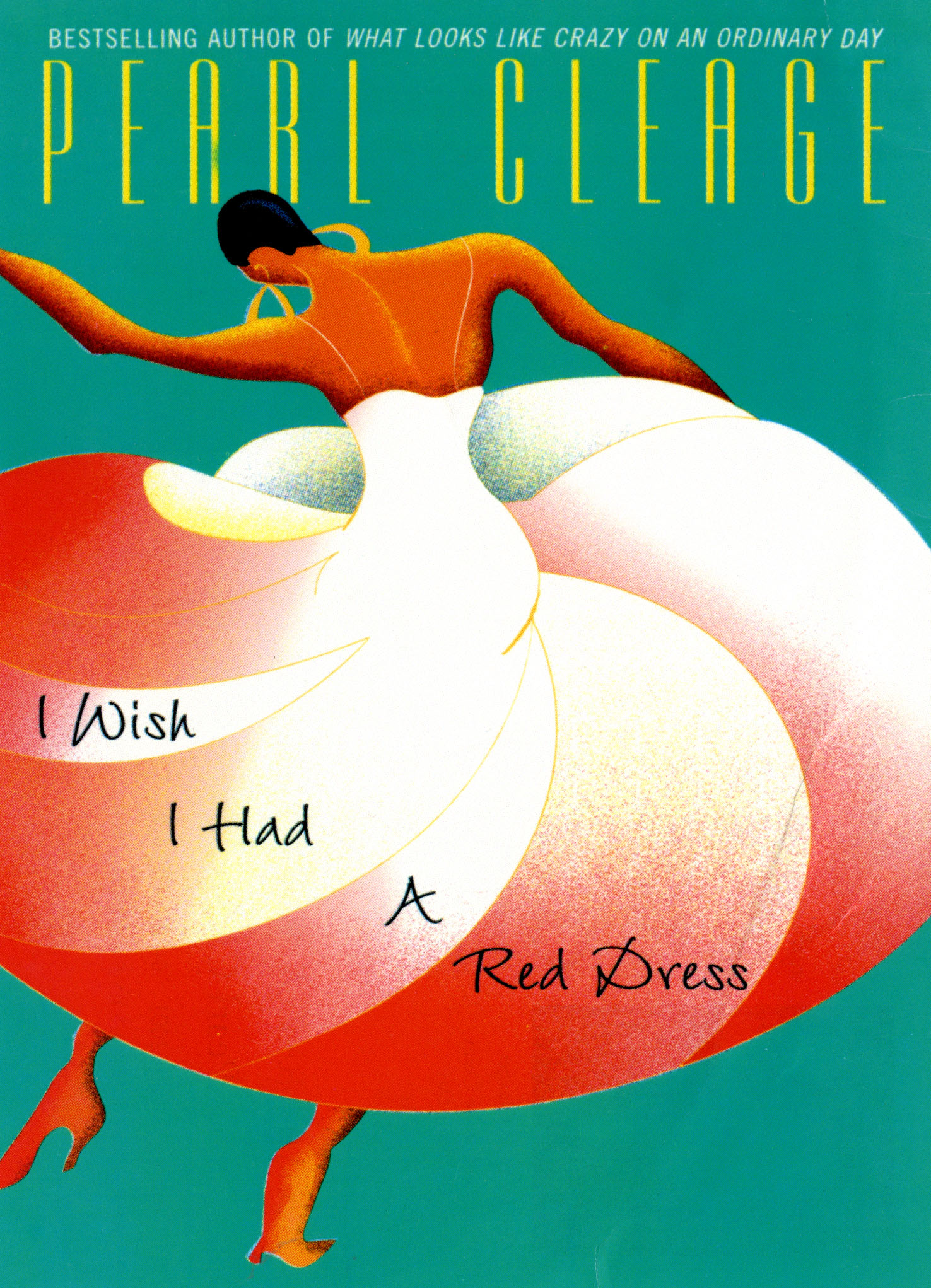
Joyce was the woman who met her one-and-only love in high school and married him. Well, then he slid on the ice like a school boy, declared, “I love my wife!” and fell through a hole in the ice and died. So, it’s been five years as a widow. Joyce hasn’t been with anyone else. She tends to wear black and dreams of buying a red dress. You’d think this red dress would be symbolic of happiness, a rebirth into a fully loving, sexual woman in her 40’s, but the red dress becomes something else entirely, which I appreciated. It’s too easy to have one symbol that functions like a bow that wraps up the novel.
Yes, Joyce meets a man whose handsome, but she’s ready to challenge him. The man seems to think that if he offers protection, safety, and the willingness to save a woman, he’s doing his job. But Joyce works at a facility that helps uplift and challenge young women — many teens — who have babies. There is even a serious conversation about what constitutes rape, and most participates realize they’ve been assaulted many times because they “gave in” when they feared the consequences. And when they show up with a black eye because they “fell on the ice,” Joyce reminds her new love interest that saying you’re going to save the woman you want isn’t enough.
I was glad Cleage avoided an easy love in I Wish I Had a Red Dress. While Joyce seems like a hard feminist, which her new man frowns on because it seems separatist, her point is that there is no place in the world women can go to and not look over their shoulders. Men can say, “Let’s forget about [insert latest domestic violence incident] and enjoy the evening!” but women cannot. There is an interesting conversation around what role me do have in spaces for women, which challenges Joyce.
I will say neither Biscuit nor I enjoyed the ending, which felt a little too Oprah-Book-of-the-Month for us, but it is what it is.
 Grab the Lapels
Sounds like a book with pluses and minuses – but I’m intrigued by your comment that the author “avoided an easy love” which made me think you liked it, but that it still had an “Oprah-Book-of-the-Month” type ending, which suggests you didn’t? So, overall, did you like it?
I do like the cover.
LikeLike
It was a bit fluffy and didn’t get me thinking too much, so if that’s the kind of book a person is looking for, it fits. However, I felt like the first book had more at stake in terms of looking at small communities.
LikeLike
It sounds interesting. My attention was already caught by the title, because I’ve always wanted a red dress, but a good red dress is hard to find.
LikeLiked by 1 person
It turns out the red dress is a symbol that she thinks she wants, but it doesn’t mean that in the end. I was glad for that.
LikeLiked by 1 person
I give huge kudos to Cleage for seriously addressing the issues like she does. Could she have done it in a different way that was maybe less didactic and Orpah book of the month-ish? Sure, but there are likely plenty of readers out there for whom some of things she says are revelations. This book isn’t my cuppa, but I really appreciate knowing it’s out there and that maybe it might actually make a difference to someone.
LikeLike
You know what? That is an excellent point. In one chapter the character are discussing rape and realized most of them had been raped, even if it wasn’t what you see in movies of a bogeyman jumping out of a bush. So, touché! This is great information that reached a large audience.
LikeLiked by 1 person
Don’t tell me another guy falls through the ice! I’m still getting over the last one.
This sounds interesting in its discussion of issues, I’ll read it if my library has it. Milly keeps me at arms length because she prefers being single, but I’m sure there’s an element of me thinking ‘I’ve done my job’ and her thinking ‘well it’s not enough’.
LikeLike
Pffft, we’re both still getting over it.
Make sure you start with the first one, or the set up won’t be there.
I’m thinking if you help Milly like a husband and you’re not, she might feel that you ARE one of the good ones. The point in the book is the guys plan what to do and do it rather than waiting to be organized and told.
LikeLike
My mom hates the phrase “it is what it is” with a passion, lol. I, however, find it very helpful! She thinks it’s defeatist/giving up and I think it’s acceptance of something you can’t change.
LikeLike
I used to think it was defeatist too, but I see how people use it to describe events that are out of their control. To be fair, I think it does lean more defeatist because it suggests (to me) that something COULD have been done about the event. Like, when Donald Trump was elected an was prepared to kick out all the DREAMers, I was teaching at a college with a load of DREAMers, many of whom were on the soccer team. I asked the coach his thoughts, and he said, “It is what it is.” I can’t change whatever votes other people cast, so it is what it is. Then again, I should not allow what happened to prevent me from action later. Okay, maybe it’s totally defeatist.
LikeLiked by 1 person
Oh lord, THIS Joyce? The one with that husband who died that terrible way? Will be forever etched in my mind and I’ve never even read the book LOL
I also like that this book challenges that easy norm, it’s so easy for men to brush off domestic violence b/c they just don’t get it. They don’t understand what it’s like to be inherently afraid of a whole gender. Well, maybe trans women would get it now that I think of it in those terms…
LikeLike
I love that so many comments say they’re traumatized by Joyce’s husband’s death. LOL.
I saw a news story about African Americans moving to Africa to live forever and feeling an extreme sense of safety in the sense that they’re not always looking over their shoulder for the white person who many harm them.
LikeLiked by 1 person
Hmm that’s interesting, I suppose there’s a few parts of Africa where they would still feel that way though, right? (as in, looking over their shoulder, scared). Unfortunately lots of racism over there, I imagine it’s just not as common as it is in the U.S.
LikeLike
I mean, maybe South Africa?
LikeLiked by 1 person
Rob and I recently had a conversation about the differences in life between men and women. His coworker (a younger girl) was walking down the road and he offered her a ride home. She was about to get in the car and then said, “Maybe I shouldn’t.” And she continued walking. Rob was offended at first, I’m sure it’s not comfortable being treated like a potential rapist, but once I explained that we are literally raised that way (if your parents care about you), he was less offended. He just wanted to do something nice and was made to feel like an animal as he put it. Ultimately, he wasn’t mad, just sad that that has be a worry for anyone. Her gut reaction was to trust him, but her training kicked in and she thought better of it. I’ve done the same thing.
LikeLike
Absolutely. Maybe in the future Rob could offer to call an Uber or something instead? Honestly, I’m not sure, but I think the message of the novel is that it should be men who come up with solutions with asking women to tell them what to do.
Nick is almost overly-aware of how men come off to women. He wouldn’t take a water aerobics class with me because it’s all women (even though it’s open to everyone) because he didn’t want to make them uncomfortable.
LikeLiked by 1 person
Good work Nick.! I think it’s honestly hard for a lot of people to be that aware because they don’t live through it every day. I’m a girl and I probably wouldn’t have thought of that at first. I would just be thinking about how it might be cool if my SO came along too.
LikeLike
I hadn’t thought of it either, and I was actually pretty upset that he wouldn’t do the class with me.
LikeLiked by 1 person
I would be too. I would be like, thanks broads, for making my husband so uncomfortable he wouldn’t come with me. 😛
LikeLike
You are just the worst in all the best ways. LOL, I love you.
LikeLiked by 1 person
😀 Lmao. I’m glad that you love me for who I am. ❤
LikeLiked by 1 person
[…] comments, so I’m not sure yet! I’ll get there soon, but if you read and commented on my I Wish I Had a Red Dress by Pearl Cleage post, thank […]
LikeLike
That point that men can just move past stories of violence against women is painfully true. This sounds like a nicely rounded story of realistic characters.
LikeLike
It’s got that Oprah book club squishiness, but I overlooked it. Biscuit, on the other hand, was MAD at the ending.
LikeLiked by 1 person
I haven’t read this one and it does sound such a useful discussion of domestic violence and rape. I’ve been thinking recently about how as things have changed, stuff that happened to us all can slide into being something we now realise is very wrong. It can be a shock, but it doesn’t mean we shouldn’t talk or think about it.
My husband has learned well about the looking over your shoulder thing, tho he’s taken some educating at times. He’s very careful not to make women uncomfortable generally, though, just needed a bit on why I don’t like to walk home alone after dark or let workmen I don’t know into the house when I’m alone here.
Sorry for late commenting – was behind anyway and now I’ve got Covid!
LikeLike
I feel you on the not being alone when workers come in. One dude asked me if I was married when we were in the apartment alone.
LikeLiked by 1 person