
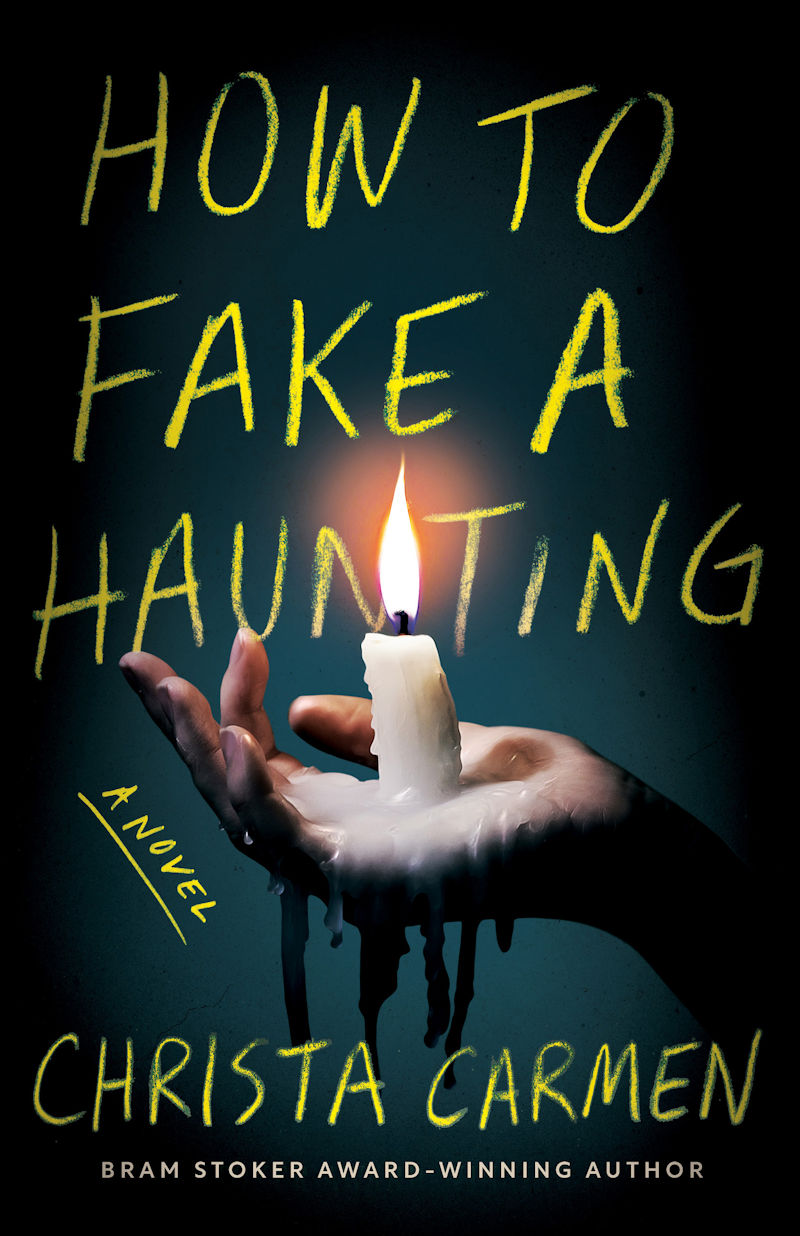
How to Fake a Haunting by Christa Carmen caught my eye in the new books section at the library. I’m pretty tired of haunted house = problems with marriage/your mother. However, Carmen’s novel is about Lainey and Callum and their four-year-old daughter. Callum was a drinker who progressed to full-out alcoholism, and Lainey wants to leave him. The issue? Callum’s family has money and political connections that keep Callum from getting checked by Child Protective Services or arrested after crashing his car while drunk. On paper, he looks like a fit father with a full-time job who could fight for shared custody of their daughter. Lainey’s best friend, Adelaide, realizes Callum is so pickled that they could scare him off if they fake a haunting in the couple’s home. He’ll leave and Lainey can claim abandonment in the divorce proceedings, keeping their daughter from living 50% of the time with a guy who likes to golf all weekend (wasted) and drive around fast (wasted). The issue is whether Lainey’s friend is adding some scares she didn’t explain beforehand, or if something else is going on.
I almost did not read How to Fake a Haunting thanks to the first two pages. The opening sentence reads, “The satiny garnet petals of mid-spring irises are said to pacify even the staunchest detractors of red-hued blooms.” Lawd, amighty. I kept reading. The author personifies Lainey and Callum’s new house and how it’s not as tall as the others nearby — which I didn’t get at first. I closed the book. Ugh, fine! I started over again, reading more slowly. Finally, I realized what was going on and got through the first two pages. From there, Carmen really picks up her narrative and gets rid of the weird flowery (literally) stuff.
In the opening chapter, titled “Then”, Lainey and Callum have just finished building a new house on property Callum’s parents gifted them. It ends with Callum drunkenly smashing a mirror. We cut ahead four years to “Now”. The couple now have a daughter, which might surprise you since Lainey knew Callum was an alcoholic, stuck around, and made a child with him. In the present, Christa Carmen wisely sets the scene for readers to hate Callum and his mother. Lainey wants to leave a gala Callum’s parents hosted at around 8:00PM because their daughter needs to get to bed. Callum’s mother harangues Lainey, arguing the party just started while Lainey has to note that the child she’s holding is four — and half asleep. Finally, Lainey gathers Callum (wasted) and gets to their car where Callum insists on driving. Lainey argues with him, but Callum’s mother and her guests all watch, and to prevent Callum from embarrassment, his mother convinces Lainey she’s overreacting. Normal people drink at parties! On the ride home, Callum crashes the car then flees the scene, leaving behind Lainey and their daughter, and calls a police officer and friend of the family to cover for him. Instantly, readers hate him and his mother. The crash is the catalyst for what comes next: the haunting scheme.
Carmen’s novel reflects a number of sources, such as those reality TV shows in which ghost hunters try to find what’s haunting innocent families. She flips it, though, describing how Lainey and her best friend, Adelaide, rig the house to seem haunted, using tape recorders, toys, magnets, costumes, and straight-up hiding in closets to scare Callum at night when he’s the most drunk. Some inspiration comes from movies, such as the fly swarm in The Amityville Horror. I enjoyed the creativity of these scenes, and watching two women plot together is loads of fun. Tensions rise not from ghosts but when and if Callum will leave. When each “haunting” occurs thanks to Adelaide sneaking around the attaic, Lainey pretends she can’t see/hear/smell it, so Callum thinks he’s crazy. Adelaide gets braver with her haunting ideas, telling Lainey they need “serial killer confidence,” which includes the use of living and dead animals:
“And what exactly are you going to use to smear carcasses across his tires?”
Adelaide considered this for only an instant before her face lit up. “I’m not sure, Lain. But I bet they have something at home Depot.”
While Lainey starts to worry she’s gone too far with the haunting stuff, Callum continues drinking, and he’s drunk when their daughter has an accident that lands her in the hospital, renewing Adelaide’s confidence that they’re doing the right thing. Except Lainey is getting blackmail notes, and the only person who knows about the haunting stuff is Adelaide. Can we even trust the best friend? I wasn’t sure, so Carmen’s plot kept me guessing. I even wondered if Adelaide was a ghost or something. Lots of theories came up.
As the synopsis mentions (and I wish it didn’t), something spooky starts happening that Lainey and Adelaide can’t explain. What kind of ghosts haunt a brand-new house? There is no “sacred Indiana burial ground” or past suicides or murders that a perky real estate agent neglected to mention. Where How to Fake a Haunting was going, I had no clue. The novel ends splendidly, though I was afraid for a hot minute I would be disappointed. Carmen pulls from an unlikely source published over 180 years ago, and I was just tickled to bits.
 Grab the Lapels