
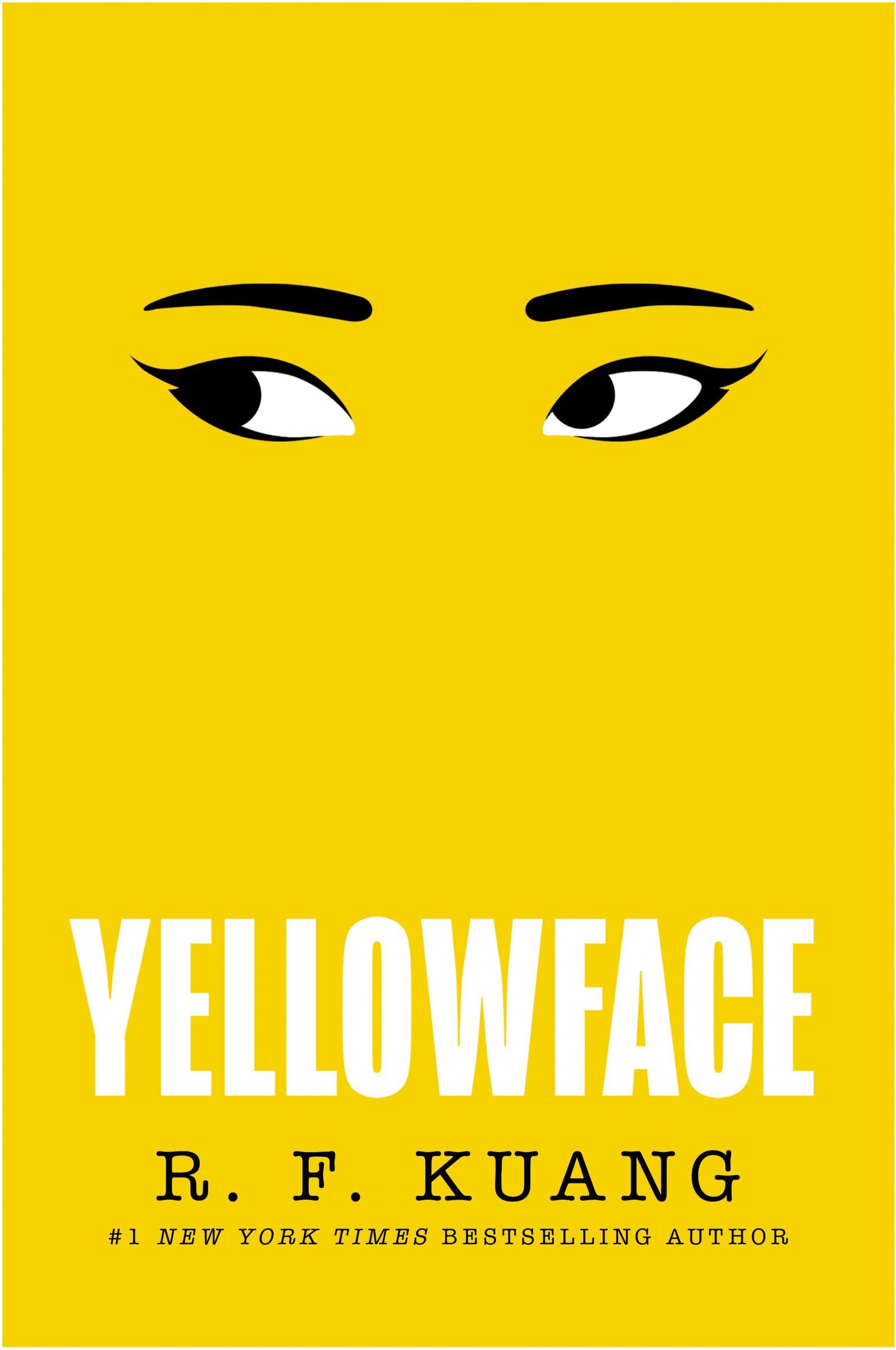
The true genius of Yellowface by R.F. Kuang is that you will come away with no answers in the debate over who can author non-white characters. The novel opens with June (a white woman) and Athena (a Chinese-American woman). They both went to Yale and studied creative writing, but while Athena’s career has taken off, June is stuck. Athena has best-selling “litfic” and movie deals in the work while June published a highly autobiographical novel that sold to a press that was shortly thereafter shuttered. Although they aren’t really close or friendly, June and Athena hang out like friends. In the opening chapter, the two are hanging out at a fancy restaurant, drinking cocktails that Athena pays for, and get tipsy. They head to Athena’s apartment, where June has never been. She’s jealous of Athena’s life, but alcohol is the great softener that makes both women silly. They engage in a pancake eating contest. And then, “Athena Liu, twenty-seven, female, is dead because she choked, to death, on a fucking pancake.” Shortly before, Athena had shown June her newest manuscript, laboriously written on a typewriter because Athena doesn’t believe computers are conducive to her process. As emergency services cart Athena’s body away, June dumps the manuscript that no one knows exists, into her bag.
From there, author Kuang takes readers on a harrowing ride because the novel is in first-person point of view: June’s. Much like Lolita‘s Humbert Humbert, June is convincing regardless of how moral her decisions. She can convince herself (and readers) of just about anything, such as how much she researched and reworked Athena’s draft, making the novel basically June’s. When she gets a book deal, June is labeled the next hottest young writer. But publishing isn’t just printing books; it’s also what happens on social media. Other Asian-American writers attack June for how her book is marketed. Although she goes by June Hayward, the publisher rebrands her as Juniper Song, which is technically June’s legal first and middle name, but the ambiguous author photos in which she looks tanner, and the reader’s assumption that her last name is Song, suggests they’re trying to quell anyone shouting about #OwnVoices.
Asian authors, critics, and artists pile on Twitter, accusing June of plagiarism and appropriation. While she has plagiarized, June’s narrative convinces you she’s the victim of bullying here. Is she? It’s hard to tell when you live in her head. On top of that, the book she stole is about Chinese Laborers during WWI. Kuang makes the conversation murky when she adds that Athena was a thief in her own right. When June meets Athena’s mother — Athena’s only family — the mother reveals that she didn’t often read Athena’s books: “She drew so much from her childhood, from stories her father and I told her, from things . . . things in our past. Our family’s past. I did read her first novel, and that’s when I realized it’s very hard to read about these memories from someone else’s point of view.” Kuang brilliantly gives readers no easy answers and she proceeds to give other examples of Athena pilfering people’s trauma for her stories.
However, Kuang avoids villainizing any one person, which is how it goes in real life. June stole, Athena manipulated people, the people on Twitter bully and create conspiracy theories, there loads of comments about white people being shit — and here is where I felt myself getting huffy. When the Tweets said something along the lines of “white people are like that,” I was sucked into June’s thoughts. Citing research she did to edit Athena’s manuscript, June thinks, “Actually… just because Chinese people were being discriminated against doesn’t mean that they couldn’t be racist as well. And actually, it’s well documented that the Chinese laborers did not get along with Arabs and Moroccans — according to one of my sources, the Chinese would call them ‘black devils.’ Interethnic conflicts are a thing, you know.” Oh, man! I’m kind of mad at Kuang for messing with my feelings! I felt terrible when I sided with June. I felt terrible when June made excuses for her theft. I was all over the place emotionally, and I realized that’s something I value in a novel. When June explains an online attack that I identified with, I wasn’t sure if I was meant to feel ashamed or an affinity: “Someone says my past reviews on Goodreads are racist. (All I did was one write once that I couldn’t relate to an Indian writer’s romance novel, because all the characters were unlikable and way too obsessed with their family duties to the point of disbelief.)” I’ve had a similar experience with reading Indian novels, feeling tired of the harsh family trope, the mother calling the daughter fat, the father sitting around and waiting to be served.
As I read, I thought about a few years ago when I tried to read more #OwnVoices books, ones from authors who lived in the country about which they were writing. It was so complicated. I thought Jhumpa Lahiri was an Indian woman, but she identifies as British-American and now writes in Italian. And on it went. Do children of immigrants count as #OwnVoices when they write about their parents’ home country? As one character says in Yellowface, “…spoiled Bay Area kids who couldn’t even speak Mandarin and who thought that Asian identification boiled down to being annoyingly obsessed with bubble tea and BTS were diluting the radical force of the diaspora canon.” What does it mean to be part of any nationality, ethnic group, and/or race? Earlier this year I watched a horror movie called Death Name that explored Korean identity. The main character’s grandmother was from Korea, her parents were Korean, she was born in the United States. Upon arriving at college, the Korean student group wants her to join, but some members are put off because she can’t speak Korean. What does it mean to be Korean, then?
Although the complicated questions Kuang raises are the best part of her novel, the trajectory is so accurate that you’ll swear Yellowface was plucked from real life, especially the comments posted on Twitter. When one writer says that accusing June on Twitter of plagiarism is like stoking a lynch mob, that person becomes the focus: “There’s then a heated debate over whether it’s appropriate to use the words ‘lynch mob’ when describing a white woman [June], and it ends with dozens of people calling the above referenced author a racist. Said author’s [Twitter] account is locked within hours.” Have you guys seen this stuff play out on Twitter? I have. It’s embarrassing, in my opinion, how into the weeds we are on what subjects are permitted for writers. I can’t help but think there is a writer having awareness of his/her goals in choosing to write non-white characters and then there is censorship.
I think Yellowface is clever because I’m painfully aware that I’m reading a book by an Asian person woman writing from the perspective of a white woman who’s herself off as the author of a book written by an Asian woman. Readers will love Yellowface for its complexity and the way it holds a mirror to the Twitter mobs, Booktubers, and critics who try to control the publishing industry by getting authors canceled. If you’ve been in a creative writing program or went to an MFA program, Kuang’s book is a must read.
 Grab the Lapels