
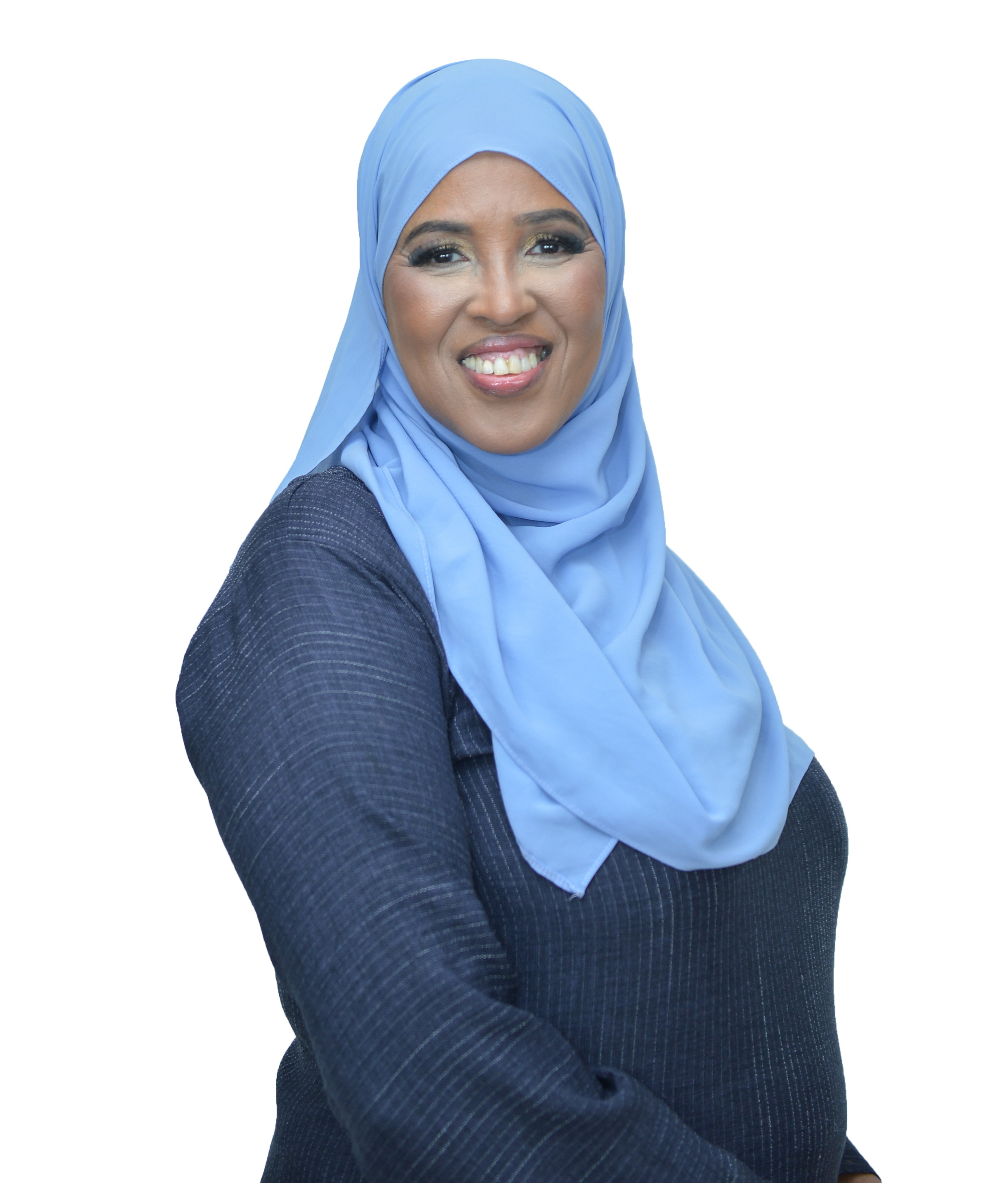
One of my favorite types of posts that I used to do when I organized and promoted book blog tours was asking the author to chose a short excerpt of a story and annotate it. What were they thinking while they were writing? How did the writing affect the author’s emotions? Here is what Fartumo Kusow has shared with us today. Note that her story is in the block quotes, and footnotes are underneath. I added footnotes in this fashion for easier readability online (no scrolling all the way to the bottom).

Shaban’s (1) eyes met mine. I was tempted to ask why they’d killed the men. What had they done? But I stayed quiet.
(2) “Each one of us has a responsibility.” Shaban grew animated, full of passion. “We must answer for our part on the Day of Judgment. The day we stand in front of Allah with nothing. No wealth. No family. No fame. No friends. Not even clothes. Nothing but our deeds.”
“That means you’ll have to answer for your evil act of snatching girls,” I said, finding my voice. “And killing men after they’ve done your bidding.”
(1) Shaban is the eighth month of the Islamic calendar, considered a spiritual bridge leading to the holy month of Ramadan. I intentionally chose this name to create irony. Rather than building connections, this character disrupts and destroys them. His presence is meant to feel unsettling. When I described his eyes, I drew from a childhood memory of my third-grade teacher, whose gaze alone frightened me. I wanted Shaban’s silence and stare to carry that same quiet intimidation.
(2) This passage illustrates how cultural and religious practices can be manipulated as tools of power and control. While the Qur’an is regarded as a perfect text, it is interpreted and practiced by imperfect human beings. As a result, verses can be taken out of context and reshaped to justify personal desires or authority. Shaban uses religious language to assert moral superiority while committing violence, revealing the hypocrisy in his character.
Shaban paid no attention to my comment. He wiped imaginary tears. “That day, Allah will ask us to account not only for our actions but also for our inactions. Not only for what we’ve done but also for what we have left undone.”
“You have enough evil actions to get you to hell,” I said.
“What did you say?” Shaban’s expression unmasked his anger.
Mika put a hand on my mouth before I could answer him.
“How can we help?” Nora (3) stood up, and Shaban turned to her. “I am done with listening and talking. I don’t care for words that do nothing.” Nora took a step toward Shaban. “What is our part, these ladies and me?”
Shaban must have expected this. It was evident in the way he smiled. His shoulders relaxed. Nora’s questions seemed to erase his anger toward me. “The ladies will marry some of the young men. You, sister Nora, will be by their side to guide them with your wisdom and experience.”
(3) The dynamic between Nora and Shaban was important to me because I didn’t want power to look simple. Shaban isn’t powerful on his own. He relies on people like Nora to reinforce his authority. When she steps in, his anger fades not because he has changed, but because he has regained control of the situation through Nora.
“What do they do with kidnapped girls?” I’d asked my mother the afternoon the Hussein girls disappeared. It seemed so long ago, yet it hadn’t even been two months. Now I had the answer to my question. The girls—the twins and Daala—were stolen. Forced to marry men they didn’t want. The ladies will marry some of the young men. Shaban’s words echoed in my mind. I’d attended many weddings with my mother where one girl or another in our town got married with her parents’ blessing. But what did it mean to marry the young men under Shaban’s roof?
(4) The afternoon sun penetrated the small window, and a single ray landed between Shaban’s eyes and mouth. Light shone on his clenched teeth, and the perspiration on his upper lip glistened. “That’ll be your duty. For Allah. To please Allah.” The emphasis landed on his last word, as if he were calling Allah to confirm the statement.
“Without our fathers’ consent?” I asked. A man who seizes girls in front of their school doesn’t care for rules and customs, but I was desperate. “Our fathers must be here to bless the union.”
(4) I began this passage with light falling directly across Shaban’s face because I wanted the setting to mirror his character. He is theatrical in this moment, illuminated, composed, persuasive, yet deeply distorted in his thinking.
The girls are shocked by the idea of getting married without their fathers’ consent. In their understanding of faith and tradition, a father’s blessing is not just cultural but religiously significant. Shaban doesn’t deny that guardianship matters. Instead, he reframes it. In his view, these fathers are corrupt, driven by greed and materialism, and therefore unworthy of their role. By redefining who qualifies as a “true” believer, he strips them of authority.
The word pure becomes central here. When Rada questions his definition, she is not just challenging him. She is challenging his entire belief system. For Shaban, purity is something he gets to define. Just like who counts as a proper Muslim, or who deserves power. That shifting definition is what makes him dangerous.
“It is difficult to abandon your old and backward customs,” Shaban responded to me this time. His words were soft, gentle even. “You know those practices are driven by sinful greed.” He sighed, as if implying I must agree, although I didn’t. “To buy and sell girls with large dowries and even bigger festivities.”
“Getting married without my parents’ agreement is wrong,” Mika said, her words without the firmness they used to possess.
Nora didn’t exhibit her usual rage. Her hands clasped, she lowered her gaze in a prayer pose.
“Sisters.” Shaban paused, a long, dramatic gesture. “Allah chose you from other girls in that school. You are pure inside and out, unlike many others around you.”
Pure? “Do you even know what pure looks like?” I asked. “Was it pure to send Issa to kidnap us and kill him and the others?” I pointed toward the door. “Shooting them and leaving them lying there like dogs after they’d done what you sent them to do?”
I could see Shaban took note of my question by the way he blinked. “Do you? Do you know what pure looks like?”
(5) Shaban turned toward the men in the front row and nodded twice.
Two men—Jordan and another I hadn’t seen before—got up and came at me. Part of me wanted to react. Maybe if I ran, I could evade capture. Perhaps I could reach the gate and find it unguarded. I didn’t have time to do any of that. Instead, I stood there bracing for whatever came next. The two grabbed me, one on each shoulder. Jordan took a black scarf out of his pocket, like the one the kidnappers wore when they took us and proceeded to tie it over my mouth. I turned my head this way and that, making it very difficult for him, so they pushed me to the ground. The other man trapped my hands under his knees and held my head between his hands. Once my mouth was tied shut, they sat me up and held me there, but I continued to thrash about, if only to tire them. Each time I moved, one of them jabbed me with his elbow. Blows landed on different parts of my upper body.
Shaban continued to speak, even smiling in my direction. “We prayed for so many days before your brothers came to collect you.”
How long was that white truck there before I noticed it?
(5) In this moment, Shaban reaches the edge of his patience. He has dismissed Rada’s protests before, but her persistence presents a deeper threat than passive resistance ever could. Unlike Nora, who reinforces his authority, Rada challenges it openly.
What matters here is that Shaban doesn’t need to shout or argue. He doesn’t even need to give a verbal command. A glance is enough. The men move immediately, as if they have done this before. That silent understanding reveals something important: his power is structured and supported. It is organized. It is practiced
This scene shows that Shaban’s control does not rely solely on religious language or persuasion. When ideology fails, force follows. And the transition between the two is seamless.
(6) Shaban reached for the glass of water on the table next to him and took a long and deliberate swig. Then he removed his headcover and ran his fingers through his thick, dark hair. “It is normal to feel like you are doing something wrong—dishonoring and disappointing your fathers.” He stopped, and the room grew quiet. “Those who came before you felt the same until they learned the error of their ways.”
“Before us? How many other girls have suffered like we are suffering now?” I mumbled. The fabric pulled my skin even tighter, but Jordan and the other man were the only ones to hear the muffled sound of my protest. That other man faced me, held my head between his hands, and head-butted me. My skull made a cracking sound, and the room spun round and round.
“But without our fathers here? Our families by our sides? Our elders absent?” Mika spoke as if she’d realized it was her job to fill the void. Maybe she wanted to join me in trouble. A loud murmur rumbled through the room.
(6) Once Rada is physically restrained, Shaban slips back into his sermon as smoothly as he signaled the men to silence her. The transition makes it feel rehearsed, as if this pattern of resistance and suppression has happened before.
When Mika continues the protest, he doesn’t order her to be restrained. Rada tied and held on the floor acts as a warning. The display of force is enough. Shaban understands that control doesn’t always require repeated violence. Sometimes one example sustains it.
What interests me most in this moment is the shift in his demeanor. The anger he showed toward Rada dissolves into something almost gentle, though the calmness feels forced. He presents his plan as if everyone in the room, including the girls, is participating willingly. He even offers them a “choice.” But the tension in the room makes it clear that the choice is an illusion.
By framing coercion as divine duty and even honor, Shaban transforms submission into something that sounds sacred. That contrast between the physical restraint on the floor and the soft language of “absolution” reveals how power can dress itself in mercy.
Shaban clenched his teeth even harder but didn’t order the men to restrain Mika as he had with me. “Sisters, sisters.” He spoke with forced calmness. “Allah has entrusted you with a divine duty.” Shaban stepped away from the stage and walked to the center of the room, splitting the distance between the podium and us. “I want you to think and decide if you are ready to do what Allah has ordained.” The words came sharp, giving the sentence authority. “If you are still not ready after serious thought, tell me your decision.” He sat on the floor among the men. “I will absolve you from this duty and honor.” He bowed his head.
(7) Absolute silence descended upon us.
I ended the scene with absolute silence. Throughout the chapter, Shaban controls the room with words, gestures, and force. But in the end, it is silence that settles over everyone. That quiet is not relief. It is fear. It signals that control has been reestablished, at least for now, and that resistance has consequences.
 Grab the Lapels
This is a powerful way to analyse a text, to see what the author was thinking at each stage as she wrote it.
When I read I am trying to understand what the protagonist is thinking and feeling, but Kusow is apparently writing like a dramatist – picturing light and shade, noise and silence.
LikeLiked by 1 person
I do really enjoy these posts. I should reach out to author more often to see if they want to get involved. Lately, it’s mostly this one publicity company that reaches out to me.
LikeLike
I found this fascinating – it’s the one I read while we were driving and couldn’t respond to while bouncing along in the car. So often I wonder what an author was thinking, and whether my guess or assumption is right. Often, if they are alluding to something we know, we are probably pretty right in what we think they mean, but things like this, “(4) I began this passage with light falling directly across Shaban’s face because I wanted the setting to mirror his character. He is theatrical in this moment, illuminated, composed, persuasive, yet deeply distorted in his thinking”, we may never fully “get” but maybe it’s the build-up of similar ways of expressing meaning that we readers come to understand as we work through a book, even if we may not be able to fully articulate it?
LikeLike
I love these posts, too. When an author truly engages with the activity, the results are amazing.
LikeLiked by 1 person