
“In the year of our Lord 1894, I became an outlaw.” A great line indeed, but how did our protagonist, Ada, become an outlaw? In Outlawed by Anna North, the book is less about being an outlaw and more what is outlawed — well, not everything that gets a person in trouble is a law on paper. Sometimes, superstition around potential witchcraft sends a town into a tizzy. For instance, Ada got married in her late teens to a young man she liked well enough. She grew up helping her mother, a midwife, and was eager for babies. However, they never came. Thus, her husband kicked her out, which was the normal thing to do. After, other women Ada knows have problems with their pregnancies, sparking gossip that Ada is a witch and must be punished. To avoid jail, she goes to live in a convent.
The convent isn’t quite what it seems; religion, nuns, yes, but basically women who are barren who were cast out. Ada reads voraciously everything the convent has about women’s ailments. One book, written by a woman, sounds promising. The Mother Superior suggests Ada go find the Hole in the Wall gang on her journey to find the author of the book. The information on a body’s inability to conceive is a mystery, and Ada wishes to know herself by going to the source of the information.
Anna North uses figures from history, like Doc Holliday and Billy the Kid to give her novel some familiarity, but it’s quite fictionalized. The Hole in the Wall gang consists entirely of women who were kicked out of their homes for being barren. Each has a special skill, like horse riding or sharp shooting, and each found her way to the gang as a place of refuge. I read this book with Biscuit, who noted that one synopsis she read described Outlawed as a book of queer and non-binary characters, and while that is true, it’s really not the point of the novel.
Sometimes, I get frustrated when many LGBTQ characters crop up in the same place at the same time and spend ages explaining their gender and sexual identities. In Outlawed, all the women gather because they do not have children and were run out. Billy the Kid is only referred to as “The Kid,” so no male or female pronouns, but it’s done so smoothly you might not even notice. Some of the outlaws engage in same sex relationships, and we do encounter gay characters that crop up for reasons that make sense, but the relationships read naturally. If anything, North has written a book about gender and sexuality that isn’t “about” gender and sexuality.
Best of all, I was immersed in the story. I could see these characters, and their loss was mine. Every heartache or injury or near death had me strung out in the best way possible. As Ada learns to shoot and ride a horse, I was impatient to learn how she would do on her first job, knowing that she’s not good at shooting or horseback riding. I loved Outlawed and highly recommend it as a modern western that fits the time period and has much to say to modern readers, too.
 Grab the Lapels
I have always enjoyed westerns – comes from a childhood of watching many of them on TV because they reigned supreme. My first heartbreak over a TV show and star was over a singing cowboy. Bring westerns back I say! I haven’t read many westerns though.
This however made me laugh “To avoid jail, she goes to live in a convent.” As you do, haha. But this made me intrigued “North has written a book about gender and sexuality that isn’t “about” gender and sexuality”.
LikeLiked by 1 person
I feel like there are “issues books,” as I’ve seen some folks call them. The whole book is focused on an issue. I think it happens on both sides, conservative and liberal. I read a novella called Christmas Jars that was basically about shaming poor people into being more reasonable with their money when they’re homeless. Lots are about gender identity and smacking labels on things like it’s a bumper sticker. This one had a very natural feel to the relationships and introductions of people.
Oh, Sue, I still feel devastated when I think of the end of Butch Cassidy and the Sundance Kid.
LikeLike
I’m fascinated by your examples of “issues” books as mine would be those with feminist or climate issues. I’m clearly behind the times though I have seen some gender identity ones.
And yes re Butch Cassidy!
LikeLiked by 1 person
oh, this sounds interesting and well written too.
LikeLiked by 1 person
Very nice review MP. I meant to mention during our discussion how I feel here in the USA, women’s healthcare and rights are being “outlawed”. Just like in the book women need to gather together as there’s strength in numbers. Vote like your life depends on it because it does. Highly recommend. ~B
LikeLike
That’s a great point about how this book speaks across time, from the story set in the 1800’s to today. At one part in the book, the narrator hears a story about a woman put in the stocks three days who did not survive because other women stoned her to death. I think that’s pretty symbolic of women not supporting each other until they realize they need support themselves. That’s what I take from all the articles about anti-abortion advocates who suddenly need an abortion due to medical complications but cannot get one and nearly die or end up sterile.
LikeLiked by 1 person
This sounds interesting – I haven’t read many westerns. Lonesome Dove is one of my very favourite books, but because it was the first western I read, everything else has felt like a bit of a let-down – clearly I should have started with something else and worked up to it. 1894 does seem awfully late for talk of witchcraft and convents, though!
LikeLike
If Lonesome Dove comes on TV, you better bet Biscuit and my Dad are going to sit there and watch the entire thing. I still haven’t seen or read it, though I should.
When I Googled 1894 and witches in the U.S., the Bell Witch kept coming up. I’m not sure.
LikeLike
I knew nothing about this book other than it was a Reece’s book club pick. Sounds interesting!
LikeLiked by 1 person
Fiction set in different times/places is often just another way of commenting on here and now and I think Biscuit has hit the nail on the head – this is a book about the unwinding of women’s rights in, especially, rural USA. Not, I hasten to add, that I have read it. Did it remind you of your old friend Tom Robbins?
LikeLike
I can’t remember if the women on the Rubber Rose Ranch ended up there for a specific reason other than adventuring. It’s been a hot minute since I read it. But no, I actually didn’t think of Robbins when I read Outlawed! That’s a great connection.
LikeLike
Oh this sounds good! It’s a fairly new release isn’t it? the cover looks very familiar.
So this book takes place in 1984 and beyond? Interesting choice of time period. It could also be a futuristic novel too, like a cowboy version of Handmaid’s Tale LOL
LikeLike
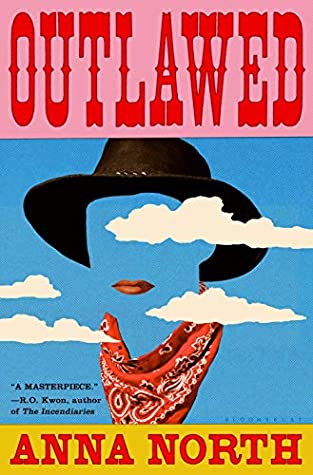
It came out in 2021, so fairly new. I remember it coming out when I still worked at the library. I like the cover because it suggests that a cowboy could be anyone, man, woman, nonbinary.
LikeLiked by 1 person
I love the cover too, it’s very striking
LikeLiked by 1 person
[…] in the book is truly representative of the time period. WWII books are the worst for this. However, Outlawed by Anna North takes bits and bobs of historical this and that to make a novel relevant to today when […]
LikeLike
Interesting book and I do like the cover. I like that the women are queer just because not to Espouse Every Side Of An Issue as I get a bit tired of (particularly) YA books, as it all gets a bit hectic!
LikeLike
I feel that I have to always wonder at this, how many of these women were not actually incapable of conceiving? That it was their husband’s weak sperm, yet they paid the price?
LikeLike
Yeah, there was no test back then, so the women would go off and basically hire a gigolo to get pregnant. This was normal and expected by other women, but if it did not work, then she would get thrown out. I guess having the appearance of having your husband’s baby is more important than anything else.
LikeLiked by 1 person
What a weird life.
LikeLiked by 1 person
This sounds really unique. Have you talked about this book before – that cover looks so familiar. I must have read someone else’s review.
LikeLiked by 2 people
I have not discussed it before. I remember when it came out in 2021 and I was still working at the library. I think others reviewed it a lot when it was first published.
LikeLiked by 1 person